
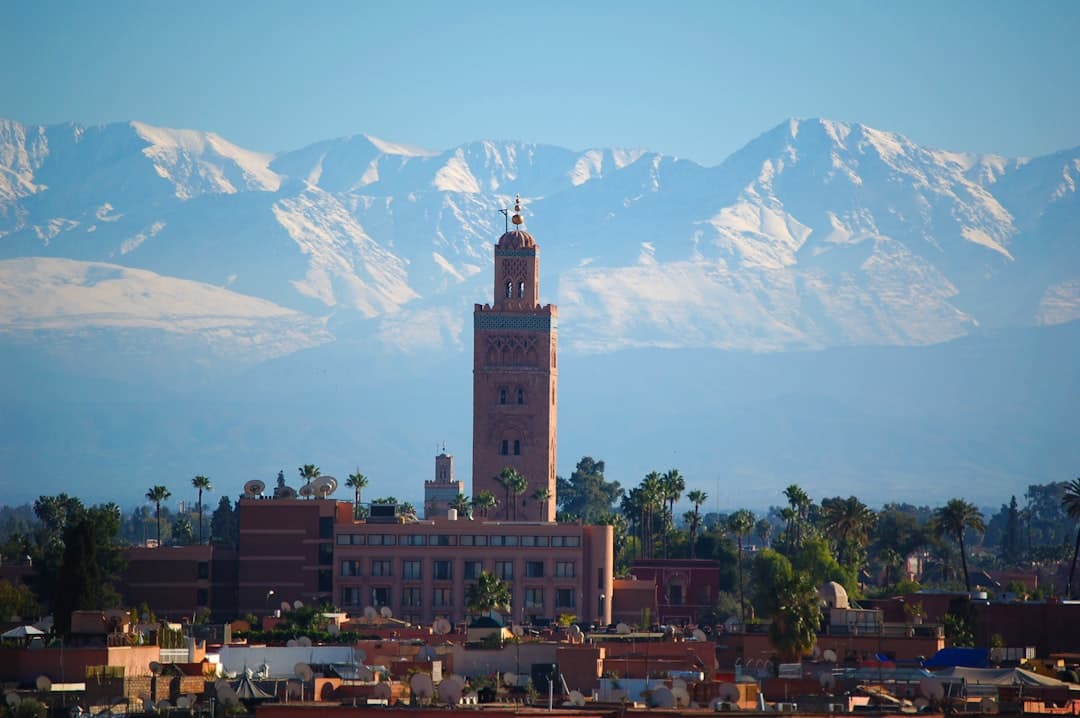
Marrakech rewards a tight, walkable plan more than a long one. Nearly everything first-timers come for sits inside the medina — a UNESCO World Heritage site since 1985 — or a short taxi from its walls. The mistake I see most is travelers trying to “fit Marrakech in a day” between airport and desert; the city deserves at least two full days. This is the experiences hub for guideme.ma: the must-do sights with real 2026 prices, the free picks, what to do after dark, and where Marrakech connects to the rest of your trip.
What are the top things to do in Marrakech?
If you only have one full day, this is the non-negotiable shortlist: walk Jemaa el-Fna at dusk, get lost in the souks, see the Bahia Palace and Saadian Tombs, photograph the Koutoubia minaret, and finish in a rooftop café. With two to three days you add the Ben Youssef Madrasa, the Jardin Majorelle + YSL Museum, Le Jardin Secret, and a traditional hammam. The sights divide cleanly into three buckets — the square and souks (free), the medina monuments (~100 MAD each), and the gardens and museums (140–190 MAD).
The best routing trick: do monuments in the morning when they open, save the souks for late afternoon, and keep evenings for Jemaa el-Fna. The square is dull at noon and unforgettable at sunset.
Jemaa el-Fna — the square that runs the city
Jemaa el-Fna is the heart of Marrakech and the one place you’ll return to every evening. By day it’s orange-juice carts, water-sellers and snake charmers; after sunset it becomes an open-air food court of 80-plus numbered stalls, storytellers, and Gnaoua drum circles. The square dates to the city’s founding under the Almoravids around 1070, and its living oral tradition is exactly what UNESCO recognized. Entry is free — you only pay for what you eat. The food stalls are good and cheap, but they’re where first-timers get caught: stalls quote “tourist” prices verbally, then pad the bill with bread and salads you didn’t order.
The souks and the medina monuments
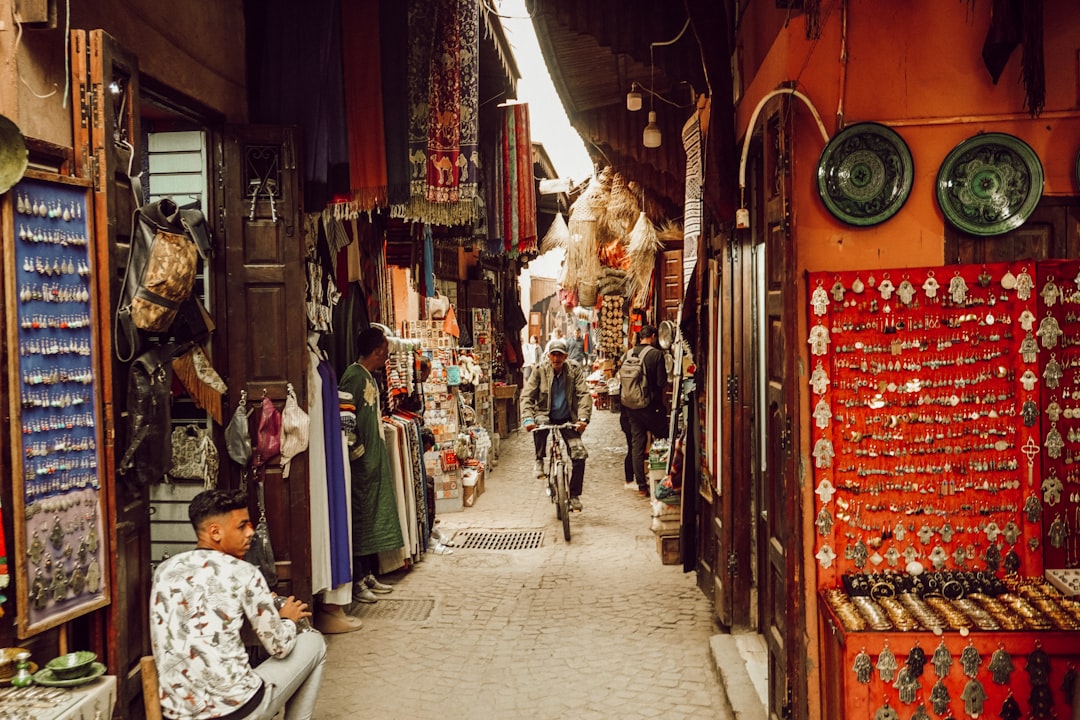
North of the square, the souks sprawl into a covered maze — Souk Semmarine for textiles and lanterns, the dyers’ and metalworkers’ lanes deeper in. Getting briefly lost is part of it; the medina is small enough that any northbound alley returns you toward the square. The medina also holds Marrakech’s headline monuments, all within walking distance:
- Bahia Palace — a ~2-hectare, ~150-room palace built between the 1860s and 1900 by grand viziers Si Musa and his son Ba Ahmed, known for its painted cedar ceilings and tiled courtyards. It reopened in October 2023 after repairs from the September 2023 earthquake. Entry ~100 MAD.
- Saadian Tombs — a 16th-century royal necropolis (1557–1603) sealed for centuries and rediscovered in 1917. It holds 56 marble tombstones plus around a hundred tiled graves, and the dazzling Chamber of Twelve Columns. Entry ~100 MAD.
- Ben Youssef Madrasa — once the largest Quranic college in the Maghreb, completed in 1564–65 and home to around 800 students in 130 dorm rooms. It reopened in April 2022 after restoration and is the medina’s finest example of zellij and carved plaster. Entry ~100 MAD.
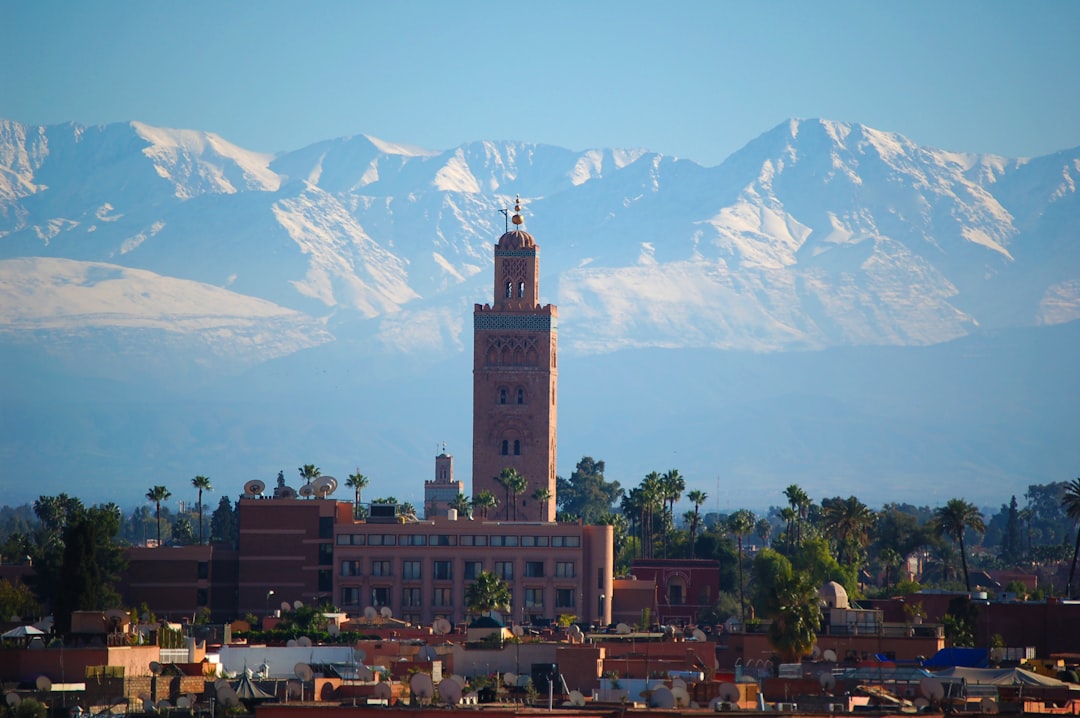
- Koutoubia Mosque — Marrakech’s landmark, founded in 1147 by the Almohad caliph Abd al-Mu’min. Its 77-metre minaret inspired the Giralda of Seville and the Hassan Tower of Rabat. Non-Muslims can’t enter the prayer hall, but the exterior and gardens are free and floodlit at night.
Jardin Majorelle, the YSL Museum & Marrakech’s gardens
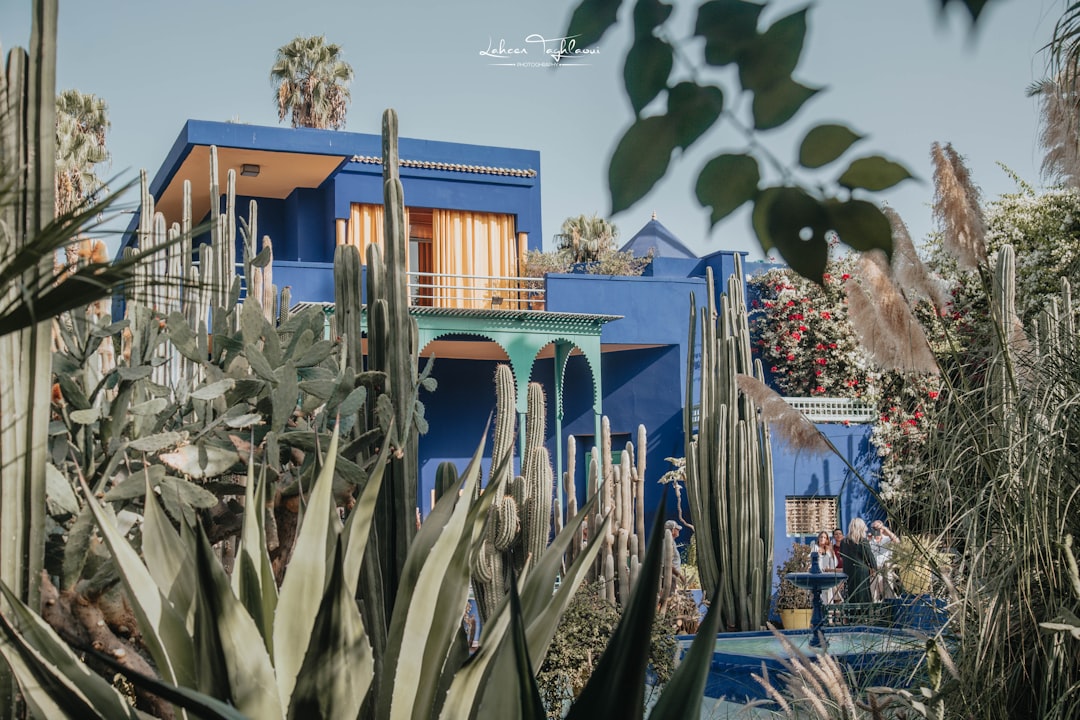
A short taxi from the medina in Guéliz, the Jardin Majorelle is the cobalt-blue garden created by painter Jacques Majorelle and later saved by Yves Saint Laurent and Pierre Bergé. It’s open daily 08:00–18:30 (last entry 18:00); garden entry is ~190 MAD, with the on-site Berber Museum and the adjacent Yves Saint Laurent Museum (~140 MAD) sold separately or combined.
Two other gardens earn their place. Le Jardin Secret, a restored riad garden on Rue Mouassine inside the medina, costs ~80 MAD and has a tower you can climb for medina rooftops. The Menara Gardens, a 12th-century Almohad olive grove with a pavilion and reflecting pool against the Atlas backdrop, are free to walk and a calm break from the souks.
Free things to do in Marrakech
You can fill a full day in Marrakech without paying a single entry fee:
- Wander Jemaa el-Fna at dusk — the whole spectacle is free; you only pay if you eat.
- Photograph the Koutoubia minaret and its gardens, floodlit after dark.
- Get lost in the souks — browsing costs nothing, and the people-watching is half the point.
- Stroll the Menara Gardens olive grove for the classic Atlas-and-pavilion view.
- Watch sunset from a rooftop café over the square — for the price of a 15–20 MAD mint tea.
- Walk the ramparts near Bab Agnaou, the medina’s finest 12th-century Almohad gate.
These free picks are also the most photogenic things in the city — which is why “free things to do in Marrakech” is one of its most-searched questions.
Things to do in Marrakech at night
Marrakech after dark isn’t about bars — it’s food, music and rooftops. The classic evening is dinner at the Jemaa el-Fna food stalls followed by mint tea from a rooftop terrace over the square’s smoke and lanterns. For something staged, Chez Ali runs a fantasia dinner show with horsemen on the city’s edge, and several riads host Gnaoua music nights. A late hammam is the most relaxing finish. Licensed nightlife clusters in Guéliz and Hivernage rather than the medina, which goes quiet by 11pm.
Marrakech attractions at a glance
Use this to slot the main points of interest into a two- or three-day plan. Prices are approximate 2026 figures in MAD (~10 MAD per US dollar) and are paid in cash at the gate unless noted.
| Sight | Area | Entry (MAD) | Time needed |
|---|---|---|---|
| Jemaa el-Fna | Medina | Free | 1–2 hrs (evening) |
| The souks | Medina | Free | 2–3 hrs |
| Koutoubia Mosque (exterior) | Medina | Free | 30 min |
| Bahia Palace | Medina | ~100 | 1 hr |
| Saadian Tombs | Kasbah | ~100 | 45 min |
| Ben Youssef Madrasa | Medina | ~100 | 1 hr |
| Le Jardin Secret | Medina | ~80 | 45 min |
| Menara Gardens | Hivernage | Free | 1 hr |
| Jardin Majorelle | Guéliz | ~190 | 1–1.5 hrs |
| YSL Museum | Guéliz | ~140 | 1 hr |
| Traditional hammam | Citywide | 150–600 | 1–2 hrs |
A traditional hammam — the experience to book
A hammam (steam bath and scrub) is the one Marrakech experience that isn’t a sight — it’s a ritual, and the best reset after a day on your feet in the souks. Public neighborhood hammams cost as little as 20 MAD but expect you to know the routine; riad and spa hammams run 150–600 MAD and include the gommage (black-soap scrub), rinse and often an argan-oil massage. For what to expect, etiquette, and how to pick a good one, see our Moroccan hammam guide.
Day trips from Marrakech
When you’ve done the medina, Marrakech is also Morocco’s best day-trip base. The High Atlas villages around Imlil are 90 minutes away; the Ourika Valley waterfalls and the Agafay stone desert are closer still; Essaouira’s Atlantic ramparts are a 2.5-hour drive. The big one — an overnight to the Sahara dunes — needs more than a day done properly. See our day trips from Marrakech guide for the full menu, and the Marrakech Sahara desert tour breakdown for the desert.
How many days do you need, and is it safe?
Plan two to three days for Marrakech itself, then use it as a launchpad for the rest of Morocco. Three days covers the medina monuments, the gardens, a hammam and one day trip without rushing. Marrakech is broadly safe for tourists — the real friction is pressure-selling and touts, not violent crime — so read our honest is Marrakech safe? briefing first. To slot the city into a wider trip, our Morocco itinerary planner and 7-day Morocco itinerary show exactly where it fits.
In summary: the best things to do in Marrakech are the medina’s free square and souks, three ~100 MAD palace-and-tomb monuments, the Majorelle and YSL museums, and one good hammam — all walkable, all doable in two to three days, and all the foundation for a longer Morocco trip.
Frequently Asked Questions
Q: How many days do you need in Marrakech?
Two to three days is the sweet spot. Day one covers Jemaa el-Fna, the souks and Koutoubia; day two the Bahia Palace, Saadian Tombs and Ben Youssef Madrasa; day three the Jardin Majorelle, the YSL Museum and a hammam. A fourth day is better spent on a day trip into the Atlas or to the coast than on more medina.
Q: How much does it cost to see the main sights in Marrakech?
Most state monuments — Bahia Palace, the Saadian Tombs and Ben Youssef Madrasa — cost about 100 MAD each (~$10), paid in cash at the gate. The Jardin Majorelle is around 190 MAD and the YSL Museum around 140 MAD. Jemaa el-Fna, the souks, the Koutoubia exterior and the Menara Gardens are all free.
Q: What are the best free things to do in Marrakech?
Spend an evening in Jemaa el-Fna, photograph the 77-metre Koutoubia minaret, browse the souks, walk the 12th-century Menara olive grove, and watch sunset from a medina rooftop café for the price of a mint tea. Walking the ramparts near Bab Agnaou is another free highlight that most visitors miss.
Q: What should I do in Marrakech at night?
Eat at the Jemaa el-Fna food stalls, then take in the square from a rooftop terrace at sunset. For a staged evening, the Chez Ali fantasia dinner show or a riad Gnaoua music night both deliver. A late hammam is the most relaxing finish. Marrakech nightlife is food, music and rooftops far more than bars.
Q: Is Marrakech worth visiting?
Yes. The medina is a UNESCO World Heritage site, Jemaa el-Fna is a UNESCO Masterpiece of Oral Heritage, and the combination of palaces, gardens, souks and street food makes Marrakech Morocco’s most rewarding short-trip city. The main downside is persistent pressure-selling in tourist areas — manageable with a firm, polite approach.

Sources cited in this guide
- UNESCO — Cultural Space of Jemaa el-Fna Square — Masterpiece of the Oral and Intangible Heritage of Humanity (2001) — ich.unesco.org
- UNESCO World Heritage Centre — Medina of Marrakech — inscribed 1985 — whc.unesco.org
- Jardin Majorelle (official) — hours, ticketing, Berber Museum & YSL Museum — jardinmajorelle.com
- Musée Yves Saint Laurent Marrakech (official) — visitor information — museeyslmarrakech.com
- Office National Marocain du Tourisme (ONMT) — Marrakech visitor and monument information — visitmorocco.com
Continue your Morocco prep
- Is Marrakech Safe? — the honest first-timer’s safety briefing for the city.
- Day Trips from Marrakech — Atlas villages, Ourika, Agafay and Essaouira.
- Moroccan Hammam Guide — what to expect and how to book a good one.
- Marrakech Sahara Desert Tour — the overnight dune trip done right.
- Morocco Itinerary Planner — where Marrakech fits in 5, 7, 10 or 14 days.
- 7-Day Morocco Itinerary — the classic loop that starts in Marrakech.
- Accommodation in Morocco — riads vs hotels, and where to stay in the medina.
- Moroccan Food Guide — what to order at the Jemaa el-Fna stalls and beyond.
- Moroccan Culture & Customs — etiquette that decides how locals treat you.
- Best Time to Visit Morocco — month-by-month, including Marrakech’s brutal July–August.
- Morocco Airports & Flights — flying into Marrakech Menara (RAK).
- Private Morocco Tours & Guides — if you’d rather have a local plan it all.