
If you visit Morocco for ten days and eat one new dish a day, you’ll still leave with half the menu untouched. This guide covers the 22 dishes worth ordering on a first trip, the etiquette that turns a meal into a connection, and the practical details — halal, alcohol, food safety, delivery apps — that travelers ask about most.
What is Moroccan food?
Moroccan cuisine sits at a four-way intersection. Berber roots gave it the tagine pot, slow stewing technique, and barley-and-fava staples. Arab traders brought saffron, cumin, ginger, and the spice routes that made Moroccan kitchens famous. The Moors of Andalusia, expelled from Spain in 1492, settled in cities like Fes and Tetouan, bringing olives, citrus, and the technique of layering sweet with savoury — the foundation of bastela. French Protectorate rule (1912–1956) added pastries, baguettes, café culture, and the structured three-course meal pattern that you still see in upscale Casablanca restaurants today.
The result is a cuisine that’s complex without being chaotic. UNESCO inscribed couscous on its list of intangible cultural heritage in 2020, jointly with Algeria, Tunisia, and Mauritania — recognition of how deeply tied the dish is to North African identity. Roughly 99% of Moroccans identify as Muslim, which shapes ingredient choices (halal everywhere by default, pork rare and openly labeled) but otherwise leaves the table open.
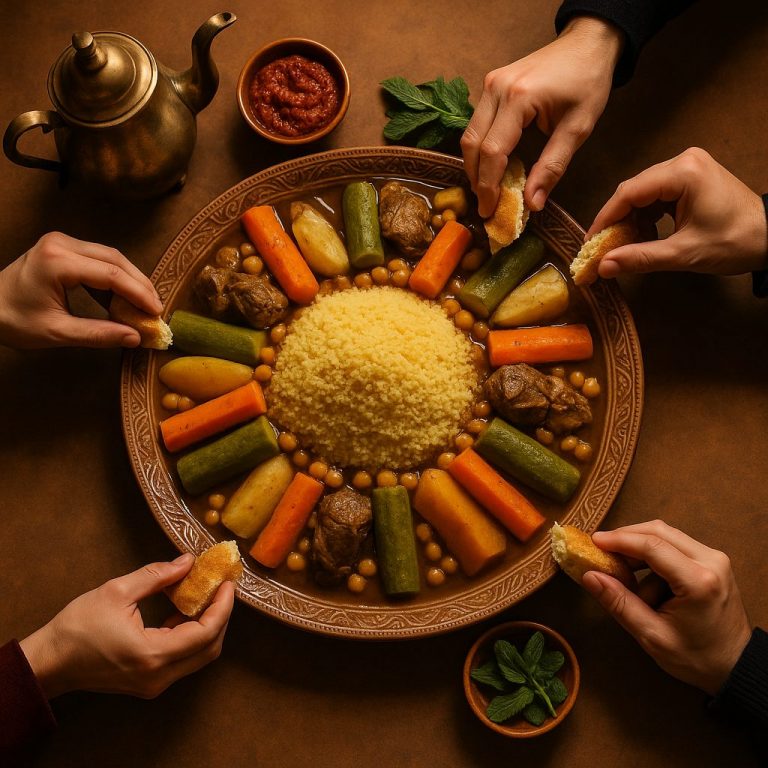
The 5 iconic Moroccan dishes you must try
These five appear on almost every menu in the country. If you order only these on your first trip, you’ve eaten well.
| Dish | What it is | Where to try it |
|---|---|---|
| Tagine | Slow-cooked clay-pot stew (lamb, chicken, fish, or vegetable) | Riad kitchens, traditional restaurants |
| Couscous | Steamed semolina with vegetables + meat broth, traditionally Friday lunch | Family homes, weekend buffets |
| Harira | Tomato-lentil-chickpea soup with cilantro + lemon | Ramadan iftar tables; daily in cafés |
| Bastela (Pastilla) | Sweet-savoury layered pie with pigeon or chicken, almonds, and cinnamon | Fes, weddings, ceremonial occasions |
| Bissara | Fava-bean soup with cumin, olive oil, and bread | Cheap breakfast spots, especially the north |
Beyond these five, look for mechoui (slow-roasted lamb), rfissa (chicken with shredded msemen flatbread), chebakia (honey-and-sesame pastry, central to Ramadan), and briouates (filo triangles with meat or almonds). Coastal cities — Essaouira, Agadir, El Jadida — add sardines, calamari, sea bream, and grilled-fish lunch spreads that rival anything in the south of France.
What is tagine, and how is it cooked?
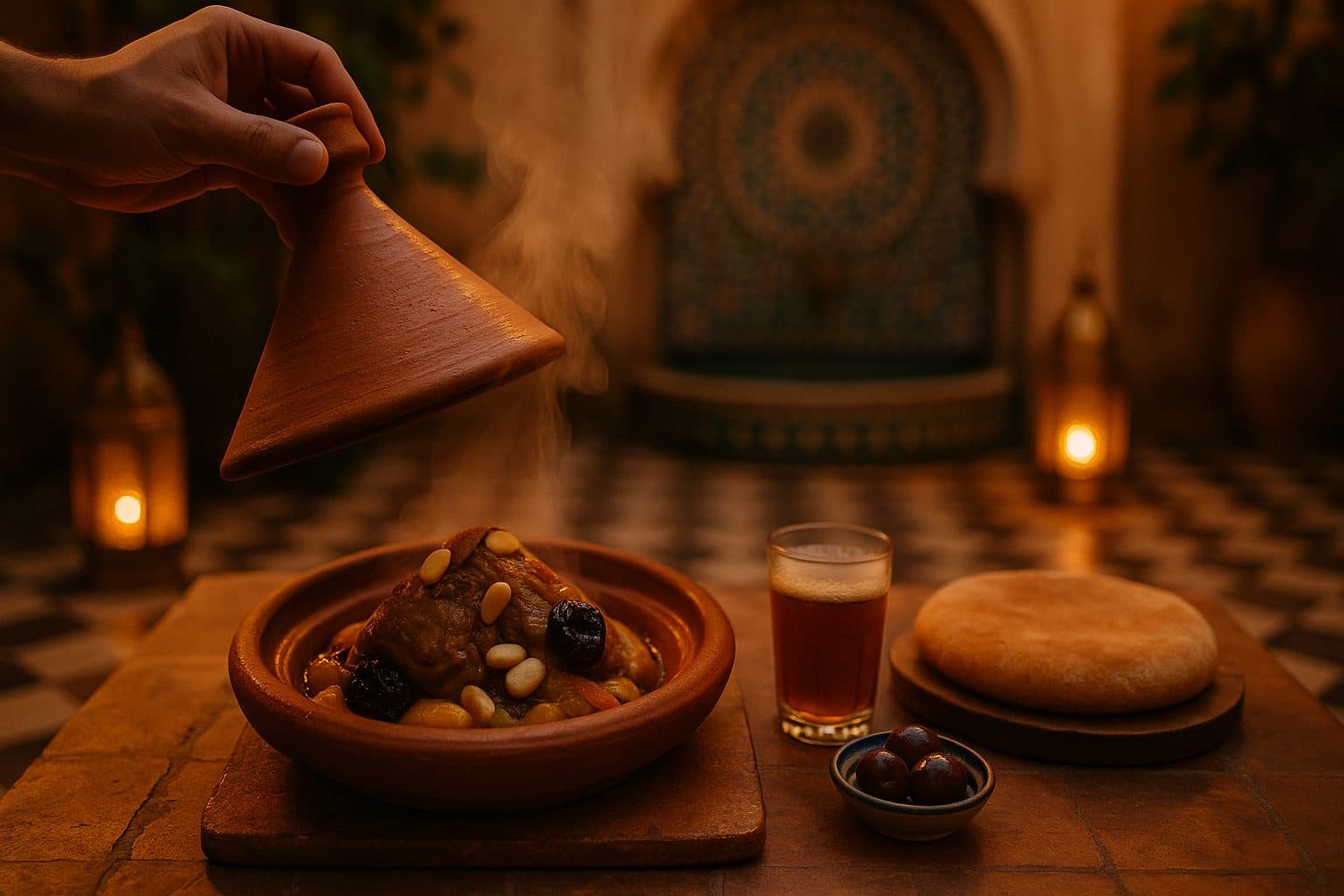
Tagine is two things at once: a dish and the clay-pot vessel that gives it the name. The pot has a wide circular base and a tall conical lid; steam rising during a 2-3 hour low simmer condenses on the cool lid and drips back down, basting the food and concentrating the flavour without losing moisture. No frying, no high heat — just patience.
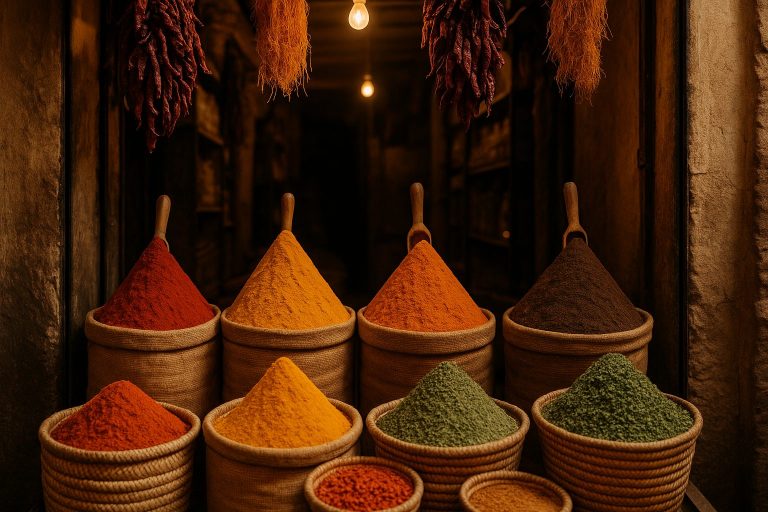
The classic combinations follow a pattern. Lamb tagine with prunes, almonds, and cinnamon is the wedding-banquet version. Chicken tagine with preserved lemon and green olives is the everyday Friday-night order. Fish tagine on the coast uses tomato, peppers, and a herb paste called chermoula. Vegetarian tagines lean on root vegetables, chickpeas, and ras el hanout — a spice blend that varies by spice merchant, often containing 20+ ingredients and considered a signature item passed down within shops.
“If you only order one tagine on a trip, make it the chicken with preserved lemon and olives. Every Moroccan grandmother makes it slightly differently, and that’s the whole point.” — Anass Aouni, Tangier
Is Moroccan food spicy?
No — Moroccan food is aromatic, not spicy. The cuisine leans heavily on warm spices — cumin, paprika, ginger, cinnamon, saffron, turmeric, ras el hanout — but rarely uses chili heat. Most tagines and couscous dishes will register as mild to medium on a Western palate.
Heat lives on the side: harissa, a North African chili paste (technically more Tunisian than Moroccan but widely served), and felfel (fresh hot peppers) appear as condiments at the table. You add them yourself. If you want a milder dish, just say “bla harra afak” (literally: “without hot, please”) when ordering — most restaurants in tourist hubs understand the phrase, and the kitchen will adjust.
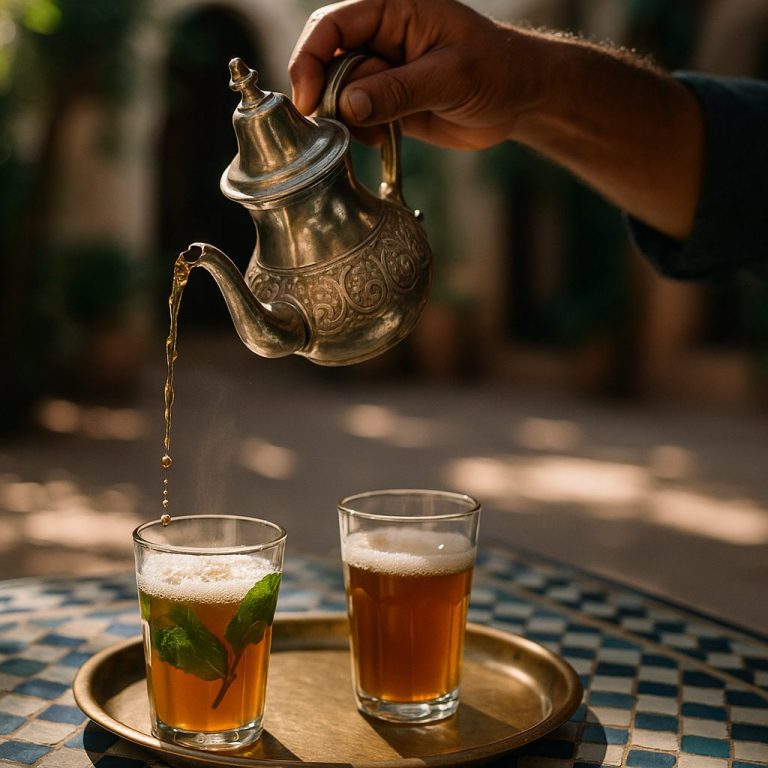
Why is mint tea served everywhere — and why you should accept it
Mint tea is the social glue of Moroccan life. It’s offered to visitors entering a home, to customers entering a shop, to travelers checking into a riad, and to anyone you sit down with for more than five minutes. The base is green gunpowder tea + fresh spearmint + significant sugar, brewed strong and poured from height to create a foam on top of the glass — the higher the pour, the more skilled the host.
The ceremony matters. Refusing tea outright is considered a social slight in most settings; if you can’t drink it, decline politely (“shukran, kafi” — “thank you, enough”) and explain why. Three-cup tradition exists in some families and the Sahara — the first cup is bitter as life, the second sweet as love, the third gentle as death. In tourist contexts, you’ll usually be served one or two.
In a shop or souk, accepting tea also signals you’re open to conversation, which often turns into negotiation. It is not a binding obligation to buy — but it’s a social opening you should be aware of before sitting down.
Is Moroccan food halal? Pork, alcohol, and what to expect
Yes, Moroccan food is overwhelmingly halal by default. Article 3 of the Constitution names Islam as the state religion, and roughly 99% of the population identifies as Muslim per HCP statistics, so meat sold in butchers and restaurants is slaughtered to halal standards as a matter of course. You don’t need to ask in most places.
Pork is rare and clearly labeled where it does appear — usually in licensed hotels with international clientele, French-style brasseries in Casablanca, or specific Spanish-style spots in Tangier. Outside those venues, expect zero.
Alcohol is more nuanced. The Quran discourages it, so traditional cafés, family restaurants, and most street food are alcohol-free. But Morocco produces wine commercially (Domaine Sahari, Volubilia, Médaillon) and beer (Casablanca, Flag, Mahou), and licensed hotels, upscale restaurants, and dedicated bars in tourist hubs serve it openly. Supermarkets like Carrefour and Acima sell alcohol to non-Muslims with ID. Outside those channels — and especially in smaller towns — you won’t find it for sale.
Camel meat is also halal and served at specialist restaurants in southern cities; locals say it tastes like a leaner, slightly sweeter lamb. It’s not standard tourist fare but worth trying in Marrakech or Erfoud.
Friday couscous, Ramadan iftar, and the rhythm of meals
Moroccan eating follows a weekly and seasonal rhythm. Friday lunch is couscous day in most family homes — a tradition tied to the weekly day of prayer, when families gather around one large platter after midday mosque. If a Moroccan colleague invites you for a Friday meal, this is what you’re being invited to.
During Ramadan (the dates rotate by ~10 days a year against the Western calendar), the daily rhythm inverts. Most restaurants close during daylight hours; cafés reopen 30 minutes before sunset for iftar — the breaking-fast meal, traditionally with dates, milk, harira soup, chebakia pastries, and fresh juice. Iftar in a Moroccan home is one of the warmest meal experiences in the country; many riads in Marrakech and Fes offer it as a paid experience for guests during Ramadan.
The main meal of an ordinary day is lunch (12:30–14:30), not dinner. Dinner is lighter — salad, soup, leftovers — except in restaurants that cater to tourist schedules.
Where to eat in Morocco — riad kitchens, souks, and delivery apps
You have four good options as a traveler:
1. Riad kitchens. The best Moroccan home cooking is in riads — restored traditional houses that operate as boutique hotels with their own kitchens. A 4-course dinner cooked by the in-house cook (typically a Moroccan woman, often the owner’s family) costs 200-350 MAD ($20-35) and is the closest you’ll get to family-style cooking without a personal invitation. Book a day ahead.
2. Traditional restaurants and dar dining. Restaurants styled like a traditional home (dar means house) — Dar Yacout in Marrakech, La Maison Arabe, Dar Roumana in Fes. Multi-course fixed menus, mid-to-high price range, full mint-tea ceremony.
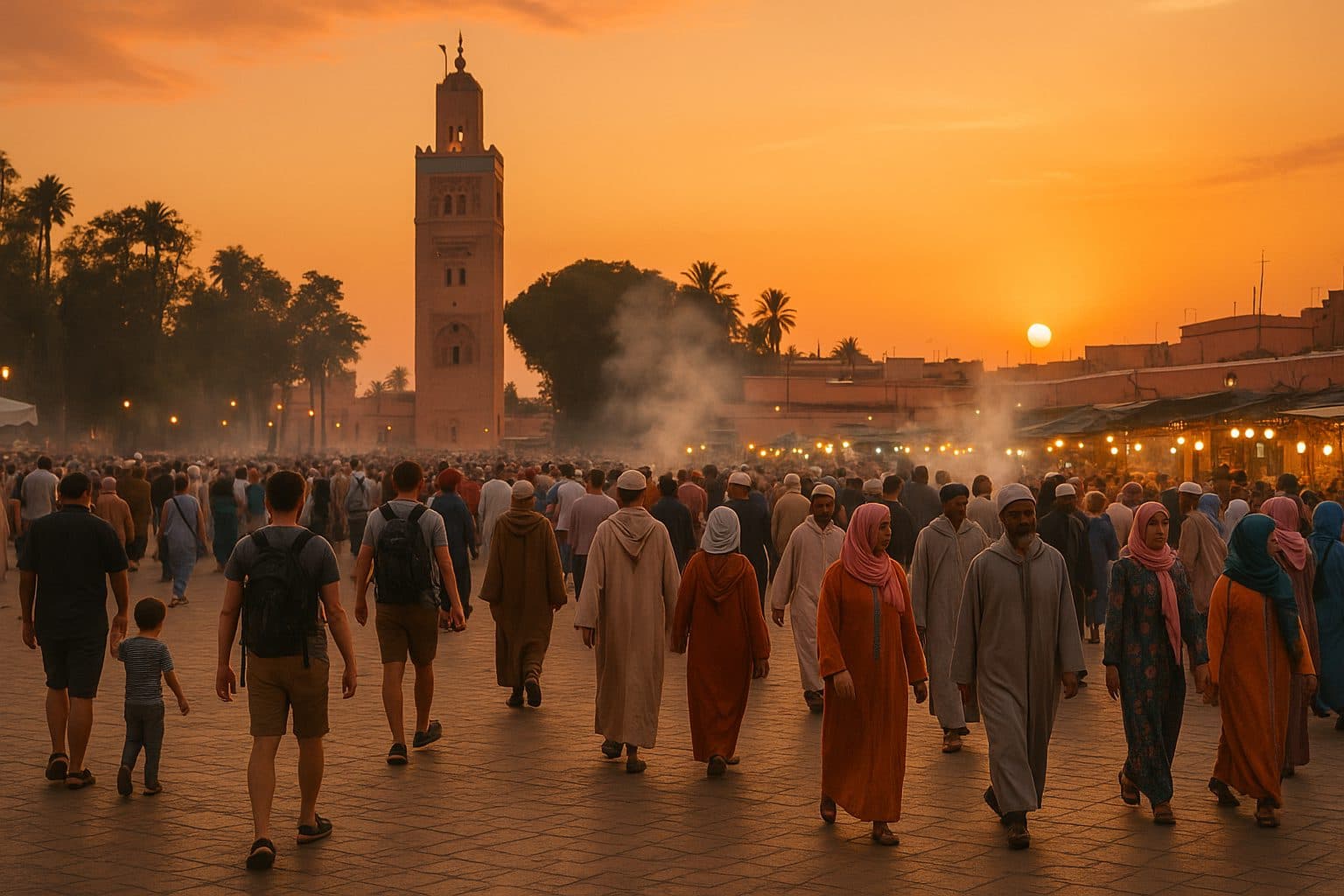
3. Street food and souk stalls. Jemaa el-Fna in Marrakech, the souks of Fes, the medina of Tangier — dinner stalls open after sunset with grilled meat, harira soup, fresh bread, and Moroccan salads at 30-80 MAD per plate ($3-8). Pick busy stalls; the locals know which kitchen is fresh today.
4. Delivery apps. Glovo, Careem Food, Kool, and Talabat all work in Morocco’s major cities (Casablanca, Marrakech, Rabat, Tangier, Agadir, Fes). Useful for late nights, hotel breakfasts, or when you want to test a dish you’ve heard about. Need a specific riad recommendation in your city? Chat with Anass on WhatsApp → — we recommend by neighborhood and budget.
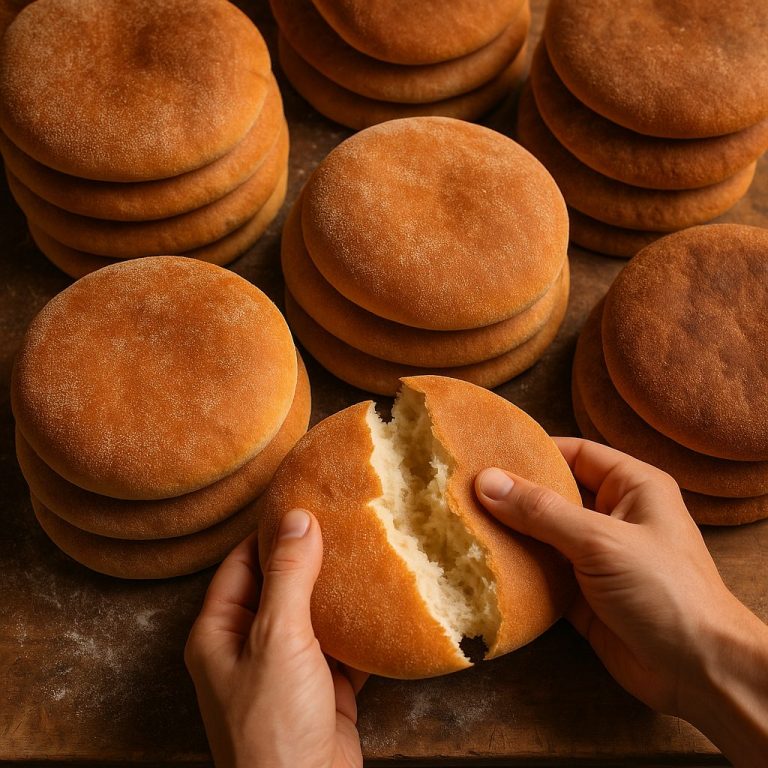
Moroccan eating etiquette: right hand, sharing, bread
Three rules cover 90% of dining situations.
Eat with the right hand. The left hand is traditionally considered impure (it’s the hand used for hygiene tasks). Even left-handed Moroccans default to the right at communal platters. Bread and finger food go to the mouth with the right; cutlery is fine for soup or rice with either hand.
Respect the bread. Khobz — round flat bread — is at every meal and is treated with quiet reverence. Don’t tear it into tiny pieces, don’t drop it on the floor, don’t throw it. If you have leftover bread, set it aside on the table rather than discarding it. Many families even kiss bread before eating it on religious occasions.
Share the platter. Tagine and couscous are served from one large central dish. The polite move is to eat from the section directly in front of you — don’t reach across, don’t dig into the middle (where the meat is, often saved for guests by the host), and let the host serve you. If invited to someone’s home, leave a small amount of food on the platter at the end as a sign you’ve had enough.
“I tell every guest the same thing on day one: right hand, no phone at the table, and accept the tea. Those three things turn you from a tourist into a guest.” — Anass Aouni
What to avoid: using your phone at the table is considered rude in most family settings — meals are for conversation. Eructing (burping) at the end of a meal is neither obligatory nor offensive, despite what some Western travel guides claim. Finally, in tourist hubs, don’t haggle hard over food — restaurants have set prices, and aggressive bargaining at a stall over a 30-MAD plate reads as petty.
Frequently asked questions
What is Moroccan food?
Moroccan food is a layered cuisine combining Berber slow-cooking, Arab spice routes, Andalusian sweet-savoury layering, and French Protectorate-era pastries. Built around tagines, couscous, mint tea, and aromatic spices like ras el hanout, cumin, and saffron. Aromatic rather than spicy, predominantly halal (99% Muslim country), and traditionally eaten with the right hand from shared platters.
What are Moroccan foods?
The core list: tagine (slow-cooked stew in a clay pot), couscous (steamed semolina with vegetables, traditionally Friday lunch), harira (lentil-chickpea soup, central to Ramadan iftar), bastela (sweet-savoury pigeon pie), bissara (fava bean soup), mechoui (slow-roasted lamb), and rfissa (chicken with msemen flatbread). Side dishes include Moroccan salads, olives, and khobz bread. Sweets: chebakia, briouates, kaab el ghazal.
Is Moroccan food spicy?
No — Moroccan food is aromatic, not spicy. The cuisine relies on warm spices (cumin, paprika, ginger, cinnamon, saffron) without chili heat. Most tagines and couscous register as mild on a Western palate. Heat lives on the side via harissa paste or fresh chilies; you add them yourself. Say “bla harra afak” — without hot, please — if you want a dish milder.
Is Moroccan food halal?
Yes — overwhelmingly so. Morocco is ~99% Muslim and meat is halal by default in butchers and restaurants. Pork is rare and clearly labeled where it appears (some hotels, French brasseries). Alcohol is sold in licensed venues and supermarkets but isn’t standard at family-style restaurants.
Is Moroccan food Mediterranean?
Partially. Moroccan cuisine shares the Mediterranean basin’s reliance on olive oil, citrus, tomatoes, and fresh herbs, and coastal cities lean heavily on fish and seafood. But it’s distinct from Italian or Greek “Mediterranean” cooking in its use of spice blends (ras el hanout), preserved lemons, dried fruits in savoury dishes, and the tagine slow-cook technique. Morocco is part of the Mediterranean culinary world but anchored in North African and Arab-Andalusian traditions.
Sources
- UNESCO — Couscous inscribed on the Representative List of Intangible Cultural Heritage of Humanity (2020), jointly with Algeria, Mauritania, and Tunisia
- HCP (Haut-Commissariat au Plan) — Religion and population statistics for Morocco (hcp.ma)
- Constitution of the Kingdom of Morocco (2011), Article 3 — Islam as state religion
- Glovo, Careem Food, Kool, Talabat — delivery app coverage in Morocco’s major cities (glovoapp.com)
- Ministry of Tourism Morocco — gastronomic tourism overview