
If you’re staring at a map of Morocco with 5 to 14 days to play with, the question isn’t where to go. It’s what to cut. The country is 710,000 km² wide, has four climate zones, three official languages and seven UNESCO sites — and the highways between them are not motorway-fast. This is the planning hub I built across more than 2,000 trips: how to decide your trip length, the routing logic that works, the cost framework, and the six mistakes first-timers make. Once you’ve picked a duration, jump into the dedicated day-by-day guide for that length — linked in each section below.
How many days do you need in Morocco?
The honest minimum is 7 days. Anything less and you’re either choosing between the imperial cities and the desert (you can’t have both) or you’re spending two full days driving for one sunset over a dune. The sweet spot for a first Morocco trip itinerary is 10 days — enough to add Chefchaouen or Essaouira to the classic loop without the trip feeling rushed. 14 days is the deep-dive option: same backbone, but with a 2–3 day Atlas trek or a longer southern circuit. Beyond two weeks, the marginal value drops — by Day 16 most guests are looking forward to going home.
The single biggest variable isn’t your tolerance for long days. It’s distance between sights. Marrakech to Merzouga (the Sahara overnight) is 560 km — about 9 hours on the road even on the new toll-aided route, because the Tizi n’Tichka pass through the High Atlas tops out at 2,260 metres and you can’t move fast on switchbacks. Marrakech to Fes is 530 km, 7 hours. Casablanca to Chefchaouen is 370 km, 5 hours. The road network is good; the topography just refuses to cooperate.
The “two-region” rule — why you shouldn’t try to see all of Morocco in one trip
Morocco roughly splits into two travel regions, and the most common mistake first-timers make is treating it as one. The south — Marrakech, the High Atlas, the Sahara, Aït Benhaddou, Essaouira, Agadir — is the postcard country, the one you’ve seen in films. The north — Tangier, Chefchaouen, Tetouan, Fes, Meknes — is older, cooler in summer, more Andalusian-influenced, and almost as visually rich. Both deserve a trip.
If you have 7 days or less, pick one. The 7-day “classic loop” below crosses south-to-north (Marrakech → Sahara → Fes) and works because Fes is the one northern city that fits without doubling back. Adding Tangier, Chefchaouen, or the Mediterranean coast to a 7-day trip forces a brutal Day 6 drive that nobody enjoys.
If you have 10–14 days, the rule loosens: you can add a northern leg (Fes → Chefchaouen → Tangier) without sacrificing the desert. The 10- and 14-day plans below do exactly this.
“Most countries reward ‘I saw everything.’ Morocco doesn’t. The slow afternoons in a riad courtyard, the second tea with a shopkeeper, the wrong turn that lands you in a neighbourhood you weren’t planning to find — that’s the trip you’ll remember.” — Anass Aouni, Tangier
Pick your Morocco itinerary length — at a glance
Four duration options work for most first-time travellers. The right one depends on whether you want the desert overnight, how many regions you’re willing to traverse, and how many days you’re prepared to spend in a car.
| Duration | Regions covered | Includes Sahara? | Pace | Mid-range cost (2 ppl, ex-flights) | Full day-by-day |
|---|---|---|---|---|---|
| 5 days | Marrakech-only (+1 day trip) | ❌ | Slow | $1,200–1,800 | 5-day Morocco itinerary → |
| 7 days | Marrakech + Atlas + Sahara + Fes | ✅ | Brisk | $2,400–3,500 | 7-day Morocco itinerary → |
| 10 days | 7-day loop + Chefchaouen or coast | ✅ | Sweet spot | $3,300–4,800 | 10-day Morocco itinerary → |
| 14 days | South + north + Atlas trek or coast | ✅ | Slow | $4,500–7,000 | 14-day Morocco itinerary → |
The rest of this hub gives you the planning principles — which duration, when to go, how to budget, what to avoid. The day-by-day routing for each length lives in the dedicated guide linked above.
Morocco itinerary: 5 days
Marrakech-only with one day-trip add-on. Five days is the shortest trip I’ll plan for a first-timer, and only if Marrakech is the focus. The round trip to the Sahara alone eats three of your five days, so a 5-day plan skips the desert entirely and goes deep on Marrakech itself: medina circuit, an Atlas or Essaouira day-trip, the Majorelle Garden + YSL Museum, an evening hammam, and a cooking class. Fly into RAK directly — avoid the cheaper Casablanca fare for a 5-day trip because the train transfer eats half a day each way.
If “I’ve been to Morocco” must include camels and dunes, 5 days won’t work — add at least two more.
→ Full day-by-day routing: 5-day Morocco itinerary guide
Morocco itinerary: 7 days — the classic loop
The canonical first-time Morocco trip. Land Marrakech (RAK), spend 2 days in the medina + an Atlas day-trip, then drive south through Aït Benhaddou to overnight in a Sahara camp at Merzouga, and finish in Fes with a flight home from FEZ. The reason this 7-day route works is one-way logic: you land in Marrakech, fly out of Fes, and never retrace a kilometre. Most first-timers don’t realise this is possible — they assume they have to return to Marrakech.
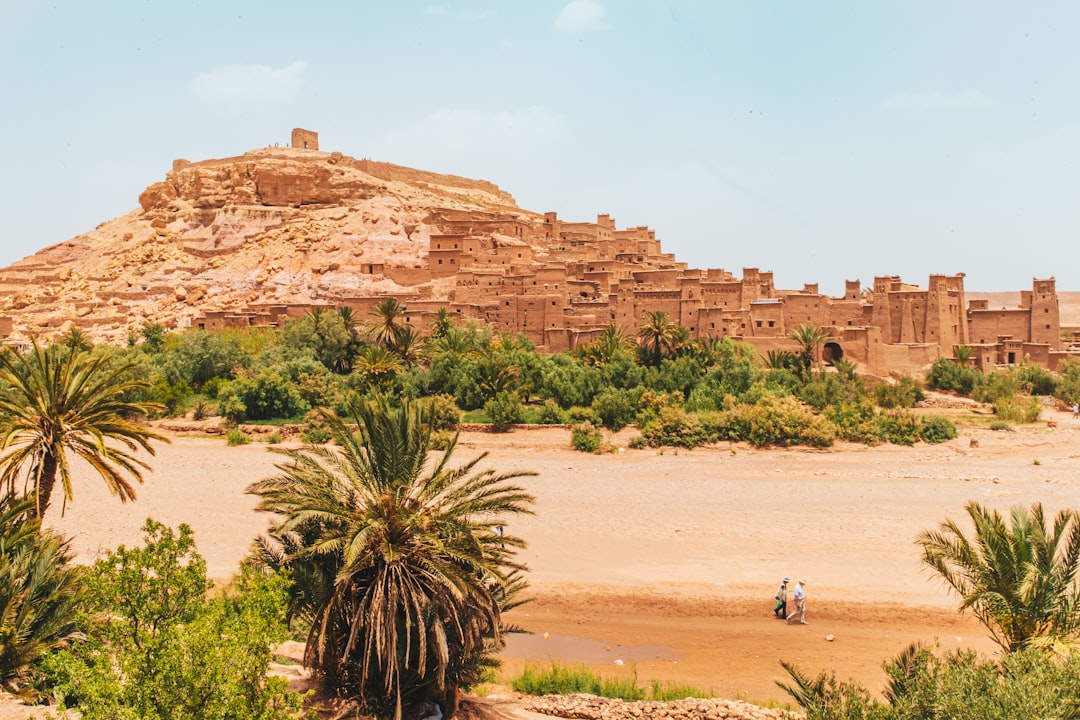
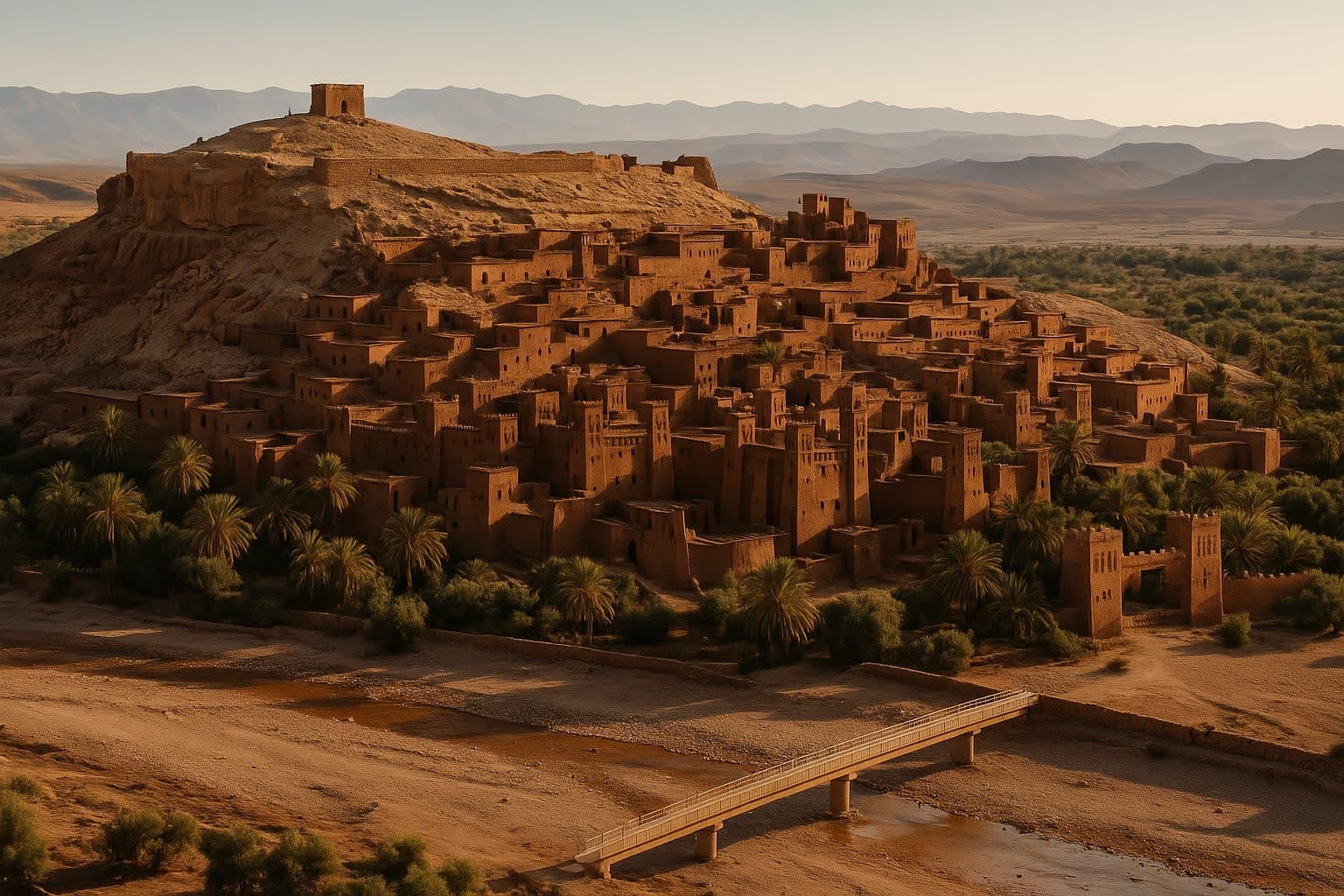
Aït Benhaddou has been on the UNESCO World Heritage list since 1987 — it’s also the Gladiator, Game of Thrones and Atlas Mountains backdrop you’ve seen on screen. For a wider tour of the country’s scenic stops, see our Morocco beauty spots guide.
→ Full day-by-day routing: 7-day Morocco itinerary guide
Morocco itinerary: 10 days — the sweet spot
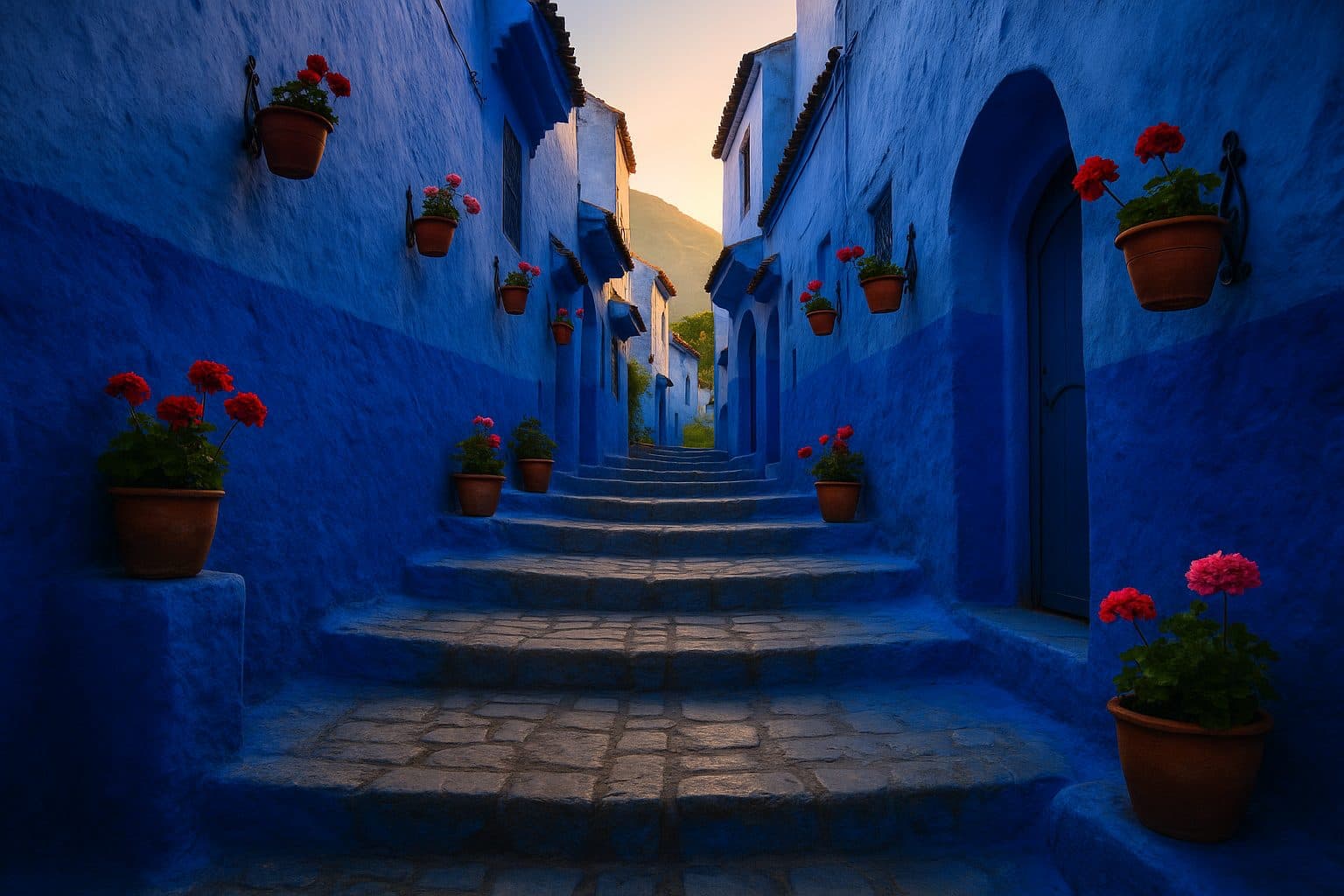
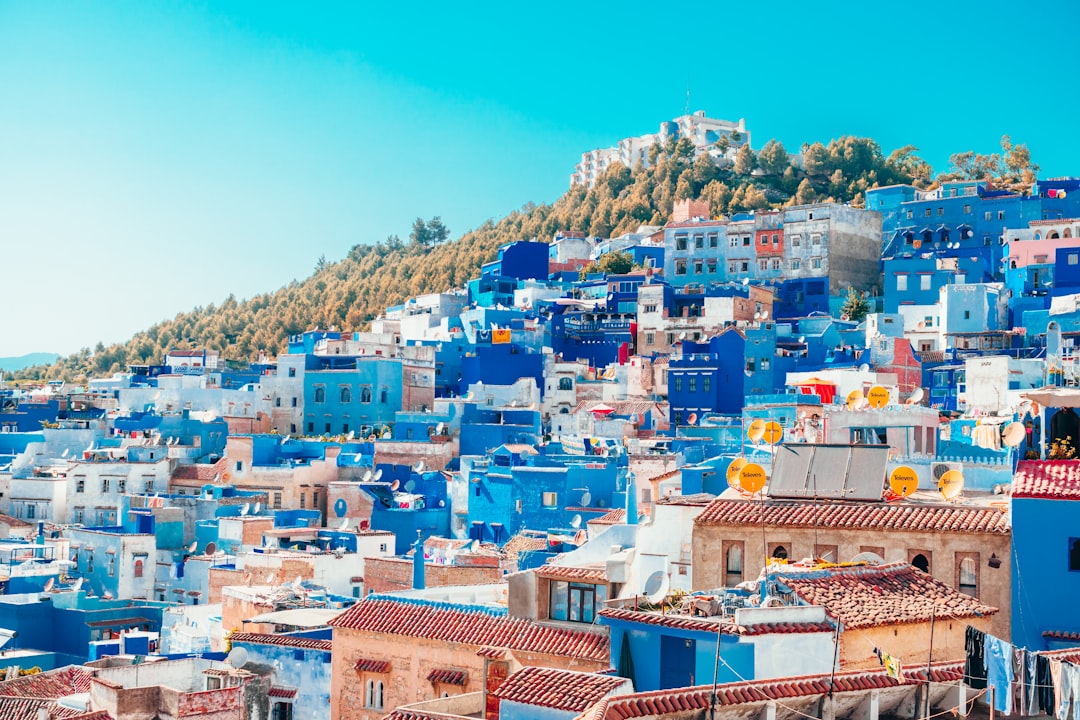
Ten days is what most experienced guests tell me they wish they’d booked. You keep the entire 7-day backbone (Marrakech → Aït Benhaddou → Sahara → Fes), add Chefchaouen in the Rif Mountains for 2 days, and finish at Tangier (TNG) with a cheap direct flight to Europe. The 10-day option works because Chefchaouen is genuinely walkable — zero traffic stress, medina fits in a 2 km radius — and Tangier opens cheap European exits (Ryanair Madrid, Iberia Barcelona, RAM Paris/Brussels) so you finish in the north without backtracking south.
→ Full day-by-day routing: 10-day Morocco itinerary guide
Morocco itinerary: 14 days — the full sweep
Two weeks lets you finally slow down. Two main expansion options on the 10-day base: add a deeper southern loop (Skoura palm oasis + Taroudant + Anti-Atlas) for desert-and-mountain depth, OR add a full northern circuit (Tangier + Asilah on the Atlantic + Tetouan) for coast and Andalusian-influenced cities. My default 14-day plan does both, with a mid-trip rest day in Fes and an Al Boraq high-speed train segment from Tangier to Casablanca on Day 13 (Africa’s first high-speed line, 2h10 at 320 km/h, opened 2018 by ONCF).
Beyond 14 days the marginal value drops fast — by Day 16 most guests are looking forward to going home.
→ Full day-by-day routing: 14-day Morocco itinerary guide
When to plan your Morocco itinerary — month, weather, festivals
Best windows: March–May and September–October. Mild days in the cities, cool nights in the desert, the Atlas peaks still snow-capped (spring) or just clearing (autumn). Avoid Marrakech, Fes and the Sahara in July–August — interior daytime highs above 40 °C make the medinas suffocating.
The full month-by-month breakdown — climate zones, regional variation, Ramadan dates — lives in our dedicated best time to visit Morocco guide. For this itinerary, the key seasonal calls are:
- April / May and October: ideal for all four itineraries above
- June: coastal additions (Essaouira, Tangier) work but interior days are warm
- July–August: 5-day Marrakech-only is brutal; switch to coastal-led routes
- November–February: desert camps need a 0 °C sleeping bag; Atlas trekking limited; Oukaïmeden ski runs December–March
The 6 routing mistakes that ruin Morocco trips
- Trying to see everything in 7 days. The 7-day classic loop already cuts Tangier, Chefchaouen, Essaouira, the Atlantic coast and the north. If you can’t accept that, you need 10 days minimum. Half a trip well-lived beats a full trip in cars.
- Casablanca as the first stop. Most travelers fly into CMN because it’s the cheapest fare, then “spend two days” in Casablanca. Casablanca is a working business city — Hassan II Mosque is the one must-see, and that’s a half-day, not two. Train directly to Marrakech or Rabat on landing.
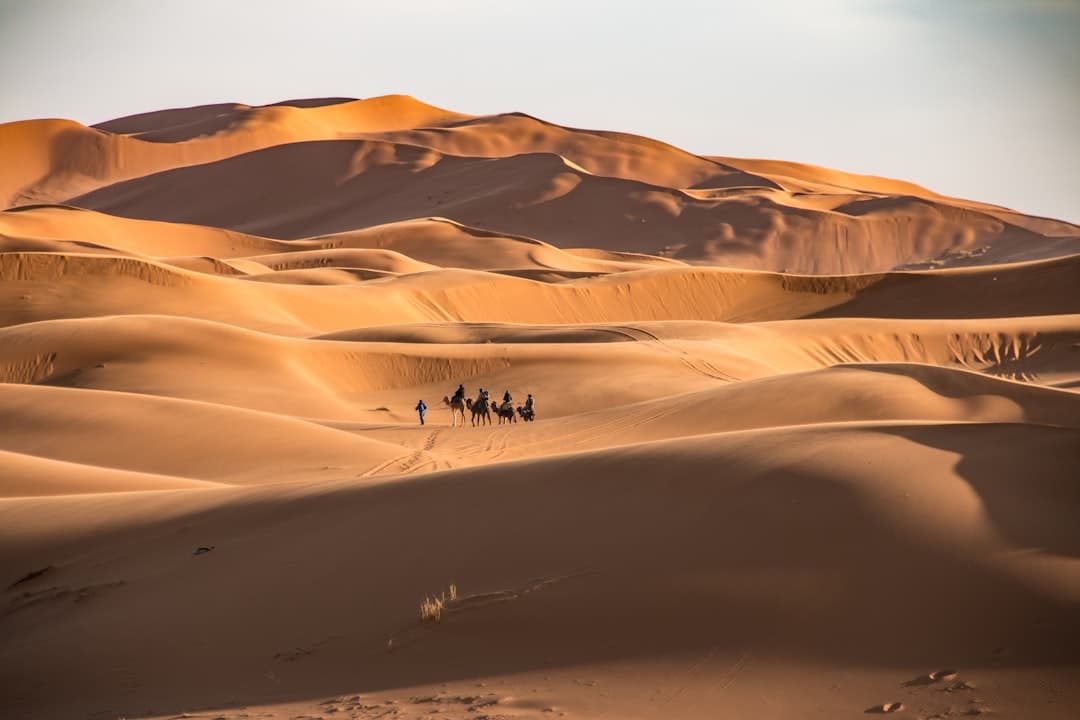
- Skipping the overnight desert camp. Day-trips to “the desert” from Marrakech sell you a 4-hour drive to a stone-and-scrub area near Zagora. The actual sand-dune Sahara (Erg Chebbi at Merzouga or Erg Chigaga via M’Hamid) requires the overnight. It’s the single best decision in any Morocco itinerary.
- Self-driving the Tizi n’Tichka in winter. The pass tops out at 2,260 m and gets occasional snow closures. Hire a driver for any Marrakech → Ouarzazate leg between December and February — costs ~$120 for the whole day, removes the stress entirely. See Is Morocco safe to drive? for the broader self-driving context.
- Booking riads in Ville Nouvelle. Marrakech and Fes “new town” hotels look modern and convenient — they’re also a 20-minute taxi from everything you came to see. Stay inside the medina, accept that your room is small and the lane is narrow, and walk to dinner.
- Treating Day 6 (the Sahara → Fes drive) as a bonus day. It’s not. It’s a 9-hour driving day. Plan an early start, a light lunch, and a Fes riad with a private patio for the recovery evening. Trying to “also see Meknes on the way” is the most common 7-day plan-breaker.
“If you only learn one rule from this guide, make it this: book one fewer city than you think you can fit. The trip you’ll remember is in the time between the sights, not in the count of them.” — Anass Aouni
How much will a Morocco trip cost?
For a mid-range traveler outside flights, a realistic daily budget runs $80–150/day, with most going to accommodation and inter-city transport. The cluster breakdown:
| Category | Mid-range / day | Notes |
|---|---|---|
| Accommodation (riad) | $70–150 | See accommodation guide — luxury runs $300+ |
| Food | $15–30 | Tagine + mint tea: 50–80 MAD (~$5–8). See food guide |
| Inter-city transport | $15–40 | Driver $120/day for groups of 2-4; Al Boraq train Casablanca → Marrakech ~$25; petit-taxi in-city base 7 MAD daytime |
| Guides + activities | $30–80 | Half-day Fes guide ~$50, desert camp overnight ~$80–150/person all-in, hammam $20–80 |
| Tips + sundries | $10–20 | Modest tipping culture — see our Moroccan culture & customs guide |
Total for the 7-day classic loop (mid-range, 2 people): ~$2,400–3,500 excluding flights — a fully-bookable amount via Booking + private driver, or a starting point for a custom-planned trip.
A luxury Morocco itinerary — Royal Mansour or La Mamounia in Marrakech, Riad Fes or Karawan in Fes, Erg Chigaga Luxury Desert Camp for the Sahara overnight — pushes that number above $6,000 per person fast, before flights. Budget hostel routes pull it below $1,200 — though you’ll lose the “stayed in a real riad” memory that most guests treat as half the trip.
Need a precise number for your dates and group size? Message Anass on WhatsApp →
Recommended action — pick your duration, lock the route
Before you book a single hotel, do this in order:
- Lock your duration honestly. Look at your actual leave days minus travel days. If the answer is 5 or 6 nights on the ground, plan the 5-day Marrakech-only — don’t force the desert.
- Decide your route shape. 7-day classic loop is the default. 10-day adds Chefchaouen. 14-day adds Tangier + a rest day.
- Book flights into one airport and out of another. RAK in, FEZ or TNG out. Saves a day; opens the loop.
- Pick your month from the weather guide — and book riads 3–4 months ahead if traveling in April–May or October.
- Pre-book the Sahara overnight (Day 5 above) — desert camps fill up; the good ones (Ali & Sara, Erg Chigaga Luxury Desert Camp) book 8 weeks ahead in peak season.
- Hire a driver for Marrakech → Sahara → Fes. ~$280–360 for three days, two drivers, fuel included. Eliminates the self-drive risk on Tizi n’Tichka and saves you a rental return.
If any of that feels like work, that’s exactly what we do for guests — GuideMe’s private Morocco trips hand-build a route around your dates with a single WhatsApp contact for the whole trip.
Frequently asked questions
How long should a Morocco itinerary be?
The minimum honest length is 7 days — anything shorter means choosing between the imperial cities and the desert. 10 days is the sweet spot, adding Chefchaouen or the coast without rushing. 14 days is for travellers who want to slow down, add an Atlas trek, or split the trip across north and south. Anything beyond two weeks runs into diminishing returns.
How many days are enough to visit Morocco?
For a first trip with both Marrakech and the Sahara, plan at least 7 days. To add Fes properly, you need the full 7. To add Chefchaouen or Essaouira, plan 10 days. To add Tangier and the northern Mediterranean coast, plan 14 days. Five days is enough for Marrakech-only; three days is enough for a long weekend in Marrakech, but not “Morocco.”
Is 3 days in Marrakech too much?
No — three days is the right amount for first-time Marrakech. Day 1 covers the medina circuit (Bahia, Saadian, Ben Youssef + souks), Day 2 covers the Atlas day-trip from Imlil, Day 3 covers Majorelle + the Yves Saint Laurent Museum + a hammam. Adding a fourth day means you’re either deep in cooking classes or burning a day for the desert overnight.
Which is nicer, Marrakech or Casablanca?
For tourists, Marrakech wins by a wide margin. Marrakech is the postcard medina with the Atlas backdrop, Jemaa el-Fna at sunset, and the city’s entire economy built around making visitors feel welcome. Casablanca is Morocco’s commercial capital — useful for the Hassan II Mosque, the Anfa beach drive, and an international airport, but not a destination in itself. If you have to choose: Marrakech.
What is the best month to visit Morocco?
April is the single best month for most travellers — Marrakech averages 24 °C daytime, Atlas peaks are still snow-capped, the desert is comfortable, rainfall is rare. October runs a close second with lower prices and fewer crowds. July–August are reserved for the Atlantic coast (Essaouira, Tangier, Agadir) — interior cities and the desert are too hot. Full month-by-month detail in our best-time-to-visit guide.
Is Morocco worth visiting?
Yes — it consistently ranks in the top 10 most-visited countries in Africa and has held the #1 African position since 2018 (Office National Marocain du Tourisme). The combination of UNESCO medinas, the Sahara, the Atlas Mountains, and a 90-day visa-free entry for 70+ nationalities makes the trade-off (long drives, pressure-selling in souks) worth it for most first-time visitors. The risks aren’t violent; they’re the friction we’ve covered in the safety pillar.
How much does an average trip to Morocco cost?
A 7-day mid-range trip for 2 people runs $2,400–3,500 excluding flights — primarily accommodation (~$70–150/night riad), a private driver for the Marrakech → Sahara → Fes leg (~$320), the desert-camp overnight (~$150–300/person), and meals at ~$15–30/day per person. Flights vary wildly: US east coast → CMN typically $700–1,200; UK / EU → RAK direct $150–500.

Sources cited in this guide
- Office National Marocain du Tourisme (ONMT) — visitor statistics, regional breakdowns, 2024 annual report — onmt.ma
- ONCF — Office National des Chemins de Fer — Al Boraq schedules, fares, and operating data — oncf.ma
- ONDA — Office National des Aéroports — airport coverage and regional passenger volumes — onda.ma
- UNESCO World Heritage Centre — Aït Benhaddou (1987), Medina of Fes (1981), Medina of Marrakech (1985) — whc.unesco.org
- Direction de la Météorologie Nationale (Morocco) — climate data per region — marocmeteo.ma
- US State Department — Morocco Travel Advisory (Level 2) — safety classification reference — travel.state.gov
- Royal Air Maroc — oneworld alliance membership, route data — royalairmaroc.com
- CTM / Supratours — inter-city bus schedules and fares — ctm.ma · supratours.ma
Day-by-day itinerary guides (the spokes)
- 5-Day Morocco Itinerary — Marrakech-focused, no desert overnight.
- 7-Day Morocco Itinerary — the classic Marrakech → Sahara → Fes loop.
- 10-Day Morocco Itinerary — sweet spot: 7-day backbone + Chefchaouen.
- 14-Day Morocco Itinerary — the full sweep: south + north + Atlas.
Continue your Morocco prep
- Spain to Morocco: Ferry, Flights & Day Trips — if you’re crossing from Spain by ferry.
- Morocco Airports & Flights — which airport to fly into (and how to skip the taxi scams).
- Best Time to Visit Morocco — month-by-month, region-by-region.
- Moroccan Culture & Customs — etiquette that decides how locals treat you.
- Is Morocco Safe? — the honest first-timer’s safety briefing.
- Morocco Language Guide — 20 Darija phrases worth memorising before you land.
- Moroccan Food Guide — what to eat, what to skip, what counts as a tagine.
- Morocco Beauty Spots — the scenic stops worth detouring for, beyond the headline cities.
- Private Morocco Tours — if you’d rather have a local plan the whole thing.