
If you’re booking a Morocco trip, the accommodation choice shapes the entire experience. This guide walks through every property type you’ll see, what each city’s best neighborhoods actually are, what to expect at each price tier, how to book without getting burned, and how to handle the half-dozen common things that go wrong.
What is a riad — and why most Morocco travelers stay in one
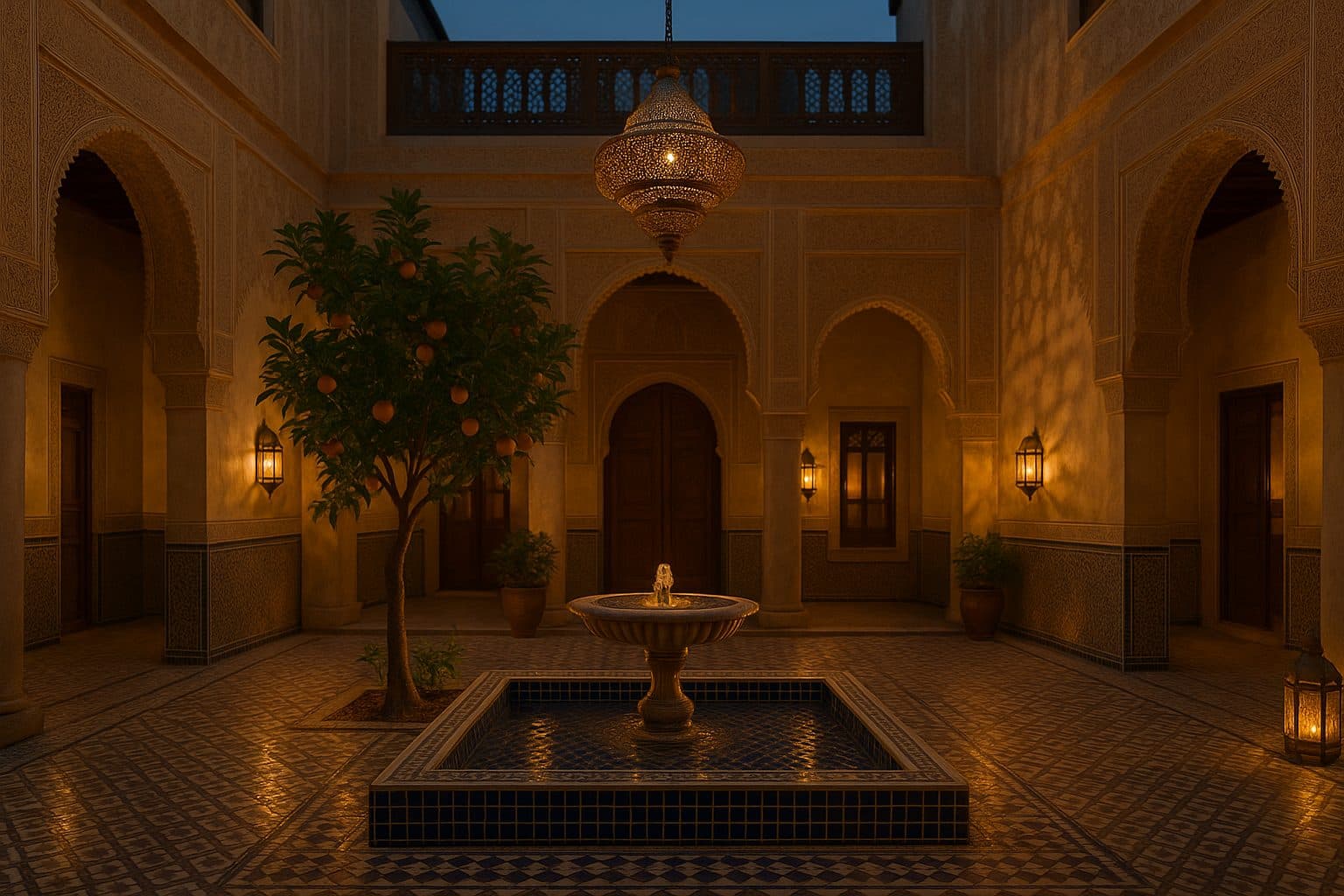
A riad (Arabic: رياض, “garden”) is a traditional Moroccan urban house built around an open interior patio courtyard — typically with a central fountain, an orange or fig tree, and rooms arranged on two or three floors looking down into the patio. Riads originated in Andalusia and were carried into Morocco’s imperial cities (Fes, Marrakech, Meknes, Tetouan) from the 12th century onwards. The exteriors are deliberately plain — narrow doors on narrow medina alleys — because the wealth and decoration is reserved for the protected interior.
In the last 25 years, hundreds of these family-owned riads have been bought up and restored as boutique hotels. A typical riad has 4-12 rooms, owner-or-manager hospitality (someone genuinely greets you, remembers your name by day 2, and helps with logistics), and a rooftop terrace where breakfast is served. The experience is fundamentally different from a chain hotel — and once you’ve spent two nights in a well-run riad, the appeal becomes obvious.
That said, riads aren’t always the right answer. They’re concentrated in medinas (limited parking, narrow access, no elevators), often in older buildings with eccentric room layouts, and a bad riad can be very bad (drafty, noisy, mismanaged). The rest of this guide is about picking the right one — and when modern hotels make more sense.
Riad vs hotel vs kasbah vs dar — the types you’ll find
Five property types make up almost every Moroccan accommodation listing:
Riad (رياض). Traditional courtyard house, 4-12 rooms, owner-operated boutique. Best for: imperial-city stays (Marrakech, Fes, Meknes, Essaouira), couples, photography lovers, culturally-curious travelers. What you trade: no pool (usually), no elevators, no business amenities.
Dar (دار, “house”). Similar to a riad in size and style but without the central courtyard — more like a traditional Moroccan townhouse. Same boutique feel, similar prices, slightly less architectural drama. Common in the Marrakech medina and Essaouira.
Modern hotel. Western-style hotel building with elevator, pool, gym, business centre, standardized rooms. Best for: Casablanca business travel, Agadir beach resorts, Rabat political-capital stays, families needing two-room suites. Most major chains (Mövenpick, Ibis, Hilton, Marriott, Sofitel) operate here.
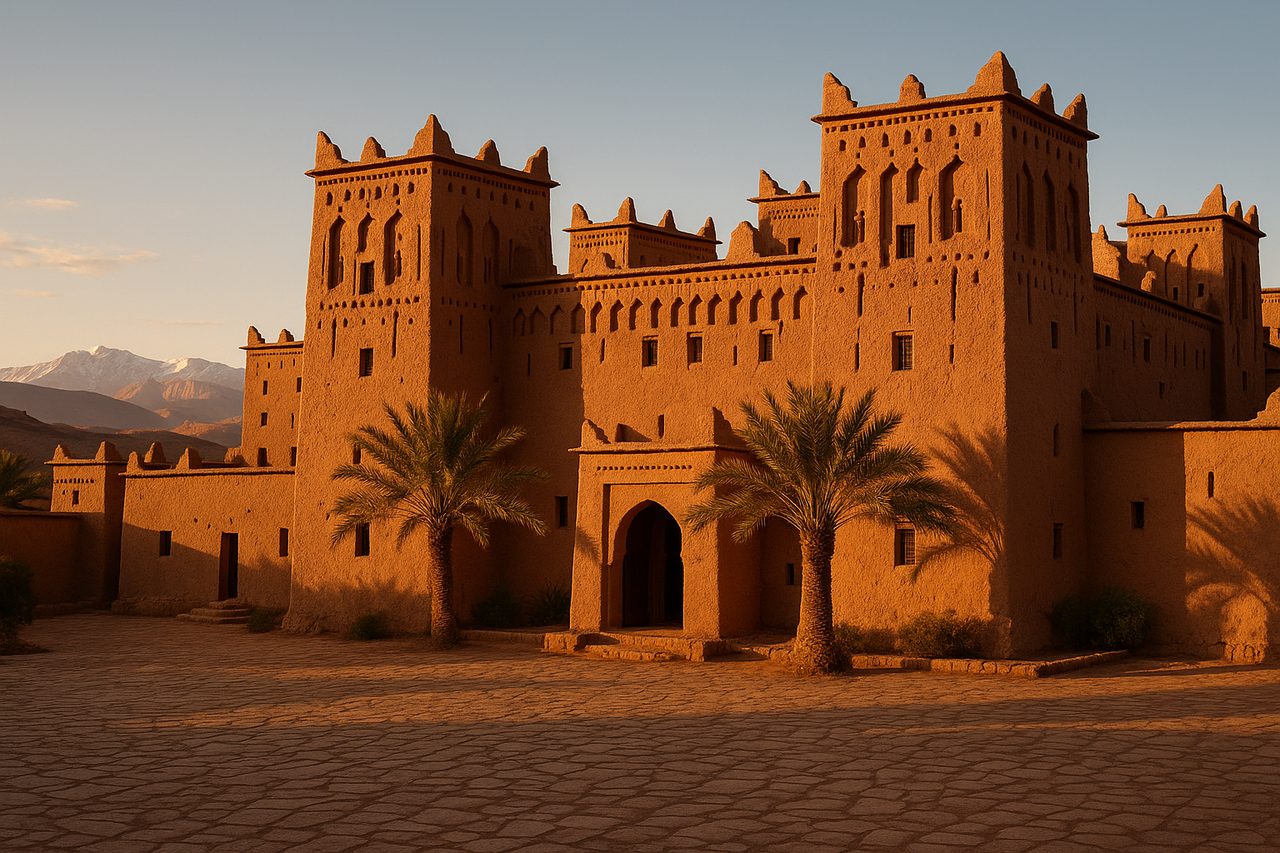
Kasbah (قصبة). Originally a fortified residence for tribal chiefs and military, now luxury restored examples open as hotels — especially in Ouarzazate, Aït Ben Haddou, and the Drâa Valley. Earthen-red rammed-earth walls, crenellated towers, dramatic architecture. Best for: a 1-2 night stop on a Sahara loop, photography, atmosphere. Often pricier than they look from the outside.
Auberge / guesthouse / gite. French-Protectorate-era inn or modern guesthouse, common in rural areas (Atlas trekking villages like Imlil, coastal towns like Asilah, oasis towns like Tinghir). Best for: budget trips, trekking, off-the-grid relaxation. Quality varies enormously.
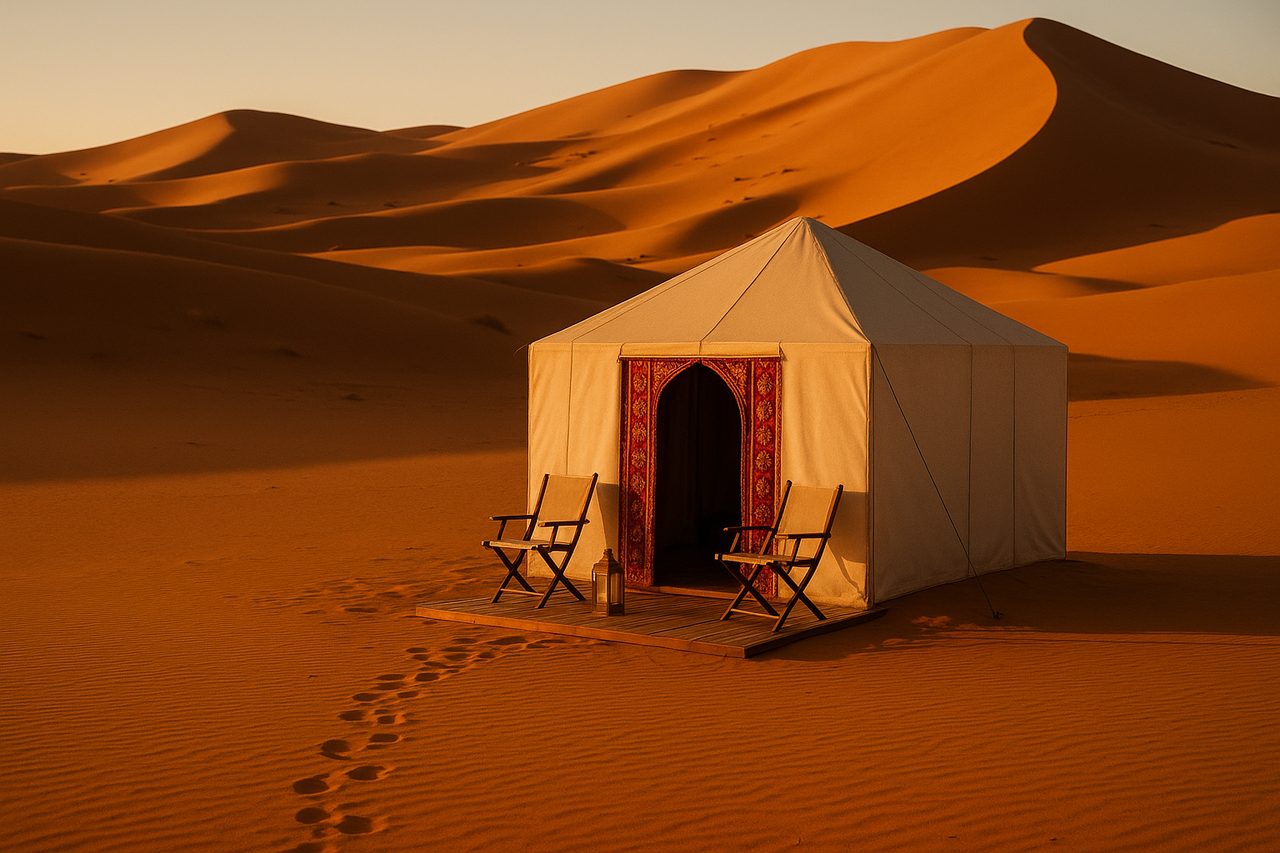
Bonus: the desert camp. Tented luxury accommodations in Merzouga and Zagora — from basic Berber tents (200-400 MAD) to high-end suite tents with proper bathrooms (1,500-3,500+ MAD). Best for: Sahara overnight, stargazing, the “moment” most travelers come to Morocco for.
How much does Moroccan accommodation cost?
Realistic 2026 prices per night for two travelers sharing:
| Tier | Riad | Modern hotel | Auberge | Luxury desert tent |
|---|---|---|---|---|
| Budget | 300-700 MAD ($30-70) | 250-500 MAD ($25-50) | 150-400 MAD ($15-40) | 200-400 MAD |
| Mid-range | 700-1,500 MAD ($70-150) | 500-1,200 MAD ($50-120) | 400-800 MAD ($40-80) | 600-1,500 MAD |
| Luxury | 1,500-5,000+ MAD ($150-500+) | 1,500-5,000+ MAD | 800-2,000+ MAD | 1,500-3,500+ MAD |
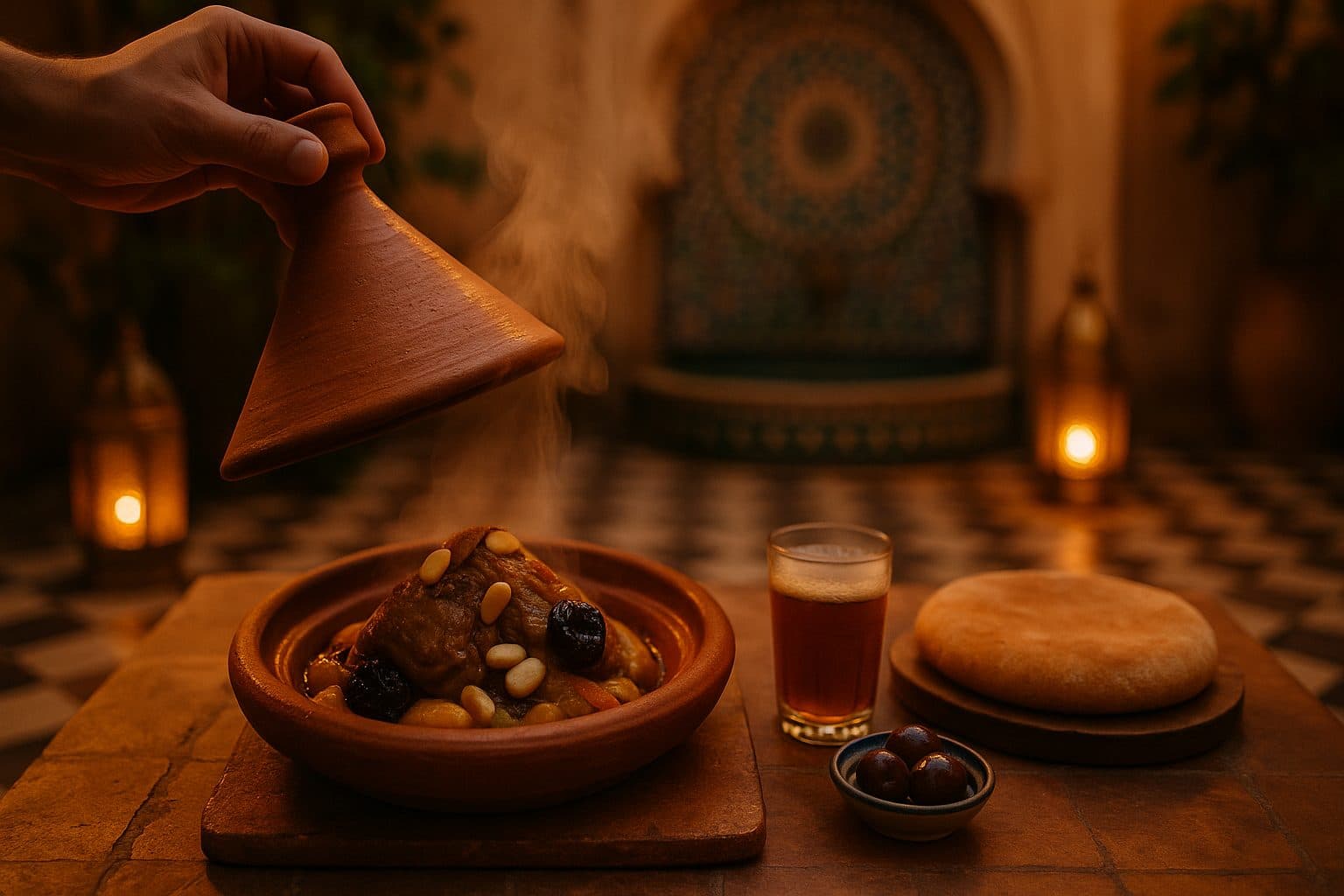
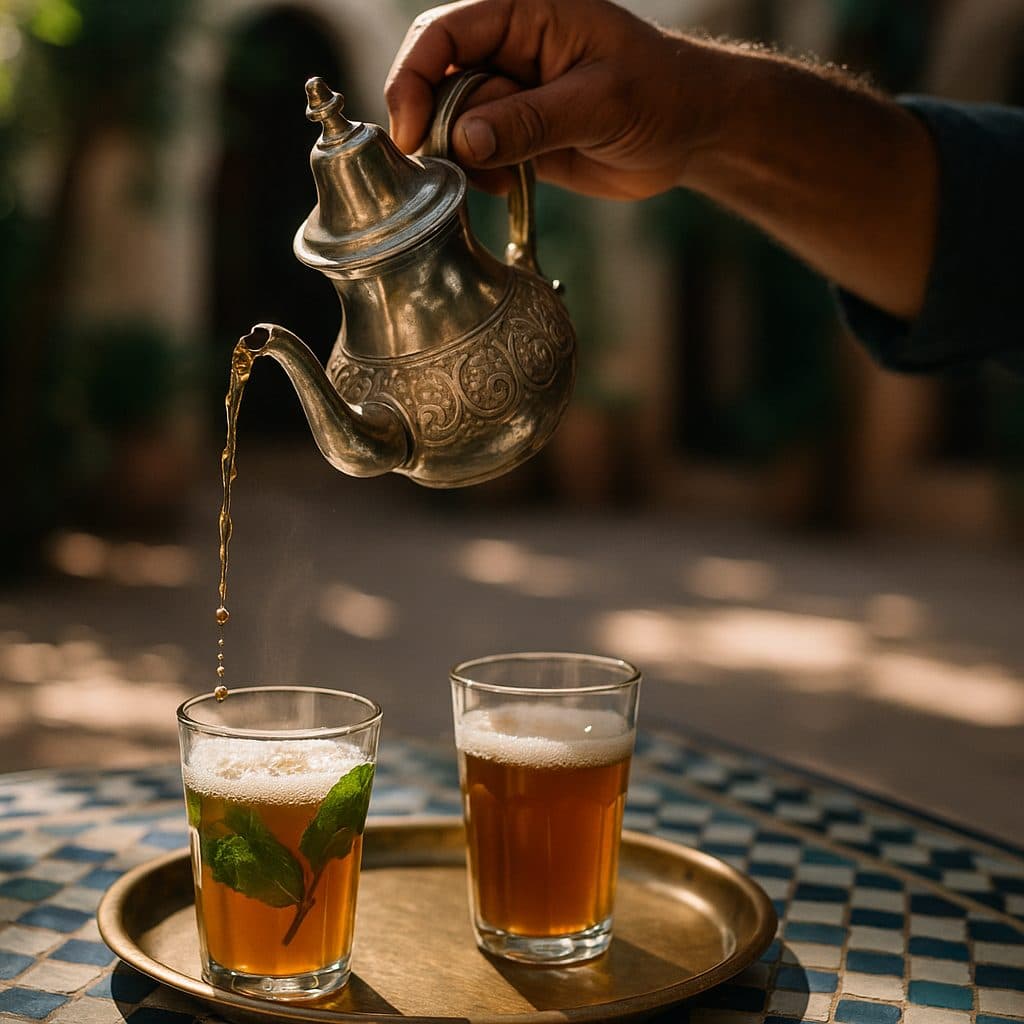
Breakfast is almost always included at riads (mint tea + bread + olives + jam + eggs + Moroccan pastries). At modern hotels, breakfast is usually extra (80-200 MAD/person/day). Dinner at riads is often available as a paid optional (200-500 MAD for a multi-course Moroccan dinner) — and is often one of the best meals of the trip.
Seasonal pricing: budget riads have stable year-round rates; mid-to-luxury riads charge 30-50% more during peak season (March-May, September-November, Christmas/New Year, Easter). Coastal hotels surge in summer (June-August) for the same reason — book Essaouira, Agadir, and Saidia 3-6 months ahead if traveling in summer.
WiFi is universal and free at every tier — even the cheapest auberges have it. Quality drops in remote desert camps and Atlas trekking villages where the signal isn’t great.
Where to stay in Marrakech — by neighborhood
Marrakech is the most-traveled city in Morocco and has the most accommodation options. Five neighborhoods, each with a clear personality:
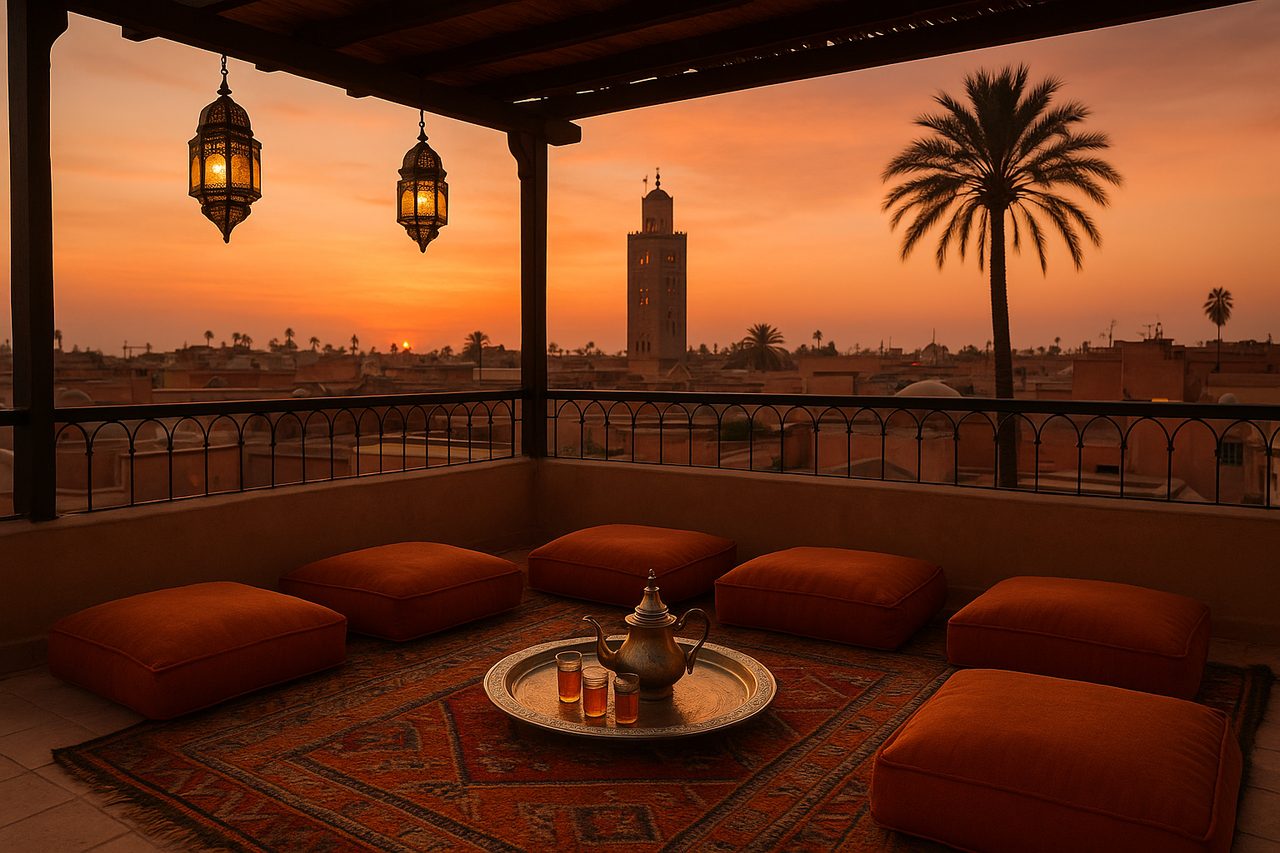
Medina (inside the walls) — where 70% of riads are. Best for: first-time visitors, immersion, walking distance to Jemaa el-Fna, the souks, Majorelle Garden. Trade-offs: no parking inside (cars stop at gates, you walk in with luggage), labyrinthine alleys can be hard to find at night. Pick this for your first 2-3 nights then decide.
Gueliz — the modern French-Protectorate-era city. Best for: business travel, repeat visitors who want a break from the medina, restaurants and cafés, modern hotels with pools and parking. More cosmopolitan, less atmospheric.
Hivernage — luxury district with international 4-5 star hotels (La Mamounia, Sofitel, Royal Mansour). Best for: high-end travelers, business conferences, those who want pools and spas. Significantly more expensive.
Palmeraie — palm grove area 8-15 km north of the city centre. Best for: large luxury resorts with pools, families with kids, golf travelers. Far from the medina — bring a car or budget for daily taxis (50-100 MAD each way).
Sidi Ghanem — industrial-arty district to the north, less developed. Skip unless you have a specific reason.
For first-timers: stay in the medina for the experience, then move to Gueliz or Hivernage for the second half if you want pool/spa time.
Where to stay in Fes — and why the medina beats Ville Nouvelle
Fes has two distinct halves: Fes el-Bali (the old medina) — the largest car-free urban area in the world, a UNESCO World Heritage site, with 9,000+ alleys — and Ville Nouvelle, the modern French-built city to the south.
Stay in the medina. This is more emphatic than for Marrakech. Fes’s medina is the deepest, most intact medieval city in the Arab world; staying inside means you wake up to the morning call to prayer echoing off stone walls, walk to the Bou Inania madrasa in 10 minutes, eat dinner under stuccoed arches. The riads here are the best in Morocco — the embroidery, woodwork, and tile traditions of Fes that you saw at the souk are also in your bedroom.
Specifically: the Talaa Kebira / Talaa Sghira artery (running between Bab Boujloud and the Kairaouine mosque) has the most-recommended riads, including Riad Fes, Palais Amani, and Dar Roumana. Slightly cheaper options near Bab er Rsif (the southern medina gate) are more affordable but still walkable to the main sights.
Ville Nouvelle is fine if you have a business reason or need car access. Modern Hilton, Ramada, and Marriott options. Skip otherwise — you’ll be too far from the medina to enjoy Fes properly.
Where to stay in other major cities
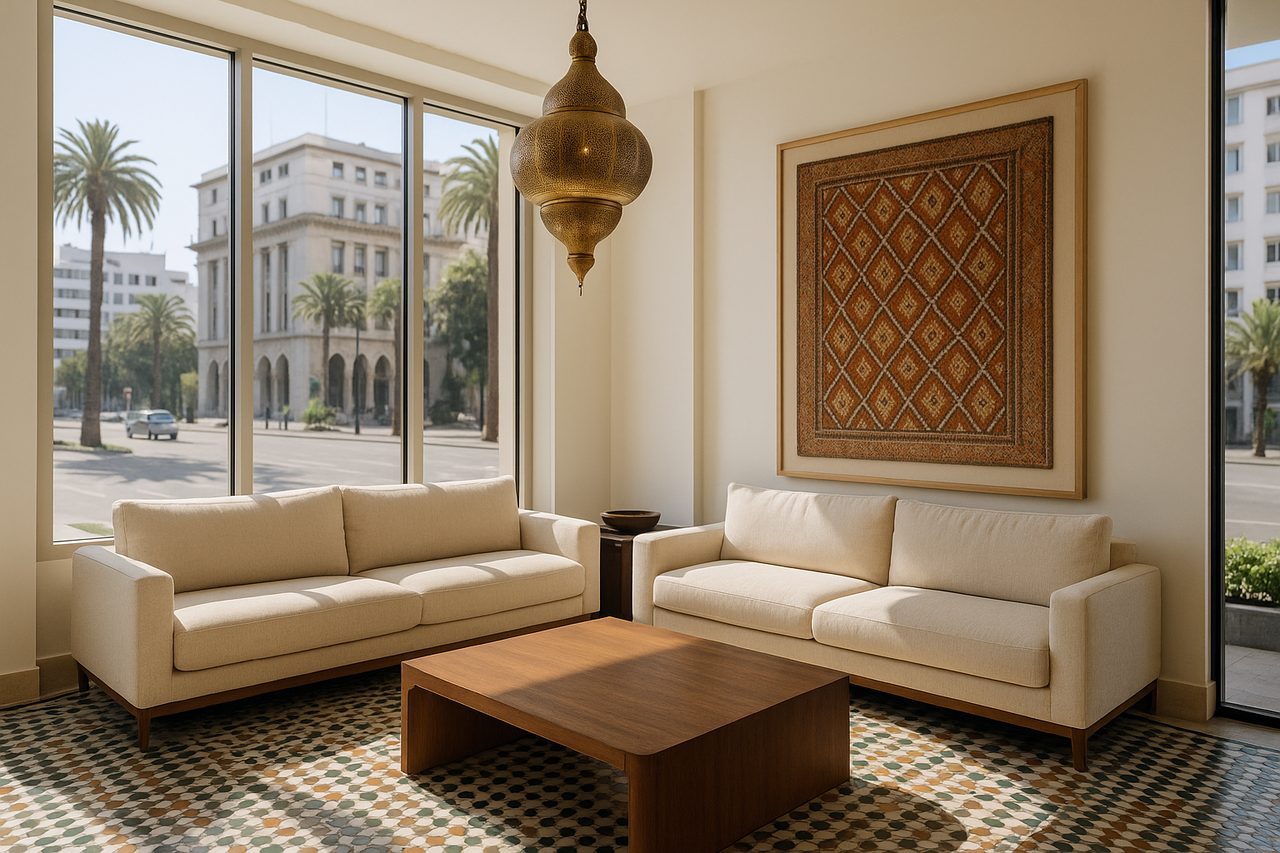
Casablanca. Business-traveler town. Stay near Place Mohammed V (administrative downtown), the Hassan II Mosque area for tourist proximity, or Anfa for newer hotels and cafés. Most travelers only stop one night before flying out — modern hotels near the airport (Mövenpick CMN Airport, Best Western Plus) make sense.
Rabat. Less touristed; political and administrative capital. Stay in the medina or near the Royal Palace area for atmosphere. Excellent value vs Marrakech-Fes prices — Rabat riads run 30-50% cheaper for similar quality.
Tangier. The international, cosmopolitan northern port. The medina (especially around Petit Socco) for atmosphere, Marshan for a quieter residential vibe with sea views, or modern hotels along the Boulevard Mohammed VI for business travelers. Tangier has the best riads-with-sea-views in Morocco.
Chefchaouen (the Blue Pearl). Almost everyone stays in the medina — the entire town is small, very walkable, and the blue-painted alley aesthetic is the whole point. Pricing skews 20-30% cheaper than Marrakech for similar quality. Family-run dars are the norm; properties like Casa Hassan and Dar Echchaouen are well-rated.
Essaouira. Stay inside the medina walls — quiet, beautiful, walkable to the Atlantic port and beach. Book 3-6 months ahead for June (Gnaoua Festival) and July-August (coastal summer peak).
Ouarzazate / Aït Ben Haddou. Stay in a kasbah hotel for 1-2 nights as part of a Sahara loop. Don’t expect this to be the highlight of the trip — it’s a stopover stop, atmospheric but not deep.
How to book — Booking, Airbnb, direct, or via a private operator
Four channels, each with trade-offs:
Booking.com — the dominant platform in Morocco, including for most riads. Best for: variety, English customer support, easy cancellation. Trade-off: 12-15% commission inflates the price vs direct.
Airbnb — common in Marrakech, Fes, Casablanca, Essaouira. Best for: longer stays (1+ weeks) and apartments rather than rooms. Trade-off: less reliable check-in experience, hosts vary widely.
Direct booking via riad websites — often 10-20% cheaper than Booking.com. Best for: when you’ve researched and know what you want. Many small riads have a direct WhatsApp number; sending a message and asking about rates often gets you a better deal.
Via a private tour operator — if you’re using a private guide-and-driver, accommodation is typically curated and included in the package. Best for: travelers who want all logistics handled. Trade-off: less choice; you trust the operator’s taste. See our Private Morocco Tours guide.
Best practice: research on Booking.com to identify 3-5 candidate riads, then email or WhatsApp the riad directly asking for their best rate for your dates. About 60% of the time you’ll get a better price.
Need help shortlisting riads for your specific dates and group? Chat with Anass on WhatsApp →
What to ask for before booking — and the red flags
Before paying, confirm these in writing:
- Exact location — for medina properties, ask for the closest gate (bab) for parking + luggage drop. Some medina alleys are 800m from the nearest car access; bring a suitcase that rolls or arrange a porter (10-20 MAD).
- Check-in time — standard is 14:00-15:00; check-out is 12:00 noon. If you arrive earlier, ask about luggage storage.
- Breakfast included? Almost always at riads, often not at hotels.
- What floor is the room on? Riads have stairs, no elevators. If you have mobility issues, ask for ground floor.
- Air conditioning / heating? Critical in summer (40°C+) and winter (medina riads can be cold and damp).
- Hot water timing — some smaller riads heat water on a boiler that resets; ask about peak shower times.
- 24-hour reception? Important for late arrivals and any nighttime emergency. Critical for solo female travelers.
- Cancellation policy — most reputable places offer 24-48 hour free cancellation.
Common problems and how to handle them
Things that occasionally go wrong, in order of frequency:
Hotel won’t let you check in. Reasons: room not cleaned yet (wait or ask for storage), overbooking, wrong dates on their system. Action: ask to speak to the supervisor or manager. If you booked via Booking.com or Airbnb, call the platform from the lobby — they have leverage with the property.
Room doesn’t match what you booked (different bed, different view, different floor). Action: politely ask for the correction; show your booking confirmation. Most riads will swap rooms if available. If they refuse and you have a confirmed booking, escalate to the platform.
No hot water. Common at small riads on heavy-use evenings. Action: tell reception immediately so they can switch the boiler on. Most issues resolve within 30-60 minutes.
Noise (other guests, mosque adhan at 5am). The 5am call to prayer is real, especially in dense medina riads. Action: pick a room facing the courtyard rather than the street; ask to swap rooms if it’s intolerable; use earplugs (bring them).
Property tries to push you out early (move check-out earlier). Action: politely refer to your booking terms. Standard check-out is 12:00 noon.
Property tries to upsell tours / hammam / dinner aggressively. Common at lower-tier places. Action: a firm “no thanks” twice; if it continues, mention it in the review.
You can’t find the riad in the medina at night. Marrakech and Fes medinas are genuinely confusing. Action: WhatsApp the riad your arrival time; most will send a porter to a specific gate to meet you. Always have the riad’s phone number saved before you land.
For broader safety context — particularly solo female travelers and after-dark medina navigation — see our Is Morocco Safe? guide.
Frequently asked questions
What is a riad in Morocco?
A riad is a traditional Moroccan urban house built around an interior patio courtyard, typically with a central fountain and an orange or fig tree, with rooms arranged on two or three floors looking down into the patio. Originally dating to the 12th century, hundreds have been restored as boutique hotels (typically 4-12 rooms) over the last 25 years. They’re concentrated in the medinas of Marrakech, Fes, Meknes, Essaouira, and Tetouan.
Is it better to stay in a riad or a hotel in Morocco?
For most first-time travelers — riad. Riads offer authentic Moroccan architecture, owner-operated hospitality, included breakfast, and a fundamentally different experience from chain hotels. Modern hotels make sense for: business travel (Casablanca, Rabat), beach resorts (Agadir, Saidia), families needing pools and elevators, and travelers with mobility issues (medina riads have stairs and narrow access).
Where should I stay in Marrakech as a first-time visitor?
In the medina, inside the walls. Most riads cluster around Jemaa el-Fna, with the Mouassine, Kasbah, and Riad Laarous sub-neighborhoods being the most popular for first-timers. Avoid Palmeraie (8-15 km out of town) and Hivernage (luxury but disconnected) on a short trip — you want walking access to the medina action.
Where should I stay in Fes for the first time?
Inside Fes el-Bali (the old medina), preferably near the Talaa Kebira / Talaa Sghira artery between Bab Boujloud and the Kairaouine mosque. The medina has the best riads in Morocco — embroidery, woodwork, and tile that match the architectural traditions of the city itself. Avoid Ville Nouvelle unless you have a business reason.
How much does a riad cost in Morocco?
Budget riads run 300-700 MAD ($30-70) per night, mid-range 700-1,500 MAD ($70-150), and luxury 1,500-5,000+ MAD ($150-500+) for two travelers sharing. Breakfast is almost always included; dinner is usually an optional paid add-on (200-500 MAD multi-course). Peak season (March-May, September-November, Christmas/Easter) adds 30-50% to mid-and-luxury tiers.
What is the difference between a riad and a dar?
A riad has a central interior courtyard with fountain and vegetation; a dar does not. Both are traditional Moroccan urban houses converted to boutique accommodation, similar in size (4-12 rooms), similar in price, and offer similar hospitality. Architecturally a riad is more dramatic; a dar is more like a townhouse layout. Many small Moroccan accommodations marketed as “riads” are actually dars — ask if it has a real central courtyard before booking if that matters to you.
Sources
- Ministry of Tourism Morocco — official accommodation statistics and classification system
- Office National Marocain du Tourisme (ONMT) — visitor and accommodation reports
- UNESCO World Heritage — Fes el-Bali (1981) and Aït Ben Haddou (1987) inscriptions
- Booking.com — Morocco accommodation availability and pricing data
- HCP — Haut-Commissariat au Plan — tourism economy statistics