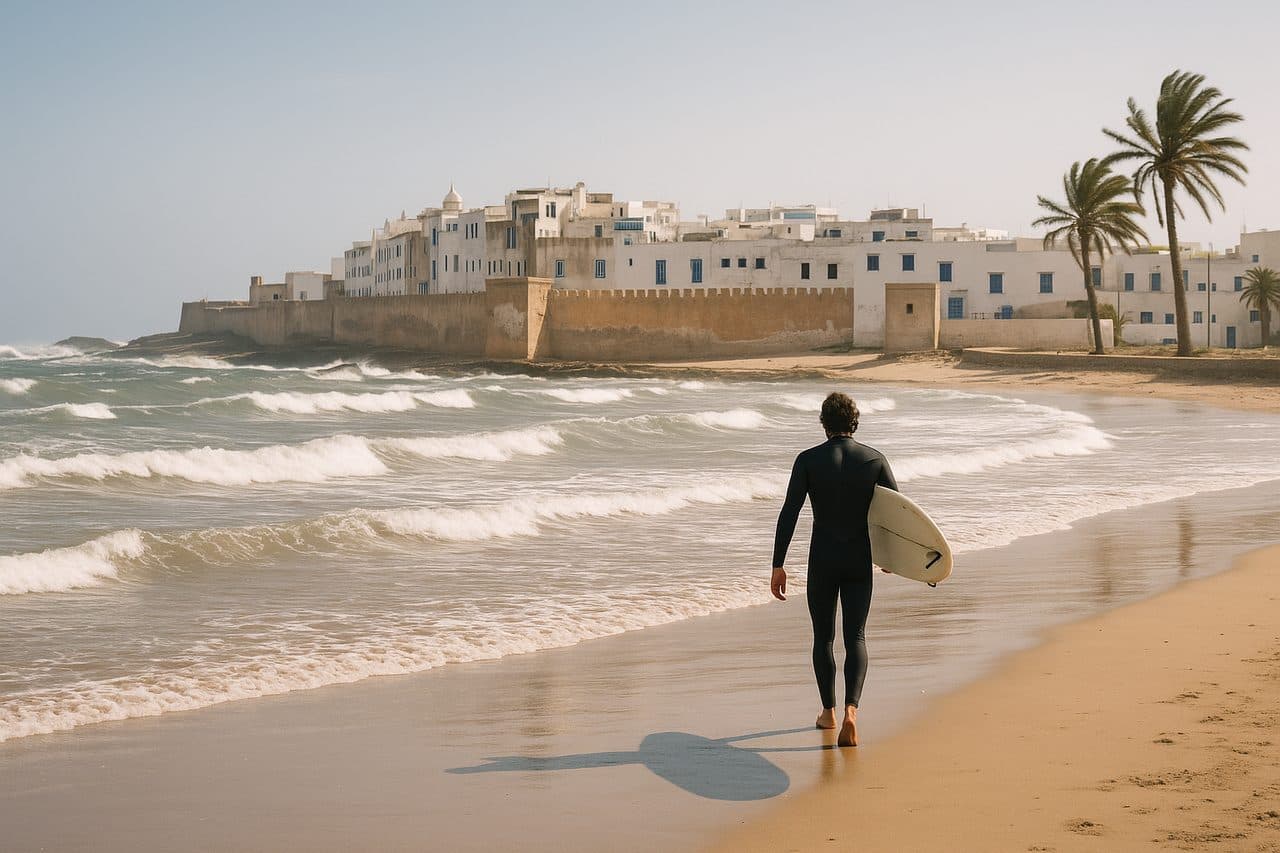

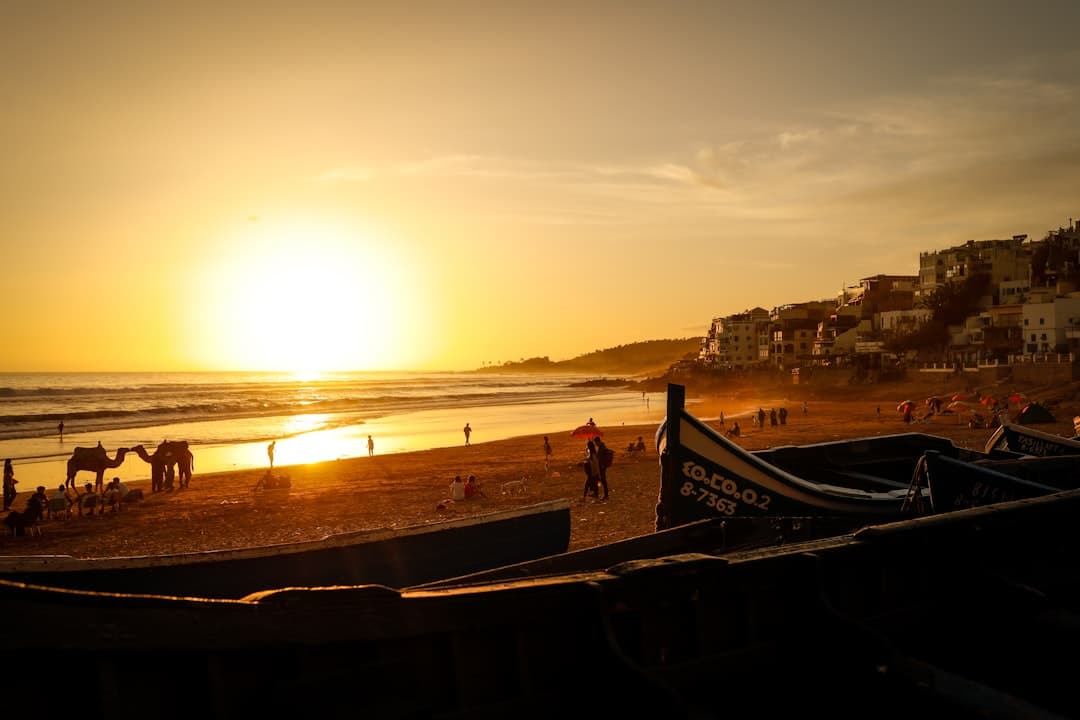
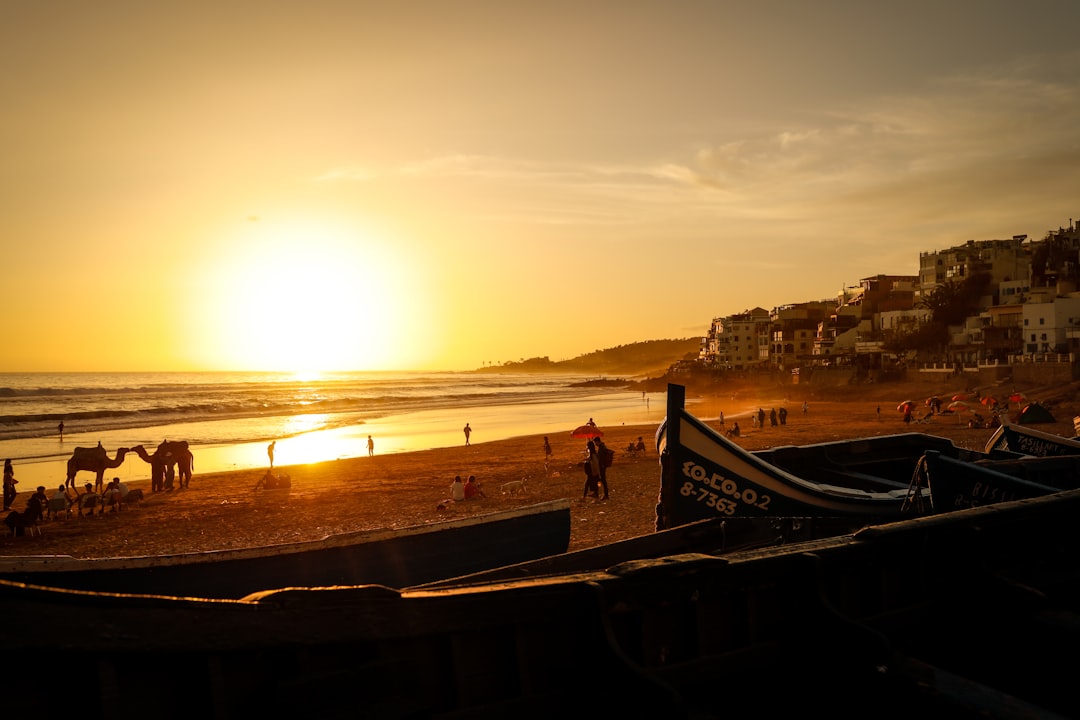
Every surfer planning a Morocco trip hits the same fork in the road. Both towns sit on the Atlantic, both have surf schools on every corner, and both show up in “best surf in Morocco” lists. But they are not interchangeable — they reward completely different surfers. Taghazout is a small surf village built around some of Africa’s best point breaks; Essaouira is a UNESCO-listed port city where the wind, not the swell, runs the show. This is the honest, level-by-level breakdown I give travelers before they book, so you choose the one that matches your ability, your season, and the trip you actually want.
Taghazout vs Essaouira: the head-to-head
If you only read one thing, read this table. Everything below explains the “why.”
| Factor | Taghazout | Essaouira |
|---|---|---|
| Wave type | Right-hand point breaks over reef/rock (Anchor Point, Killer, Boilers) | Exposed sandy beach break, plus Sidi Kaouki |
| Best for level | Intermediate → advanced (some beginner bays) | Beginner & intermediate; kite/windsurf all levels |
| Wind | Sheltered, offshore mornings — clean waves | Strong onshore Alizé trade winds, 20–30 kn |
| Prime season | October–March (powerful clean swell) | Spring–autumn for wind; mellow summer surf |
| Vibe | Dedicated surf-town scene, board-to-bed | Real city — medina, ramparts, art, food |
| Getting there | ~40 min from Agadir (AGA) | ~2.5 hr from Marrakech; small local airport |
| Price feel | Surf-camp packages, mid-range | Slightly pricier rooms, more dining range |
What kind of waves does Taghazout have?
Taghazout’s reputation rests on right-hand point breaks — waves that peel cleanly off a headland for long, makeable rides rather than closing out like a beach break. The three names you’ll hear constantly:
- Anchor Point — the marquee wave, one of the most famous right-handers on the African continent. Its sweet spot sits in the 4–10 foot range; smaller and the swell can’t wrap the point, bigger and it gets serious fast.
- Killer Point — the heaviest, most pitching break in the area, named after a resident pod of orcas that sometimes pass through. It sucks in even modest N–NW swells.
- Boilers — steep, heavy rights over a rocky reef. It sits in a wind channel created by the Atlas foothills, so it’s rarely onshore and holds 6–10 ft clean.
In winter, faces at Anchor and Killer regularly run 6–12+ feet. That power is exactly why Taghazout is a pilgrimage for good surfers — and why beginners should be careful which spot they paddle out at.
What kind of waves does Essaouira have?
Essaouira is an exposed beach break inside a wide, sandy bay. The waves are usually waist-to-shoulder height and rarely overhead — soft, forgiving rollers that are forgiving when you mistime a pop-up. That’s the good news for beginners. The catch is the wind (next section).
Surf-focused visitors who want cleaner, more consistent waves often base a little south at Sidi Kaouki, about 25 km down the coast, where the beach is wider and the wind slightly less aggressive thanks to the coastal geography. For experienced windsurfers, Moulay, ~30 km north, is a world-class wave spot.
So yes — you can surf Essaouira. Just go in knowing it’s a learner-and-intermediate beach break, not a points town.
Which is better for beginners — Taghazout or Essaouira?
For your very first week on a board, Essaouira (or Sidi Kaouki) is the easier place to learn. The wide sandy beach, shallow entry, and mellow whitewater mean fewer hazards than paddling onto a rocky reef. Taghazout does have beginner-friendly bays and the most surf-school infrastructure in Morocco, but its headline waves are firmly intermediate-plus.
A simple rule:
- Never surfed / first week? Essaouira bay or Sidi Kaouki, lessons in mellow whitewater.
- Comfortable popping up, want to progress on real waves? Taghazout’s softer bays in the shoulder seasons.
- Confident on green waves and reef? Taghazout’s points, October–March.
Why is Essaouira so windy — and when does that help?
Essaouira’s nickname is the “Windy City of Africa,” and it’s earned. The Alizé trade winds blow steadily from the northeast across spring, summer, and autumn, often 20–30 knots, with summer (June–September) frequently hitting 20–25 knots daily. For surfing, that’s a problem: strong onshore wind blows the surf out, especially in the afternoons, which is why locals surf early or head to Sidi Kaouki.
But that same wind is a gift if you came to kitesurf or windsurf. The bay’s side-on wind, flat water near the port, and wide sandy entry make it one of the best wind-sport spots in Morocco — Essaouira has been a windsurfing destination since the early 1990s. If “surf trip” for you means kites and a wing rather than dawn point-break sessions, Essaouira wins outright.
When is the best season to surf each town?
The calendars barely overlap, which is the single most useful fact for choosing:
| Window | Taghazout | Essaouira |
|---|---|---|
| Oct–Mar | Peak — North Atlantic swells, clean offshore mornings, powerful points | Cooler, some winter swell; wind eases vs summer |
| Sep–Nov / Mar–May | Sweet spot for beginners — smaller, cleaner, less crowded | Pleasant, building/easing wind |
| Jun–Aug | Smaller mellow bay waves; warm water | Peak wind for kite/windsurf; gentle 1–3 ft surf, water 21–23 °C |
Translation: come for serious surf in winter → Taghazout. Come in summer for wind sports or a gentle learn → Essaouira. Shoulder seasons (spring/autumn) are kind to both.
Which has the better surf-town scene and lessons?
This is where personality matters more than wave quality.
Taghazout is a surf village — the entire economy is boards, camps, smoothie bowls, and rooftop sunsets. It has the densest cluster of surf camps and schools in Morocco, so booking a learn-to-surf or coaching package is effortless, and you’re never more than a flip-flop walk from the lineup. If you want to live and breathe surf for a week with like-minded travelers, this is the scene.
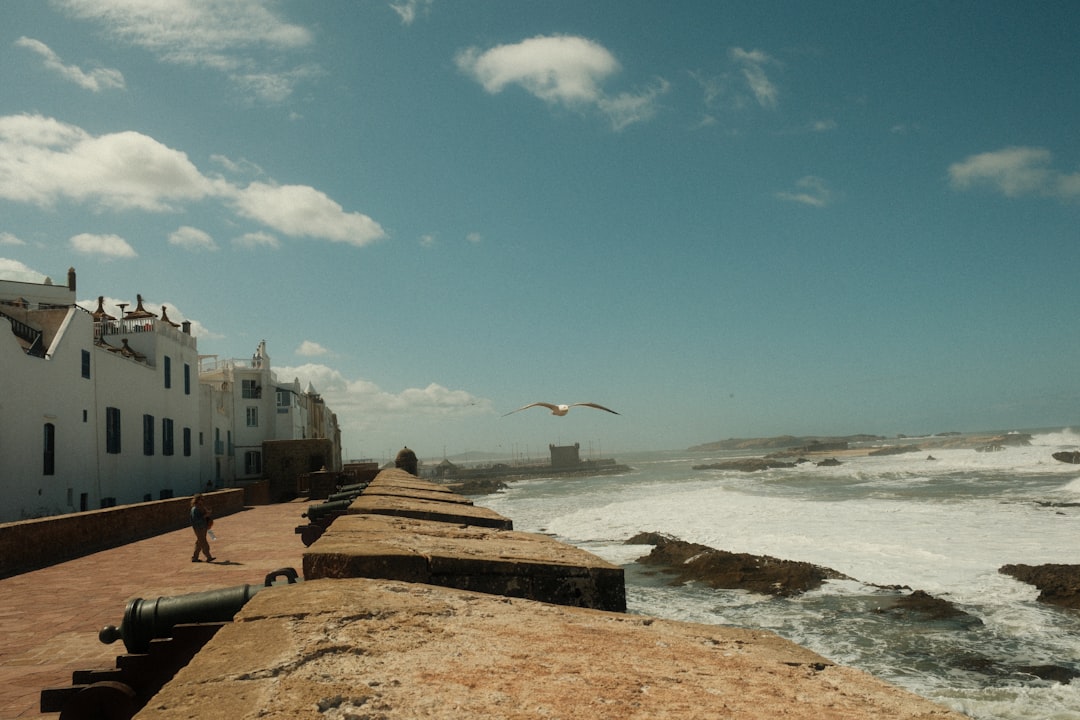
Essaouira is a real city. Inside its UNESCO-listed ramparts you’ll find a walkable medina, fishing port, galleries, the Gnaoua music heritage, and a genuinely good food scene — things to do when you’re not (or can’t, because of wind) in the water. It suits couples, families, or surfers who want a town with culture attached rather than a pure surf bubble. For where to stay in either, see our accommodation in Morocco guide.
How do you get to Taghazout vs Essaouira?
Taghazout is easiest via Agadir Al Massira Airport (AGA) — about 40 km / 40–50 minutes by car or transfer. From Marrakech it’s roughly 200 km; there are direct surf-shuttle buses, or fly into Agadir to save the drive. It’s also about 152 km (~2h40) from Essaouira.
Essaouira has a small local airport with limited routes, so most travelers arrive from Marrakech — about 2.5–3 hours by bus (CTM/Supratours) or transfer. It’s a very common add-on to a Marrakech trip.
For choosing your entry airport and avoiding transfer headaches, read Morocco airports and flights. If you’re folding this into a wider route, our Morocco itinerary hub shows how the coast fits with Marrakech and the desert.
Taghazout vs Essaouira: which costs more?
Both are mid-range by Moroccan standards. Taghazout sells mostly as surf-camp packages (bed + board + lessons), which can be excellent value for a focused week. Essaouira has a wider spread of accommodation and dining — boutique riads inside the medina to simple guesthouses — so the ceiling is a bit higher and the food bill more variable. Neither is expensive next to a European surf trip; for a full cost picture see is Morocco expensive?.
So which should you pick?
- You want world-class waves and a surf-only week → Taghazout, October–March.
- You’re learning, or traveling with non-surfers → Essaouira (or Sidi Kaouki).
- You came to kite or windsurf → Essaouira, spring–autumn.
- You want surf and a real city to explore → Essaouira.
- You want power and clean point breaks → Taghazout.
Still torn? Read the umbrella surfing in Morocco hub for the full coastline, and if it’s your first time on a board, surfing in Morocco for beginners walks through gear, lessons, and etiquette.
Frequently asked questions
Q: Is Taghazout or Essaouira better for beginners?
Essaouira is the easier place to learn. Its wide sandy beach break, shallow entry, and mellow waist-to-shoulder waves are more forgiving than Taghazout’s reef and point breaks. Sidi Kaouki, just south, is even calmer. Taghazout has more surf schools and some beginner bays, but its famous waves are intermediate-plus, so first-timers are usually happier starting in Essaouira.
Q: Can you actually surf in Essaouira, or is it only for kitesurfing?
You can surf — waves are usually waist-to-shoulder. But strong afternoon Alizé trade winds (20–30 knots) blow the surf out, so locals surf early or head to Sidi Kaouki for cleaner conditions. That same wind is why kitesurfing and windsurfing dominate Essaouira; it’s been a windsurf destination since the early 1990s.
Q: When is Taghazout’s surf season?
October to March is peak: North Atlantic swells light up Anchor Point, Killer, and Boilers with clean offshore mornings and powerful waves, though lineups get crowded. September–November and March–May are the sweet spots for beginners — smaller, cleaner waves and fewer people.
Q: How far is Taghazout from the airport?
Taghazout is about 40 km from Agadir Al Massira Airport (AGA) — a 40–50 minute drive or transfer. From Marrakech it’s roughly 200 km, with direct surf-shuttle buses available. It’s around 152 km (about 2h40) from Essaouira.
Q: Can you visit both Taghazout and Essaouira in one trip?
Yes. They’re only about 152 km apart — under three hours by road on the same Atlantic coast. A common plan is to learn on Essaouira’s gentle bay, then drive south to progress on Taghazout’s points, often with a Marrakech stop in between.

Sources cited in this guide
- UNESCO World Heritage Centre — Medina of Essaouira (formerly Mogador), inscribed 2001 — whc.unesco.org
- Stormrider Surf Guides — Taghazout region spot and wind data — stormrider.surf
- Surf Atlas — Taghazout & Essaouira surf travel guides (spots, seasons) — thesurfatlas.com
- ION Club Essaouira — wind-sports operator (windsurf/kite conditions) — ion-club.net
- Rome2Rio — Agadir Airport (AGA) → Taghazout transit options — rome2rio.com
Continue your Morocco surf prep
- Surfing in Morocco — the full Atlantic coastline, every major break.
- Best Time to Surf in Morocco — month-by-month swell and wind.
- Surfing in Morocco for Beginners — gear, lessons, and etiquette for your first week.
- Morocco Airports & Flights — which airport to fly into for the coast.
- Accommodation in Morocco — surf camps, riads, and where to stay.
- Is Morocco Expensive? — real 2026 costs for a surf trip.
- Best Time to Visit Morocco — weather and season across the country.
- Things to Do in Marrakech — the natural pairing with an Essaouira leg.
- Morocco Itinerary — how the coast fits with Marrakech and the desert.