
The honest answer to “is Morocco expensive?” depends entirely on how you travel — but the floor is genuinely low. Street food, public transport, and guesthouse beds cost a fraction of what they do in Spain or France, while top-end riads and luxury Sahara camps can match Marrakech to Marbella if you want them to. This guide breaks down every line item in 2026 dirham and US dollars, anchored to a mid-June 2026 rate of about 9.2 MAD per US dollar (cash and ATM rates run a little weaker, around 9.5–10). All figures are realistic estimates, not promises — prices move with season, demand, and how well you negotiate.
Is Morocco expensive compared to Europe?
No — and it’s not close. For the same daily comfort level, Morocco runs roughly 40–60% cheaper than Spain, France, or Italy. A sit-down tagine lunch that costs €5–8 in Fes would be €18–25 in Seville. A clean private double room runs 300–600 MAD ($33–65) in Morocco versus €90–150 in southern Spain. Intercity rail is a fraction of European fares: the ONCF train from Casablanca to Marrakech is 130–150 MAD ($14–16) in second class (advance promo fares start near 49 MAD), where a comparable distance in France costs three to four times more.
Where Morocco is not cheap is imported and luxury goods — international hotel chains, Western alcohol, and high-end fashion are priced near European levels. The savings are concentrated exactly where travelers spend most: food, local transport, and locally run accommodation.
What’s a realistic daily budget by travel style?
Your daily spend depends on three choices: where you sleep, how you eat, and how you move between cities. Here are realistic 2026 daily budgets per person, excluding flights and big one-off tours like the Sahara overnight.
| Travel style | Per day (MAD) | Per day (USD) | What it buys |
|---|---|---|---|
| Backpacker | 350–550 | $38–60 | Hostel dorm or basic guesthouse, street food, trains and CTM buses, shared tours |
| Mid-range | 700–1,300 | $76–140 | Private riad room, mix of cafés and restaurants, some petit taxis, a guided day or two |
| Luxury | 2,500+ | $270+ | Boutique/luxury riad, fine dining, private driver, premium desert camp |
For a blended trip — a couple sharing a riad, eating well but not extravagantly, mixing trains with the occasional driver — budget around 450–800 MAD ($50–85) per person per day. That’s the number most first-timers actually land on once shared accommodation is split. Keep some of that as small dirham notes for tipping, which is cash-only.
How much does accommodation cost in Morocco?
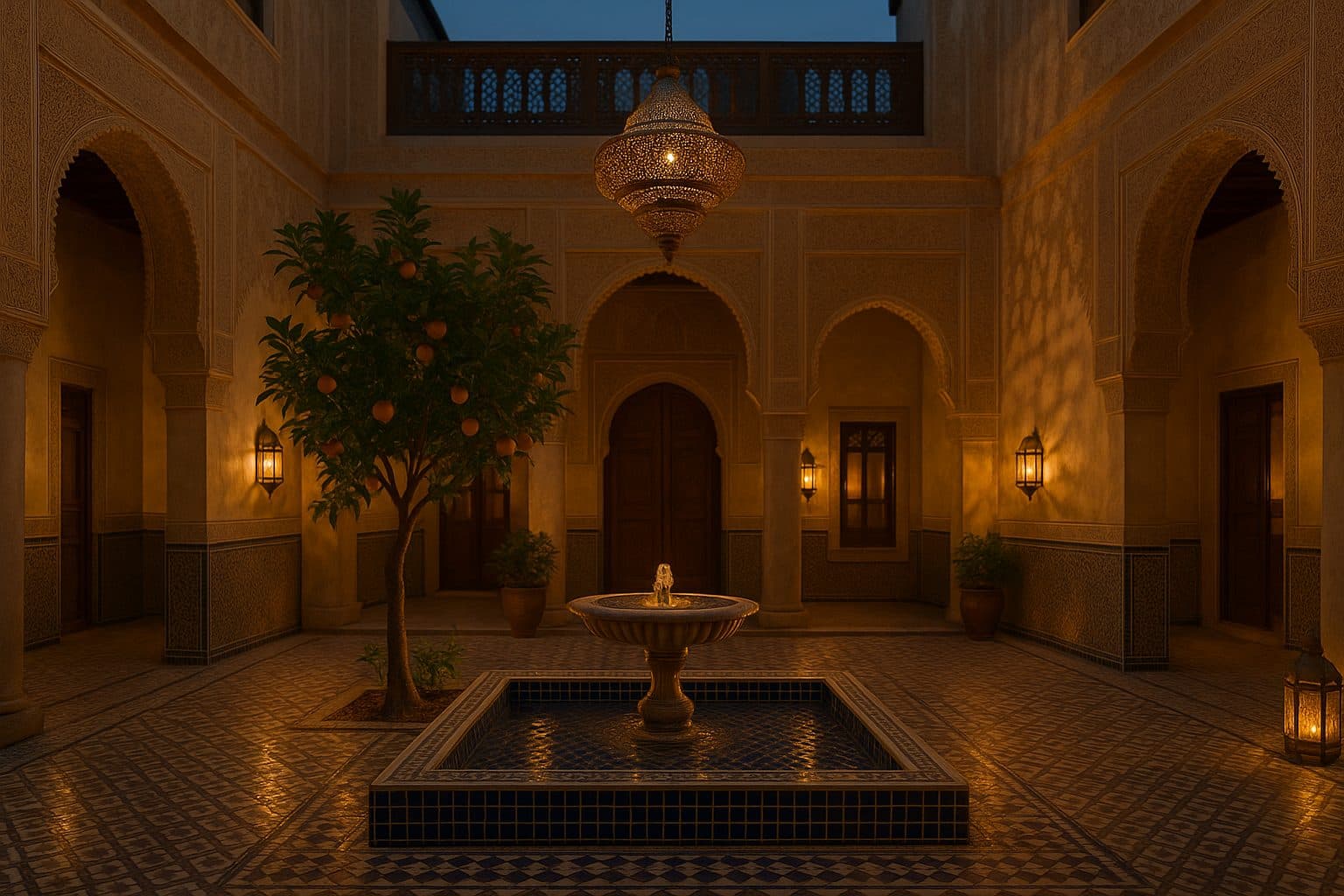
Accommodation is your biggest single cost, and it spans a huge range. Hostel dorm beds start around 80–150 MAD ($9–16) a night. A clean private double in a small guesthouse or budget riad runs 300–600 MAD ($33–65). A characterful mid-range riad with a courtyard and breakfast sits at 600–1,200 MAD ($65–130). Luxury and boutique riads — the Marrakech and Fes names everyone photographs — start around 2,000 MAD ($220) and climb past 5,000 MAD ($540) in peak season.
The sweet spot for most travelers is the mid-range riad: it’s where Morocco’s value shows best, since a $90 room here often beats a $250 European boutique on atmosphere. Full breakdown by city and property type in our accommodation in Morocco guide.
How much does food cost in Morocco?
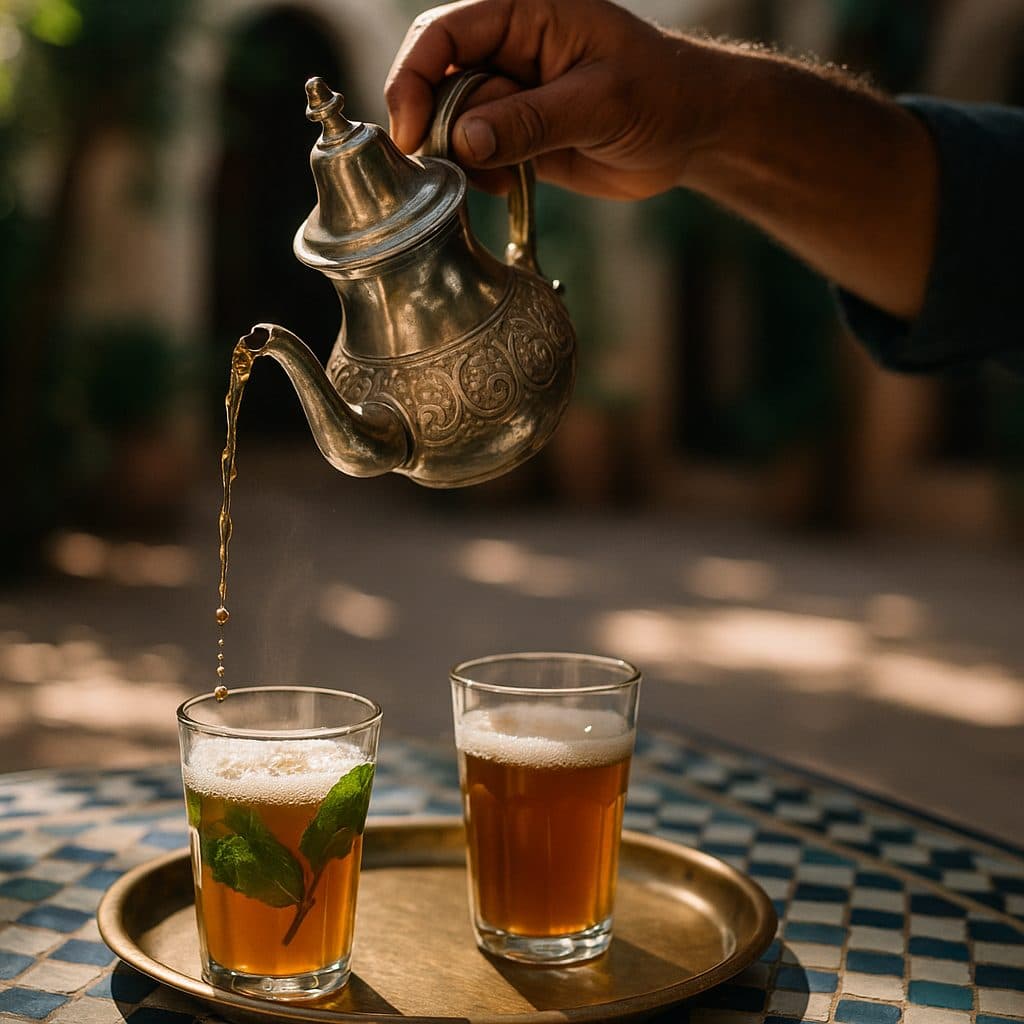
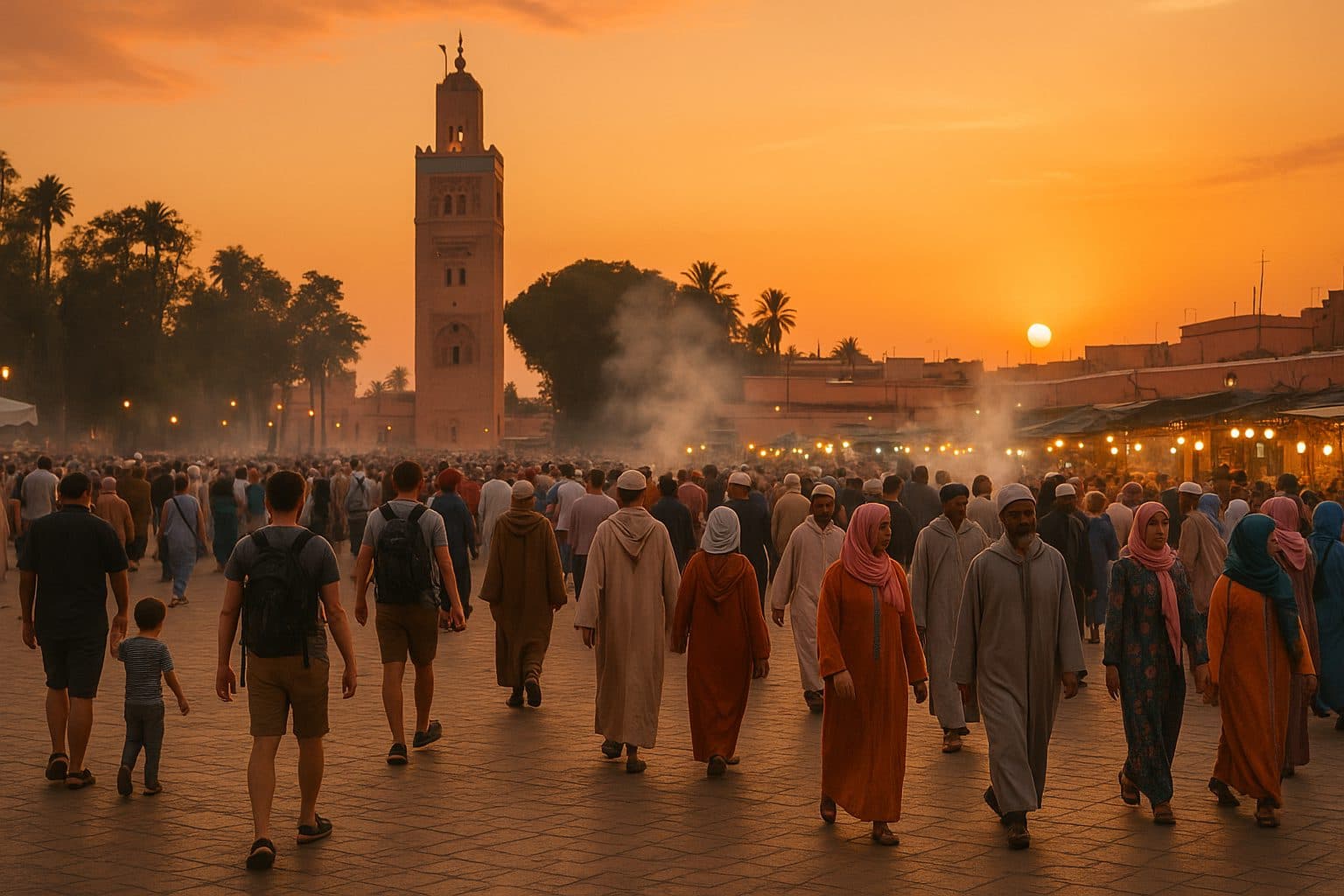
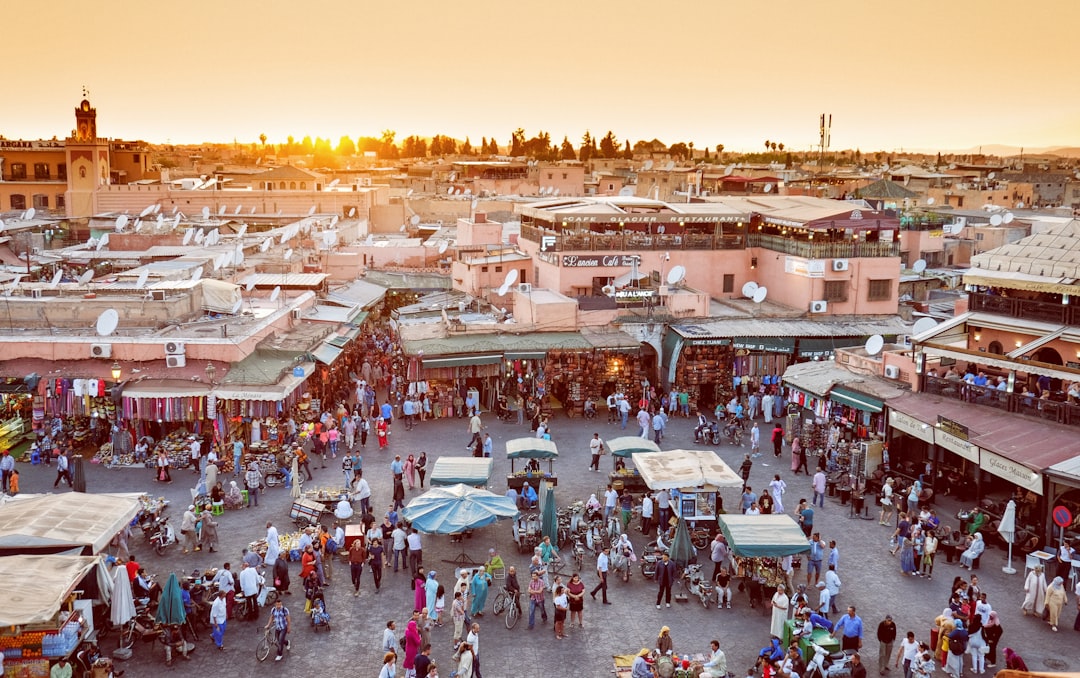
Food is where Morocco feels almost free compared to home. Street food — a bowl of harira soup, a msemen pancake, a skewer plate — runs 15–40 MAD ($1.50–4). A sit-down lunch of tagine or couscous at a local restaurant is 50–80 MAD ($5–9), often including bread and salad. A glass of mint tea is 10–15 MAD ($1–1.50), and a fresh-squeezed orange juice on Jemaa el-Fna is famously 4–10 MAD (under $1).
Step up to a tourist-facing restaurant with rooftop views and you’ll pay 120–250 MAD ($13–27) per main. Western-style cafés and anything with alcohol cost more. Even eating well, two people can keep food to 150–300 MAD ($16–33) a day combined. Our Moroccan food guide covers what’s worth ordering — and what’s overpriced.
| Item | Price (MAD) | Price (USD) |
|---|---|---|
| Glass of mint tea | 10–15 | $1–1.50 |
| Street-food snack / sandwich | 15–40 | $1.50–4 |
| Tagine or couscous at a local restaurant | 50–80 | $5–9 |
| ONCF train, Casablanca → Marrakech (2nd class) | 130–150 | $14–16 |
| CTM intercity bus, Marrakech → Fes | 190–310 | $21–34 |
| Petit-taxi base fare (daytime) | 7+ | under $1 start |
| Sahara overnight camp (per person, from) | ~600 | from ~$65 |
| Bahia Palace entry | 70–100 | $8–11 |
| Majorelle Garden entry | 70 | $8 |
How much does transport cost in Morocco?
Getting around is one of the biggest reasons Morocco stays cheap. The ONCF rail network is comfortable and inexpensive: 130–150 MAD ($14–16) second class from Casablanca to Marrakech, with advance promo fares from around 49 MAD. Intercity CTM buses reach towns the train doesn’t — Marrakech to Fes is 190–310 MAD ($21–34). Within cities, petit taxis start at about 7 MAD daytime; insist on the meter (the “compteur”) and most in-town rides land at 15–40 MAD.
For the iconic Marrakech → Sahara → Fes route, a private driver for three days runs roughly $280–360 total (fuel included), which split between two to four people is excellent value and removes the stress of the Tizi n’Tichka mountain pass. Compare options in our Marrakech to Sahara desert tour guide and read up on taxi meters and avoiding scams before your first ride. For arrival logistics and airport transfers, see Morocco airports and flights.
What do desert tours and attractions cost?
The Sahara overnight is the one splurge nearly everyone makes — and it’s worth it. A standard overnight camel trek and desert camp starts around €65 (about 600+ MAD) per person; a shared 3-day Marrakech–Merzouga tour runs €250–400 ($270–430) per person all-in including transport, camp, and meals. Luxury camps with private en-suite tents climb to €180–400 ($195–430) a night.
City attractions are cheap by global standards. Bahia Palace in Marrakech is 70–100 MAD ($8–11), the Majorelle Garden is 70 MAD ($8) (or 100 MAD combined with the Berber Museum). Most monuments and madrasas sit in the 30–100 MAD ($3–11) range, so a full week of sightseeing rarely tops $40 in entry fees.
What are the hidden costs in Morocco (taxis, cards, ATMs, tipping)?
This is where budgets quietly leak. Three traps to watch:
- Unmetered petit taxis. Drivers who “forget” the meter for tourists will quote 3–5× the real fare. Always ask for the compteur, or agree a price before getting in.
- Card surcharges. Many riads, shops, and restaurants add a 2–3% surcharge for card payment, and plenty of small vendors are cash-only. Morocco runs on cash.
- ATM fees. Most machines charge 20–40 MAD ($2–4) per withdrawal on top of your home bank’s fee — so withdraw larger amounts less often. The dirham is a closed currency: you can’t buy it abroad and should spend or change it back before you fly home.
Tipping is modest but expected: round up taxi fares, leave 5–10 MAD at a café, 10% at a sit-down restaurant, and 50–100 MAD for a half-day guide.
How can you save money in Morocco?
The biggest savings come from three habits. Eat where locals eat — the tagine is the same recipe at a third of the rooftop-restaurant price. Take the train and CTM instead of defaulting to taxis or private transfers for intercity legs. Share the Sahara tour and driver — costs are per-vehicle, so a group of four pays roughly the same as a couple. Beyond that: book riads directly or a few months ahead for shoulder-season rates, carry cash to dodge card surcharges, and learn three Darija numbers so souk prices start lower. For souvenirs, our Moroccan culture and customs guide covers souk etiquette and how to bargain without overpaying. Traveling in the best shoulder-season months (March–May, September–October) also cuts accommodation by 20–30%.
Sample 7-day Morocco budget for two
Here’s a realistic mid-range total for two people on the classic Marrakech → Sahara → Fes week, excluding international flights. Figures are estimates at ~9.2 MAD/USD.
| Item | Total (MAD) | Total (USD) |
|---|---|---|
| Riad accommodation, 6 nights (mid-range double) | 4,800–7,200 | $520–780 |
| Food, 7 days (two people) | 1,800–3,000 | $195–325 |
| 3-day private driver, Marrakech → Sahara → Fes | 2,600–3,300 | $280–360 |
| Sahara overnight camp (2 people) | 1,400–2,800 | $150–305 |
| Trains, taxis, in-city transport | 600–1,000 | $65–110 |
| Entry fees + tips + sundries | 700–1,200 | $76–130 |
| 7-day total (2 people, ex-flights) | ~11,900–18,500 | ~$1,290–2,010 |
That works out to roughly $650–1,000 per person for the week before flights — competitive with a long weekend in Western Europe. A backpacker version (hostels, shared tours, no private driver) drops below $700 per person; a luxury version with top riads and a premium camp climbs past $2,500 per person. For routing, see our Morocco itinerary hub, the 7-day itinerary, and the 10-day itinerary.
In short: Morocco is as cheap or as expensive as you decide it to be — but its floor is genuinely low, and the mid-range sweet spot delivers more atmosphere per dollar than almost anywhere within a short flight of Europe.
Want a precise number for your dates and group size? Message Anass on WhatsApp →
Frequently Asked Questions
Q: How much does a week in Morocco cost?
A mid-range week for two people on the classic Marrakech–Sahara–Fes route runs roughly 11,900–18,500 MAD ($1,290–2,010) excluding flights — about $650–1,000 per person. That covers a riad, meals, a 3-day private driver, the Sahara overnight, transport, and entry fees. Backpackers can do the week under $700 per person; luxury travelers spend $2,500+ per person.
Q: Is Morocco cheaper than Europe?
Yes — significantly. For the same comfort level, Morocco runs about 40–60% cheaper than Spain, France, or Italy. A tagine lunch is €5–8 versus €18–25 in southern Spain, a private room is 300–600 MAD ($33–65) versus €90–150, and intercity trains cost a fraction of European fares. Only imported goods, international hotel chains, and alcohol approach European prices.
Q: Is Morocco cheap for tourists?
For most tourists, yes. Food, local transport, and locally run accommodation are inexpensive — street meals from 15 MAD, trains from 49 MAD, hostel beds from 80 MAD. The main way tourists overpay is through unmetered taxis, tour-desk markups, and card surcharges, all of which are avoidable with cash and a little planning.
Q: What is a good daily budget for Morocco?
Backpackers do well on 350–550 MAD ($38–60) a day, mid-range travelers on 700–1,300 MAD ($76–140), and luxury travelers from 2,500 MAD ($270)+. For a couple sharing a riad and eating a mix of cafés and restaurants, budget around 450–800 MAD ($50–85) per person per day excluding flights and the one-off Sahara tour.
Q: How much spending money do I need for a week in Morocco?
Beyond pre-booked accommodation and tours, carry around 2,500–4,000 MAD ($270–430) per person in cash for the week to cover food, taxis, entry fees, tipping, and souvenirs. Morocco is largely cash-based, ATMs charge 20–40 MAD per withdrawal, and the dirham can’t be bought abroad — so withdraw in larger amounts once in the country.

Sources cited in this guide
- XE — USD/MAD live rate — current US dollar to Moroccan dirham exchange rate — xe.com
- ONCF — Office National des Chemins de Fer — train routes and second-class fares — oncf.ma
- CTM — intercity bus schedules and fares — ctm.ma
- Office National Marocain du Tourisme (ONMT) — destination and visitor data — visitmorocco.com
Continue your Morocco prep
- Tipping in Morocco — how much cash to carry and who to tip.
- Accommodation in Morocco — riads, hostels, and hotels by price band.
- Moroccan Food Guide — what to eat, what to skip, and what it costs.
- Is Morocco Safe? — taxis, meters, and avoiding the common scams.
- Marrakech to Sahara Desert Tour — costs and options for the overnight camp.
- Morocco Itinerary Hub — pick your trip length, then cost it out.
- 7-Day Morocco Itinerary — the classic loop the sample budget is based on.
- 10-Day Morocco Itinerary — the sweet-spot route with Chefchaouen.
- Morocco Airports & Flights — getting in cheaply and skipping airport-taxi markups.
- Best Time to Visit Morocco — shoulder-season months that cut accommodation costs.
- Private Morocco Tours — if you’d rather have a local build and price the whole trip.
- Moroccan Culture & Customs — souk etiquette and how to bargain.