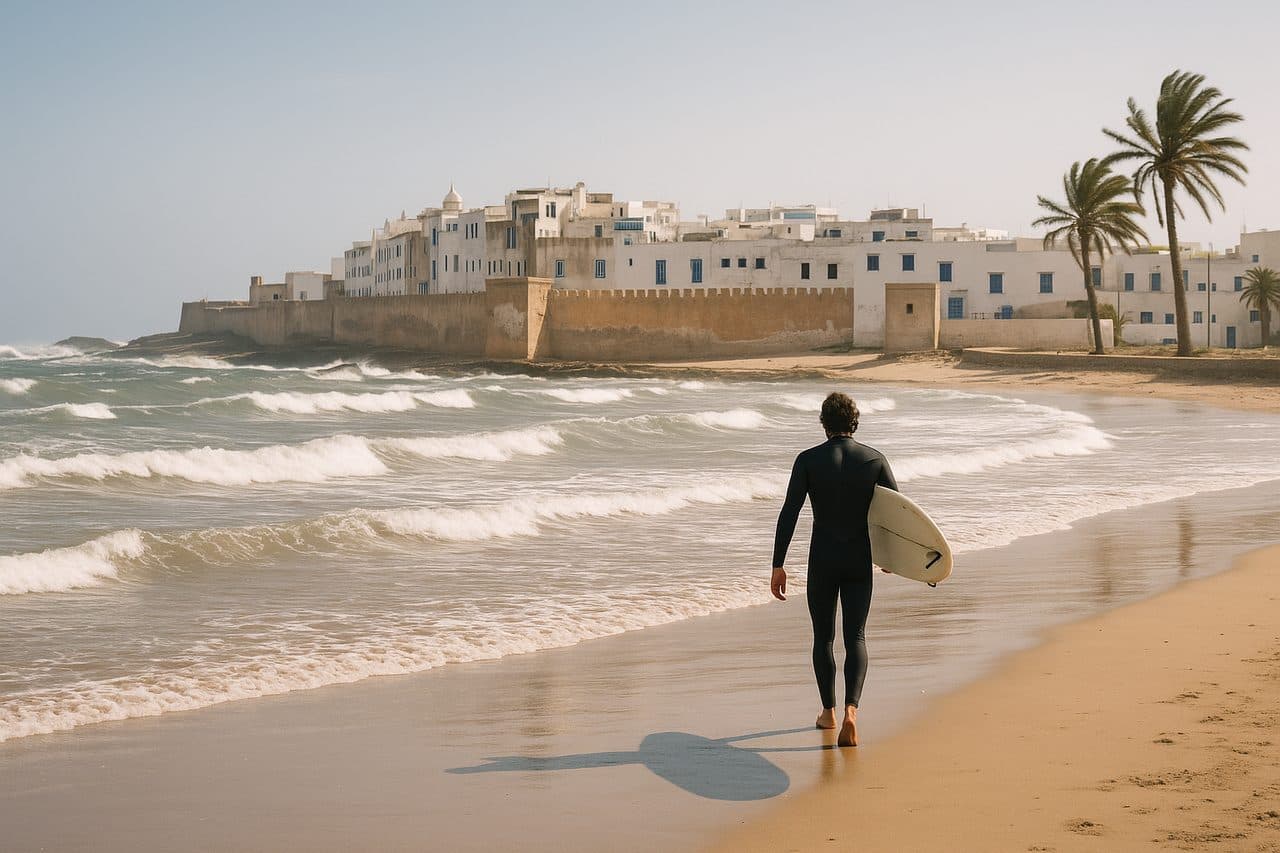

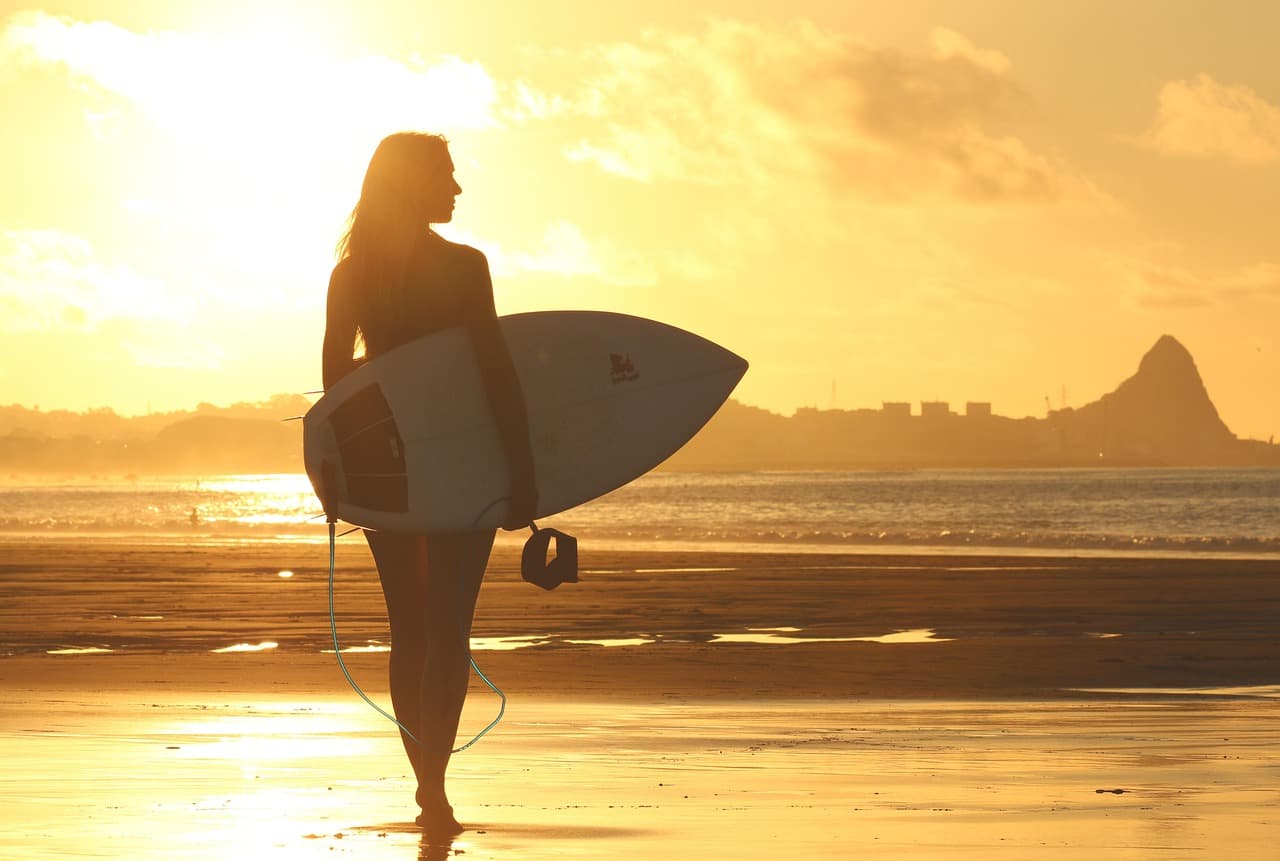
If you’ve never stood on a board and the idea makes you a little nervous, Morocco is about the friendliest place to start. The Atlantic coast south of Agadir has warm-ish water, sandy-bottomed beginner beaches, consistent swell, and a dense cluster of surf camps built specifically around teaching first-timers. This guide is the beginner’s entry point to our wider surfing in Morocco hub: which beaches are actually safe, whether to book a camp or independent lessons, what a surf week includes, what it costs, and how to stay out of trouble in the water.
Is Morocco good for beginner surfers?
Genuinely, yes — and not just as marketing. Three things make the Souss-Massa coast (Agadir up to Imsouane) a top beginner destination. Consistency: Atlantic swells hit almost year-round, so there’s nearly always a workable wave somewhere, even if your home beach is flat. Sandy beach breaks: the beginner spots have sand under your feet, not rock or reef, so a wipeout means a mouthful of saltwater, not a scraped shin. Infrastructure: dozens of surf schools and camps cluster within a 30-minute drive, all renting soft-tops and wetsuits and running daily lessons.
The water is cooler than people expect — around 20–23°C in late summer and 16–18°C in mid-winter — but a wetsuit handles it. And the nearest airport, Agadir Al Massira (AGA), is only 30–45 minutes from the main surf villages, so you can be in the water the afternoon you land. See Morocco airports & flights for routing.
What are the best beginner surf spots in Morocco?
You don’t need to know the whole coast — just three beginner-safe zones, all within easy reach of Agadir.
- Crocro (Crocodile Beach), Tamraght — probably the single most popular beginner beach in the region. Wide, sandy, with long, gentle whitewater waves perfect for foam-board practice. The name comes from a crocodile-shaped headland, not actual crocodiles.
- Devil’s Rock, Tamraght — despite the ominous name, this is one of the most forgiving learner waves in Africa: roughly 200–300 metres of sand-bottomed A-frame peaks, best at low tide. A genuine playground for first-timers and improvers.
- Imsouane “The Bay” — a long, mellow, right-hand point break that peels for 500–700 metres or more on a good day, with rides that can last close to two minutes. The bay refracts swell into slow, organized walls, giving you ages to get to your feet. It’s the prototypical surf-school wave in Morocco.
- Agadir & Taghazout town beaches — broad, sheltered, with whitewater and small waves available essentially year-round; a reliable fallback when the swell is up elsewhere.
Beginner beach break vs reef break — which should you surf?
This is the distinction that matters most for a nervous first-timer, and the one camp websites tend to blur. Morocco is world-famous for its reef and point breaks — Anchor Point, Killer Point, Boilers near Taghazout — which break over rock, hold powerful fast waves, and crowd up with experienced surfers. They are not beginner waves.
What you want is a beach break: waves over a sandy bottom, more forgiving, where you can stand and walk out and a fall is low-consequence. Crocro, Devil’s Rock, and the inside of Imsouane Bay are all sand or sand-friendly. Rule of thumb: for your first trip, ignore any spot with “Point,” “Rock,” or “Reef” in its name, and let your instructor pick the day’s beach.
| Beginner spot | Why it works for first-timers | Best months |
|---|---|---|
| Crocro / Crocodile Beach (Tamraght) | Wide sandy beach break, long gentle whitewater, biggest learner scene | Apr–Oct (small); workable year-round |
| Devil’s Rock (Tamraght) | ~200–300m sand-bottom A-frames, best at low tide, very forgiving | Apr–Oct; bigger but OK in winter |
| Imsouane “The Bay” | Mellow right-hand point peeling 500m+, long slow rides, classic surf-school wave | Summer for whitewater; Nov–Mar for cleaner lines |
| Agadir / Taghazout beaches | Sheltered, whitewater + small waves nearly all year | Year-round fallback |
Surf camp vs independent surf lessons — which is right for you?
Both work; the right choice depends on how you travel.
A surf camp is an all-in package — accommodation, meals, daily lessons or guided sessions, all the gear, and usually Agadir airport transfers, typically over 7 nights. You show up with a bag and everything is handled, including which beach to surf each day. Independent lessons mean you book your own accommodation and pay per session (about €25–35 for a ~2-hour group lesson), then surf the rest on rented gear.
If you’re nervous, traveling solo, or want zero logistics, the camp wins — you also get a built-in group at your level. If you’re on a tight budget, traveling with someone who already surfs, or combining surfing with other plans, independent lessons plus your own accommodation in Morocco gives more flexibility for less.
What’s a surf-camp week actually like (and what’s included)?
A typical Taghazout- or Tamraght-area week: arrive at Agadir (AGA), get collected, settle into a dorm or private room. Mornings and/or afternoons are surf sessions — the camp checks the forecast and drives the group to whichever beach suits your level. In between you’re fed (most camps do three meals a day), and many add yoga, sunset sessions, or a hammam trip.
What’s usually included in the price:
- Accommodation (dorm or private room) for the week
- Three meals a day
- All surf equipment — soft-top board and wetsuit
- Daily surf lessons or guided sessions with instructors
- Round-trip airport transfers from Agadir
What’s usually extra: alcohol, optional excursions, private (1-on-1) lessons, and any non-surf day trips. Always read the inclusions line before booking — “surf package” can mean lessons or just guiding.
Is a surf camp safe and good for solo or female beginners?
Yes — the surf-camp belt around Taghazout and Tamraght is one of the more comfortable places in Morocco for solo and first-time travelers, precisely because of the community model: you arrive alone but you’re immediately part of a small group eating, surfing, and exploring together, with a local team on-site. Solo female travelers consistently report feeling safe and respected in these villages, where locals are long used to international surfers.
There are also women-only surf weeks (Surf Maroc’s “Girls Surf Maroc” was billed as Morocco’s first), ideal if you’d rather learn in an all-female group. For the broader picture on traveling alone as a woman, read our solo female Morocco safety guide.
When is the best time for beginners to surf in Morocco?
For learning, the gentler seasons win. April through October brings smaller, mellower waves and warm sunny days — the easiest conditions to stand up in for the first time. Winter (roughly December–February) is peak surf season with bigger, more powerful swell — still surfable for beginners on protected beaches, but better once you’re past the foam stage.
So: spring or early autumn for the most forgiving first-timer conditions, winter if you don’t mind bigger days and want the spots at their most consistent. Either way, the beach you surf each day matters more than the month. For a deeper breakdown see best time to surf in Morocco and the general Morocco weather and best time to visit overview.
How much does it cost?
Surfing is one of Morocco’s better-value activities. Here’s the realistic 2026 picture, in bands rather than fixed quotes (prices vary by camp, room type, and season):
| Option | What you get | Cost band |
|---|---|---|
| All-inclusive surf camp (7 nights) | Room, 3 meals/day, gear, daily lessons/guiding, Agadir transfers | €450–900 / week |
| Single group surf lesson | ~2 hours, instructor, board + wetsuit | ~€25–35 |
| Board + wetsuit rental (per day) | Soft-top board and suit only | low-budget add-on |
| Private (1-on-1) lesson | Personalized coaching | premium over group rate |
For how surf costs sit against the rest of a Morocco trip, see is Morocco expensive?. The camp route is usually the best value once you factor in that lodging, food, gear, and transfers are bundled.
What should you bring — and do you need a wetsuit and board?
You don’t need to bring a board — camps and schools supply soft-tops (the safe, forgiving foam boards beginners learn on) and wetsuits as part of the package or for a small rental fee. If you do want to bring your own gear, read flying with a surfboard to Morocco first; for a first trip, renting is far simpler.
You do need a wetsuit — the Atlantic is cool. As a rough guide:
- Summer / early autumn: a 2mm shorty (or a 3/2 for windy, early-morning sessions)
- Winter: a 4/3mm full wetsuit
Otherwise, bring: reef-safe sunscreen (the sun is strong even when the air is mild), a rash vest for sun and board rub, flip-flops, a quick-dry towel, and a dry bag for the beach. Everything else the camp provides.
What are the most common beginner mistakes?
Beyond the rip currents above, the usual first-trip errors are easy to avoid: paddling out to a crowded reef or point break too early (stay on the sandy beach until your instructor moves you), surfing alone, ignoring the day’s beach choice, and underestimating the sun. Always wear your leash, keep hold of your board (a loose board is a hazard to others), and learn the basic right-of-way etiquette taught on day one.
In summary — your first Morocco surf trip
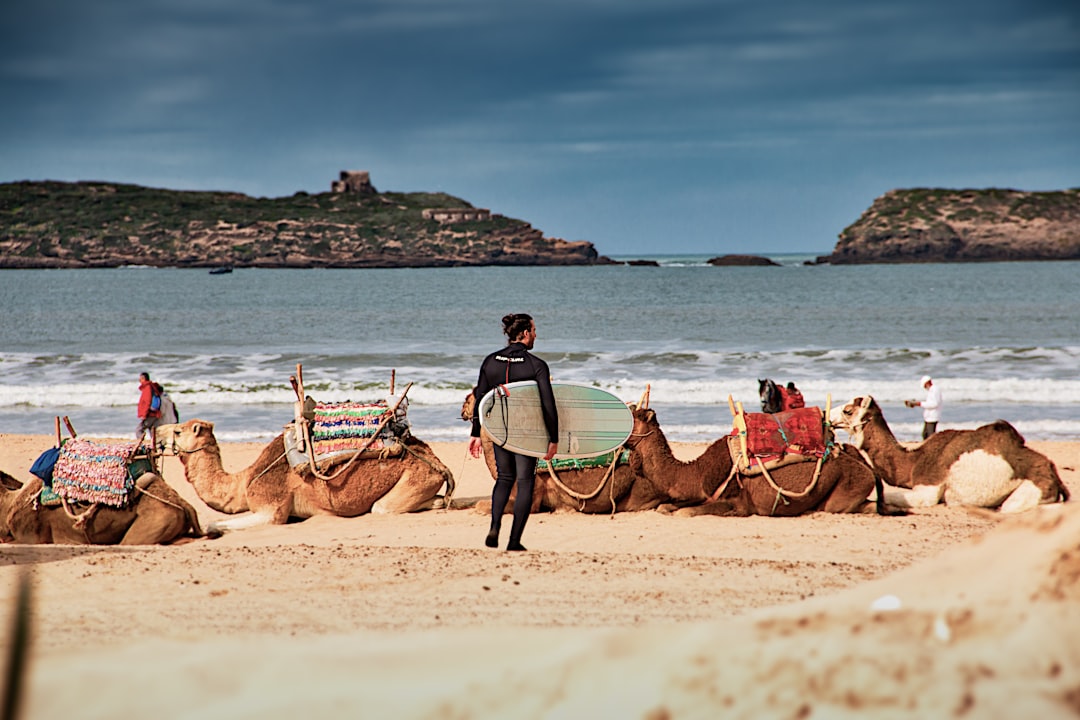
Morocco earns its reputation as a beginner surf destination: warm-ish, consistent Atlantic water; safe, sandy beginner breaks at Crocro, Devil’s Rock and Imsouane Bay; and a tight cluster of surf camps that handle everything for €450–900 a week, or independent lessons at ~€25–35 a session. Pick a sandy beach break, book a camp if you’re nervous or solo, come in spring or autumn for the gentlest waves, rent your gear, and respect the rip currents. Then start at the surfing in Morocco hub to plan the rest.
Frequently asked questions
Q: Can a complete beginner learn to surf in Morocco?
Absolutely — it’s one of the best places to start. The sandy beach breaks at Crocro and Devil’s Rock in Tamraght, plus the long mellow point break at Imsouane Bay, are forgiving learner waves, and surf schools supply soft-top boards and wetsuits with instructor-led lessons. Most people stand up in their first or second session on the foam.
Q: How much does a surf camp in Morocco cost?
A week-long all-inclusive surf camp in the Taghazout/Tamraght area typically runs €450–900 depending on room type, camp, and season — that usually covers accommodation, three meals a day, all gear, daily lessons or guiding, and airport transfers from Agadir. A single group lesson on its own is about €25–35.
Q: Do I need a wetsuit to surf in Morocco?
Yes. The Atlantic ranges from about 16°C in winter to 23°C in late summer, so you’ll want a 2mm shorty in summer and a 4/3mm full wetsuit in winter. You don’t need to own one — camps and surf schools include or rent wetsuits (and boards), so first-timers can travel with just clothes and sunscreen.
Q: Is Taghazout safe for solo female travelers?
Generally yes. Taghazout and neighboring Tamraght are established surf villages where locals are used to international travelers, and the surf-camp community model means solo travelers quickly join a group. Many camps actively host solo women, and some run women-only surf weeks. See our solo female Morocco safety guide for the full picture.
Q: What’s the best month for a beginner to surf in Morocco?
April to October offers the smallest, mellowest waves and warm sunny days — easiest for first-timers. Winter (December–February) brings bigger, more consistent swell that’s better once you’re past the foam stage, though protected beaches still work for beginners. The specific beach matters more than the month, which is why a camp picks the day’s spot for you.

Sources cited in this guide
- Surf Atlas — Tamraght and Imsouane spot guides (beach breaks, wave length, tides) — thesurfatlas.com
- Surf-Forecast — Agadir sea temperature and wetsuit guidance — surf-forecast.com
- ONDA — Office National des Aéroports — Agadir Al Massira (AGA) airport — onda.ma
- ONMT / Visit Morocco — Souss-Massa coast and Agadir region tourism — visitmorocco.com
Continue your Morocco surf prep
- Surfing in Morocco — the full hub: spots, seasons, camps, and trip planning.
- Best Time to Surf in Morocco — month-by-month swell and wind.
- Taghazout vs Essaouira for Surfing — which base suits you.
- Flying With a Surfboard to Morocco — airline rules and packing.
- Accommodation in Morocco — riads, hostels, and non-camp options.
- Is Morocco Expensive? — budget context for your whole trip.
- Morocco Airports & Flights — fly into Agadir (AGA).
- Solo Female Morocco Safety Guide — traveling alone as a woman.
- Best Time to Visit Morocco — month-by-month, region-by-region.