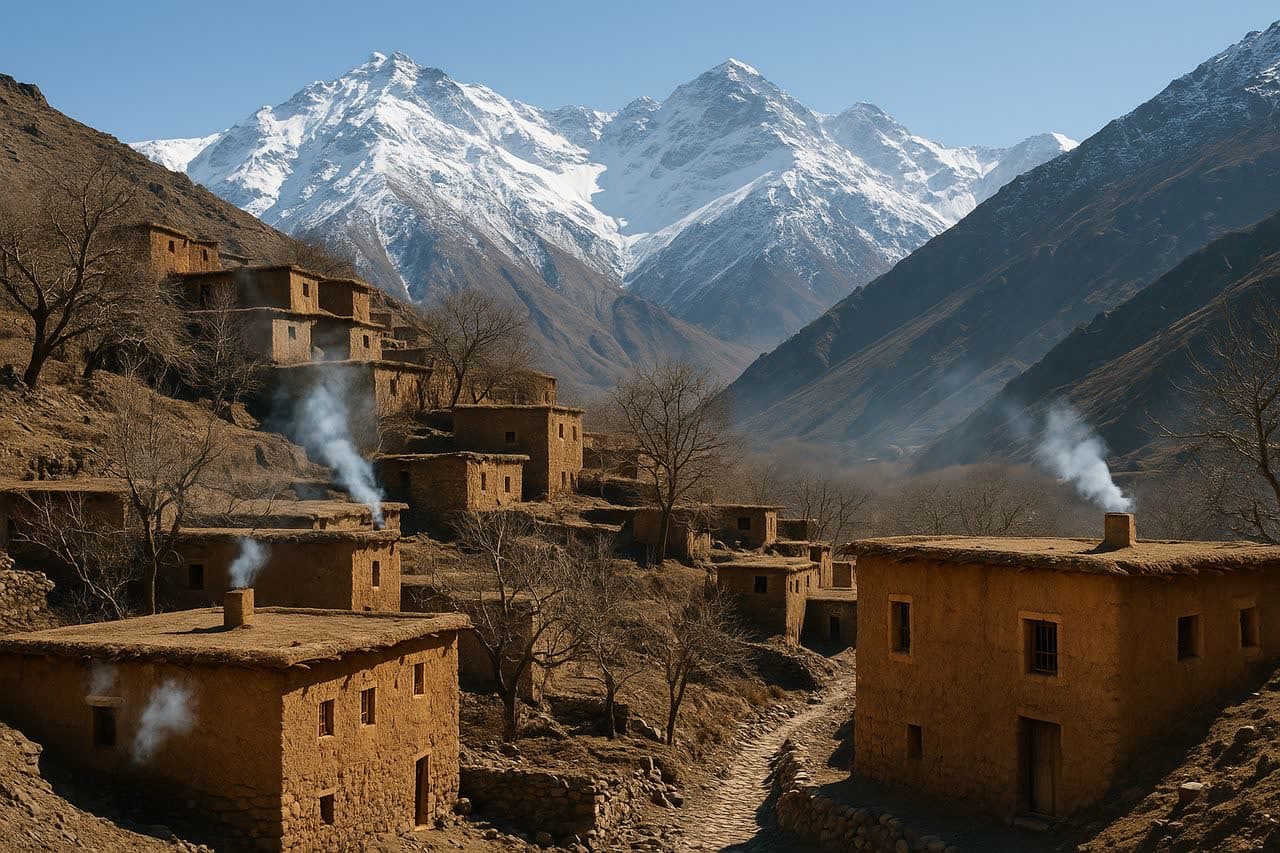

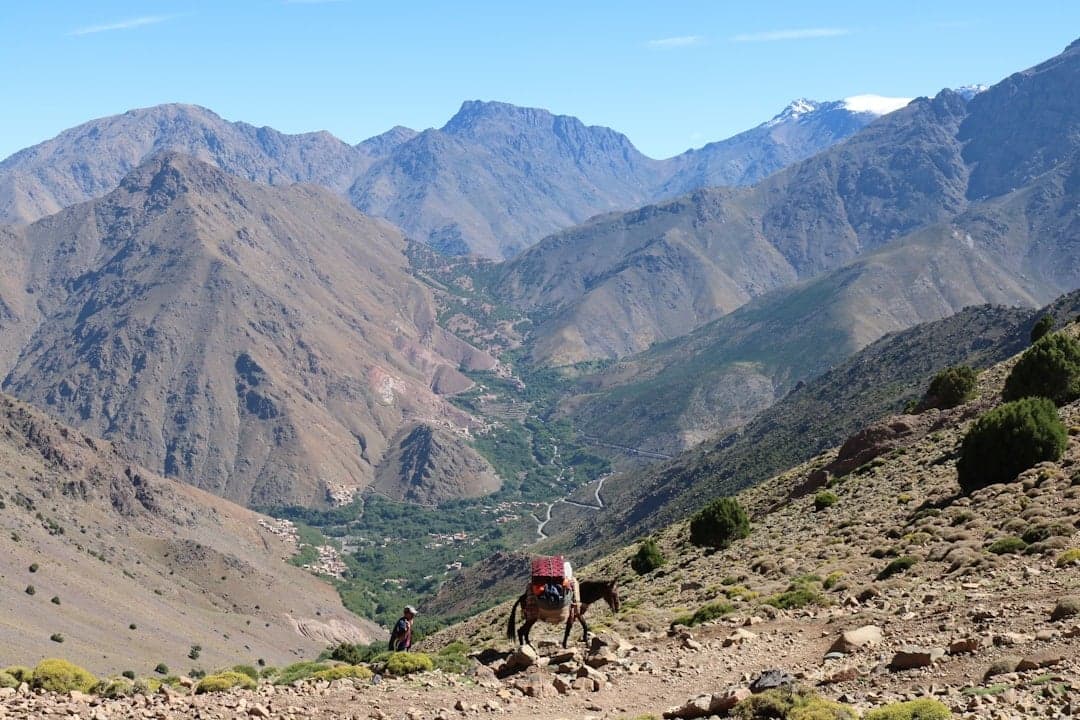
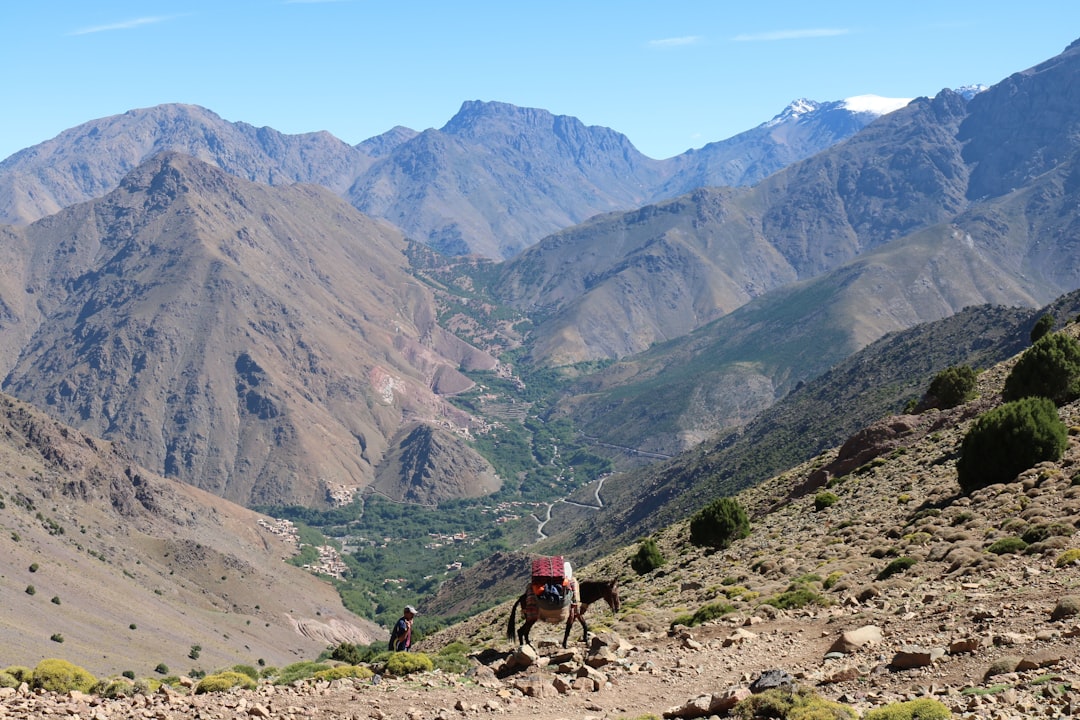
If you normally self-guide — Alps, Lakes, the Sierras, whatever — being told you “need” a guide for a non-technical summer slog like Toubkal feels like a tourist tax. I get it. So here’s the straight version with no operator spin: what the rule actually is, whether it’s really enforced, why it exists, what it costs, and the honest case for and against. Toubkal is the highest peak in North Africa at 4,167 meters, it’s a walk-up in summer, and the frustration is legitimate. The rule is still real, and ignoring the stale “just say no to the guides” advice still floating around online will cost you the trip.
Is a guide legally required for Mount Toubkal?
In practice, yes — for anyone trekking inside the Toubkal National Park summit zone. The requirement came in during 2018, and it applies to the trail from the Imlil/Aroumd trailhead up through Sidi Chamharouch to the Refuge du Toubkal and the summit. It is not a “strongly recommended” suggestion like you’ll find on Snowdon or Ben Nevis. On the ground it functions as a hard rule: licensed guide, or you don’t pass the checkpoint.
The nuance independent trekkers care about: it’s a guide requirement, not a group tour requirement. You can hire one licensed guide, walk at your own pace, carry your own pack, and make your own decisions on the hill. You are not legally obliged to buy a packaged tour, a mule, a porter, or a cook. More on that distinction below — it’s the part the operator websites tend to blur.
Is the guide rule actually enforced?
Yes — and this is where the old internet advice gets people. There are checkpoints staffed by the Royal Gendarmerie and local authorities at three points: just outside Aroumd (Aremd), at Sidi Chamharouch, and again at the Refuge du Toubkal. They check your passport and your guide’s license. No license, no onward travel — they turn you around at the first post.
There is no penalty-and-proceed lane. You don’t pay a fine and keep walking; you simply don’t get up the valley. So the calculus for a confident solo trekker isn’t “risk a small fine” — it’s “drive five hours from Marrakech, sleep in Imlil, and get sent home from a checkpoint before breakfast.” That’s the reality the pre-2018 blog posts don’t tell you.
Why is a guide mandatory — what happened in 2018?
The rule exists because of a specific tragedy. In December 2018, two Scandinavian trekkers — Louisa Vesterager Jespersen of Denmark and Maren Ueland of Norway — were murdered while camping near Imlil, at the foot of the Toubkal massif. The attack shook Morocco’s tourism sector, which takes traveler safety seriously, and the authorities responded by mandating licensed guides on the mountain.
There are two honest layers to the “why,” and it’s worth separating them. The stated reason is safety and accountability — a licensed guide means someone vetted is with you, knows the terrain, and is traceable. The unstated layer is local economy: Imlil and the surrounding Berber villages depend on guiding, portering, and refuge income, and the rule guarantees that visitors to the park put money into the valley that hosts them. Neither layer is sinister. But you should know both, because “it’s for your safety” alone doesn’t fully explain a rule applied to a non-technical summer walk.
Can I do the approach trek to Imlil or Aroumd alone?
Yes. The village-level walking is unpoliced. You can get yourself to Imlil (about 1.5 hours by grand taxi or car from Marrakech) and stroll up to Aroumd without a guide — that lower stretch is open trail through villages and terraced fields. Plenty of independent travelers do an Imlil-base day hike with zero paperwork.
The checkpoint line is what changes everything. Once you’re heading up-valley toward Sidi Chamharouch and the high mountain — the Toubkal summit route proper — you hit the gendarmerie posts and the guide requirement bites. So “the approach alone” works for casual valley walking around Imlil and Aroumd; it does not work for the summit push or the multi-day Toubkal circuit, which sits inside the same controlled zone.
What does a Toubkal guide cost?
Less than the Marrakech tour-aggregator sites imply. The Bureau des Guides in Imlil posts an official day rate, and hiring directly is far cheaper than booking a multi-day “experience” through a middleman in the city. Here’s the realistic 2026 cost map for the standard 2-day, 1-night summit (Imlil → refuge → summit → Imlil):
| Item | Cost band (2026) | Notes |
|---|---|---|
| Licensed guide | ~50€ / day (≈500–550 MAD) | Official Bureau des Guides rate; a 2-day summit ≈ 100€. Hired on the spot for a round trip, some quote 400–700 MAD. |
| Mule (gear carry) | ~150–250 MAD / day | Optional. Carries packs to the refuge; not required if you carry your own. |
| Porter | ~150–250 MAD / day | Optional. Often bundled with the mule + muleteer. |
| Refuge night (half-board) | ~280 MAD / person | Refuge du Toubkal or the neighboring Les Mouflons; dinner + breakfast, shared bunkroom. |
| Park / trail access | No separate tourist permit fee | The “cost” of access is effectively the mandatory guide, not a ticket. |
| Full 2-day package ex-Marrakech | ~$75–120 / person / day all-in | Guide + transport + refuge + meals; guide-fee portion ≈ $150–200. |
Tips are customary on top — budget roughly 50–100 MAD per day for a guide you were happy with, less for a muleteer.
Guide vs no guide — the honest case for independent trekkers
Let me argue both sides properly, because you deserve more than “guides are great, book now.”
The case against being forced into one (your frustration, validated): Summer Toubkal is non-technical. The trail to the refuge is obvious, the summit-day route is a well-trodden scree slog, and a competent hillwalker with a map and decent fitness genuinely doesn’t need hand-holding. If you’ve self-navigated harder mountains, the rule can feel like it taxes your autonomy rather than your risk. That’s a fair read.
The case for just doing it anyway: First, you have no choice if you want to summit — the checkpoints settle the argument. Second, a good local guide earns the fee even for strong trekkers: weather calls on a mountain that flips fast, the line through scree and (shoulder-season) snow, altitude pacing toward 4,167 m, and the Darija that smooths refuge beds and checkpoint stops. Third, your money stays in the Berber villages that maintain the trail you came to enjoy. The practical move for an autonomy-minded trekker: hire the cheapest licensed guide, decline the mule and porter, carry your own pack, and walk your own hike. You keep your independence and your legality at the same time.
Do I need a guide for Toubkal in winter?
Yes — and here the rule and basic survival point the same way. From roughly December to April, the route holds snow and ice above about 2,500 meters, crampons and an ice axe become mandatory, and the summit-morning approach can sit around −15°C. The non-technical summer slope turns into genuine winter mountaineering terrain where a slip on hard snow has consequences. This is not the season to test how serious the checkpoint is.
A winter-competent guide is worth far more than the summer fee: route-finding under snow cover, avalanche-aware terrain choices, and turning you around when the weather says so. If you don’t own winter kit, crampons rent for around 400 MAD for 3 days in Imlil. For the full winter playbook — kit list, conditions, and the harder summit logistics — see our Toubkal in winter guide, and check best time to climb Toubkal before you lock dates.
How do I hire a legitimate guide (and avoid a fake one)?
Use a licensed guide — the checkpoints verify the license, so an unlicensed “guide” you met outside your riad doesn’t just risk quality, it fails the legal test and gets you both turned back. The cleanest routes:
- Bureau des Guides, Imlil — the official guides’ office in the trailhead village; posted rates, vetted licenses.
- Your Imlil guesthouse — most reputable gîtes in Imlil and Aroumd partner with licensed local guides.
- A vetted operator — handy if you want transport from Marrakech and the refuge pre-booked. This is what we arrange for guests through GuideMe’s private Morocco tours: a licensed local guide, the refuge night, and a single WhatsApp contact for the whole thing.
If you’re basing yourself in the city and weighing Toubkal against lighter options, our day trips from Marrakech and things to do in Marrakech guides cover the Imlil valley day-hike alternative — that lower walking needs no guide at all.
For context on whether the rule is “babysitting” or sensible: summer Toubkal is a strenuous walk, not a climb — no ropes, just sustained uphill and altitude, and fit hikers summit comfortably with one refuge overnight. The hazards are altitude and fast-moving afternoon weather. Where the trek fits a wider trip is in our Morocco itinerary planner.
The bottom line
You cannot legally summit Toubkal without a licensed guide, and the rule is genuinely enforced at three checkpoints between Aroumd and the refuge — there’s no workaround worth your trip. But you keep more autonomy than the tour sites suggest: hire one licensed guide directly in Imlil for around 50€ a day, skip the mule, porter, and packaged extras if you want, and walk your own hike. The cost is modest, the frustration is understandable, and the practical answer is to meet the rule cheaply rather than fight it and lose the mountain.
Frequently asked questions
Q: Can you climb Toubkal without a guide?
Not legally since 2018. You’ll be stopped at the Royal Gendarmerie checkpoint outside Aroumd, and again at Sidi Chamharouch and the Refuge du Toubkal, where your passport and your guide’s license are checked. Without a licensed guide you’re turned back — there is no fine-and-continue option. The village-level approach walk around Imlil itself is unpoliced, but the high mountain trail to the summit is not.
Q: How much does a guide for Mount Toubkal cost?
The Bureau des Guides in Imlil sets an official rate of about 50€ (~500–550 MAD) per guide, per day, so a standard 2-day summit runs roughly 100€ for the guide alone. Hired on the spot for a round trip, some quote 400–700 MAD. A full guided package from Marrakech — transport, refuge, meals included — works out to about $75–120 per person per day.
Q: Is the Toubkal circuit possible without a guide?
No. The same checkpoint rule covers the whole Toubkal National Park trekking zone, not just the single summit day, so the multi-day circuit also requires a licensed guide. Older blog reports describing guide-free circuits predate the 2018 regulation and no longer match what happens at the checkpoints today.
Q: Do I need a guide for Toubkal in winter?
Yes, on both legal and safety grounds. From roughly December to April the route holds snow and ice above ~2,500 m, crampons and an ice axe are mandatory, and summit-morning temperatures can reach about −15°C. Winter turns a summer walk-up into genuine mountaineering terrain — it is the worst possible time to test the rule.
Q: What happens if I refuse and try to go up alone?
You lose the day. The gendarmerie turns unaccompanied trekkers around at the first checkpoint outside Aroumd; you cannot pay a fine and proceed. Beyond the legal block, you also give up the route-finding, weather judgment, and rescue link the rule exists to provide. The efficient move is to hire the cheapest licensed guide and keep your independence on the hill.

Sources cited in this guide
- Bureau des Guides, Imlil — official guides’ office, day rates and licensed-guide booking — bureaudesguidesimlil.com
- Refuge du Toubkal / CAF Casablanca — refuge altitude, capacity, and management — refugedutoubkal.com
- UK Foreign, Commonwealth & Development Office — Morocco travel advice — current mountain-area guidance — gov.uk/foreign-travel-advice/morocco
- US State Department — Morocco Travel Advisory — safety classification reference — travel.state.gov
Continue your Morocco prep
- Mount Toubkal trek guide — the full route, refuge logistics, and packing list (hub).
- Toubkal in winter — snow conditions, crampons, and the harder summit window.
- Best time to climb Toubkal — month-by-month conditions for the summit.
- Private Morocco tours & guides — book a licensed Toubkal guide with one WhatsApp contact.
- Is Morocco safe? — the honest safety picture, including the 2018 context.
- Day trips from Marrakech — the Imlil valley day-hike alternative.
- Things to do in Marrakech — basing yourself in the city before the climb.
- Is Morocco expensive? — how guide and trek costs fit a wider budget.
- Morocco itinerary — where a Toubkal trek slots into 7, 10, or 14 days.