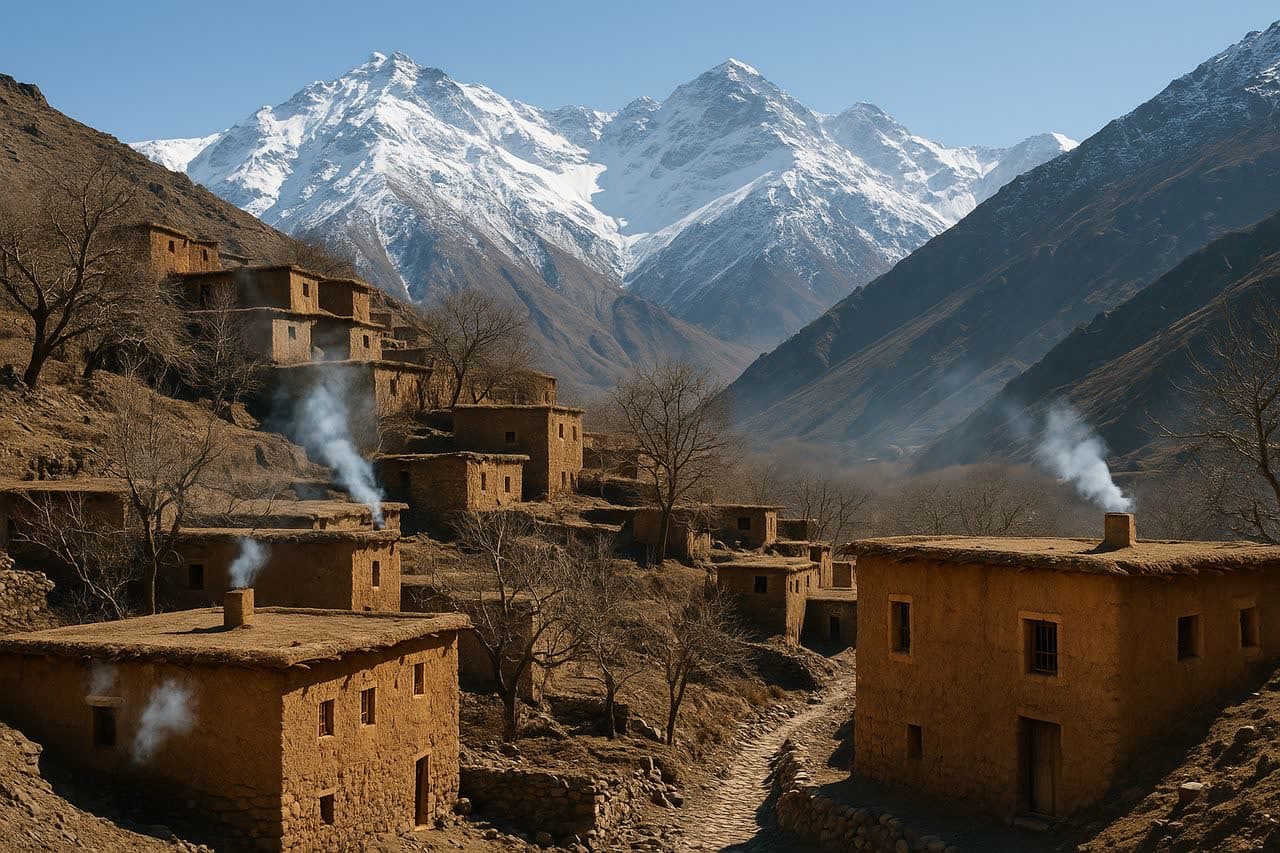

Toubkal isn’t one climb — it’s two different mountains depending on the month. From late spring through autumn it’s a hard but non-technical walk that fit hikers finish in two days. From late November to April it’s a winter ascent with avalanche risk and sub-zero summits. Pick the wrong month and you either bake on a furnace-hot lower trail or arrive in trainers to a slope that demands crampons. Here’s the decision, month by month.
When is the best month to climb Toubkal?
For most people the two best months are May and October. Both sit on the shoulders of the season: the heavy snow has gone (May) or hasn’t yet arrived (October), daytime temperatures are mild, and the Refuge du Toubkal at ~3,207 m isn’t the shoulder-to-shoulder scrum it becomes in midsummer. April and September are strong runners-up — April can still hold snow high up, and September is reliable but warm on the lower trail.
If you only remember one thing: the snow-free walk-up window is roughly late April/May through September/October, and the technical winter window is December through March, with November and April as unpredictable transition months that can swing either way year to year.
What’s the best season for a non-technical ascent (a walk-up)?
Autumn (September–October) is the most consistent season for a non-technical climb, and many guides quietly rate it above spring. The summer crowds have thinned, daytime temperatures average in the 20s °C, and there’s little or no snow on the route. You get the walk-up experience — steep, high, tiring, but no crampons — with the calmest weather of the year.
Late spring (May) gives you the same non-technical line in most years, plus snow still decorating the skyline for the photos. The trade-off is that conditions are less predictable than autumn: a heavy winter can leave hard snow on the final cone well into May, especially on the shaded north side.
Toubkal weather by month — the decision table
Here’s the month-by-month call. “Snow?” refers to the summit cone and upper route, where it matters for gear; the lower valley clears far earlier.
| Month | Conditions | Snow on the route? | Who it suits |
|---|---|---|---|
| January | Deep winter, coldest period | ✅ Heavy, avalanche risk | Experienced winter mountaineers only |
| February | Deep winter, heavy snowfall | ✅ Heavy, avalanche risk | Experienced winter mountaineers only |
| March | Late winter, south face starts clearing | ✅ Still snowy up high | Winter mountaineers; late-March = transition |
| April | Transition — green valleys, snowy tops | ⚠️ Often on the upper cone (esp. north) | Confident trekkers ready to carry crampons |
| May | Mild, stable, snow mostly gone | ⚠️ Patches some years | Most trekkers — strong shoulder month |
| June | Warm, dry, snow-free; busy | ❌ Rare | Heat-tolerant trekkers; early-summer crowds |
| July | Hot on lower trail; storm risk PM | ❌ None | Trekkers who can handle heat + early starts |
| August | Hottest, busiest; storm risk PM | ❌ None | Summer-only travelers; book the refuge early |
| September | Warm, reliable, thinning crowds | ❌ Rare | Most trekkers — excellent walk-up month |
| October | Mild, stable, quiet — top pick | ❌ Usually none | Almost everyone; best all-round month |
| November | Transition — first snows arrive | ⚠️ Increasingly likely | Risk-tolerant; check conditions before booking |
| December | Winter sets in | ✅ Likely, building | Experienced winter mountaineers only |
Is spring a good time to climb Toubkal? (April / May)
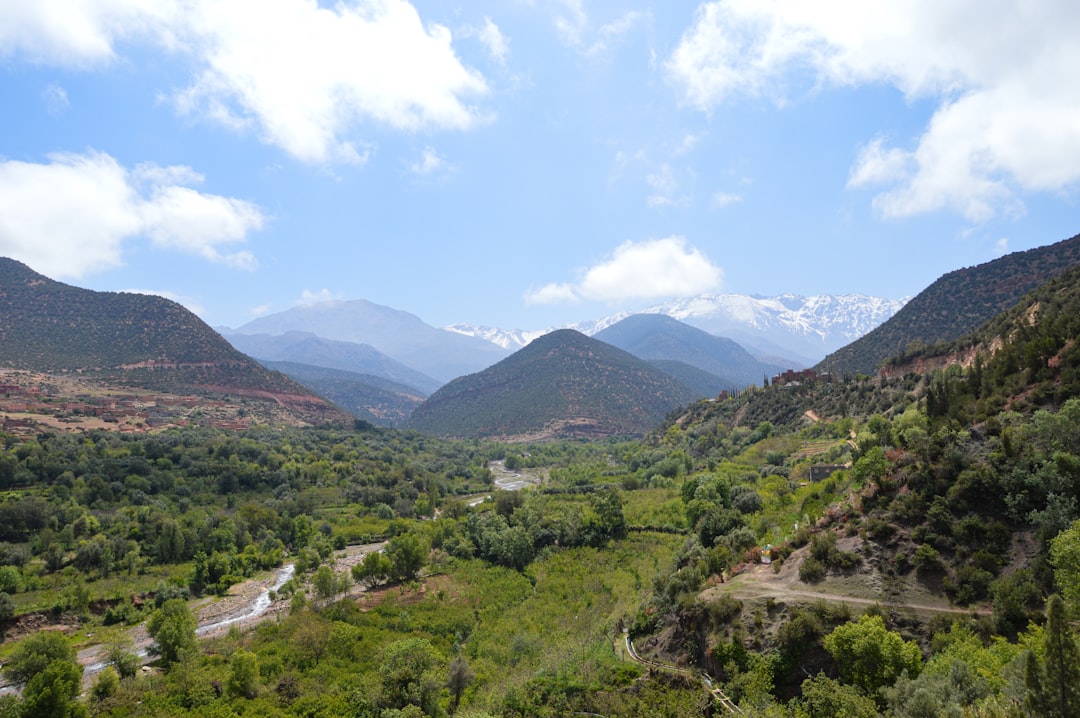
Spring is good — with one large asterisk. The south face often clears by late March, but the north side can hold snow into May. That mismatch is the single most useful planning fact on this page, and most blogs skip it. By late April the valleys around Imlil are green and warm, which lulls people into leaving the crampons behind — and then the final 300–400 m to the summit turns out to be hard, icy snow.
So: May is a reliable shoulder month in most years. April is the gamble — you might get a clean walk-up, or you might need an ice axe on the cone. If you’re climbing in April, do not commit to “no technical gear” until your guide has eyes on current conditions.
How bad is the summer heat (June–August)?
Summer is snow-free and the summit itself stays cool — so the danger isn’t the top, it’s getting there. In June, July and August, Marrakech routinely hits the high 40s °C. The High Atlas runs about 10 °C cooler, but that still leaves the lower trail from Imlil (20–30 °C in summer) up toward the refuge as a sweaty, exposed grind in full sun. The fix is an early start and plenty of water, not heavier boots.
The second summer issue is afternoon thunderstorms, common in mountains this time of year. Rain only falls on roughly two or three days in a given summer month, but a 2 p.m. storm high on an exposed ridge is a real hazard. Summit early and be heading down by midday. Refuge temperatures sit a comfortable 10–20 °C in summer, so the overnight is pleasant — it’s the daytime lower trail and the storm timing that catch people out.
What about Toubkal in winter (November–March)?
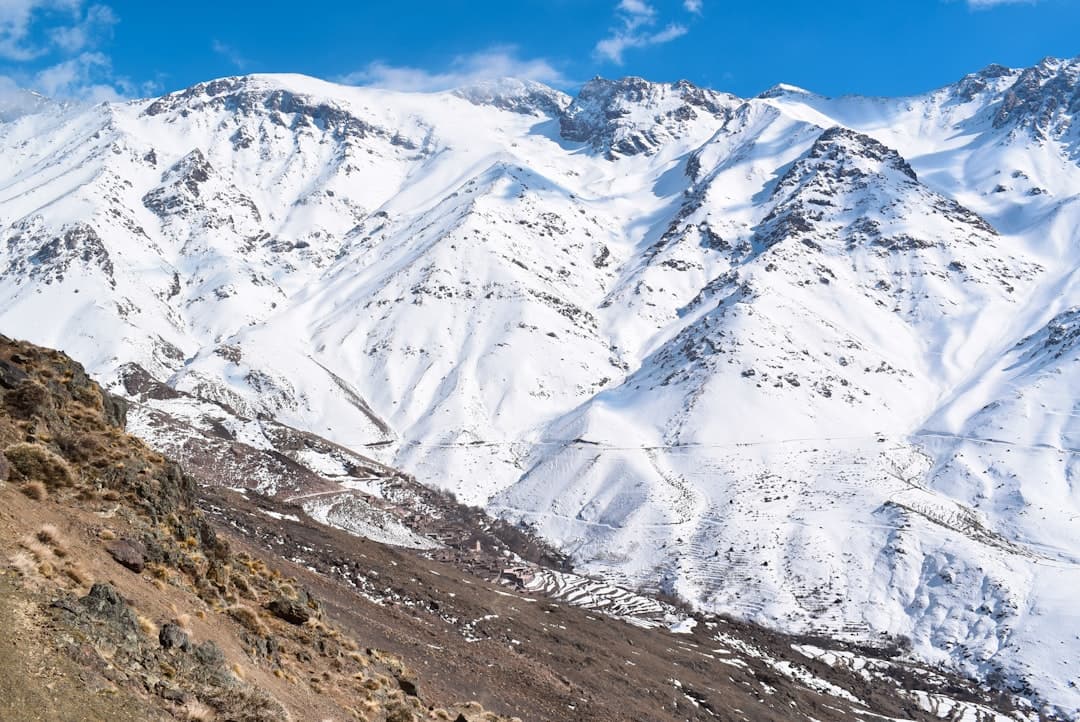
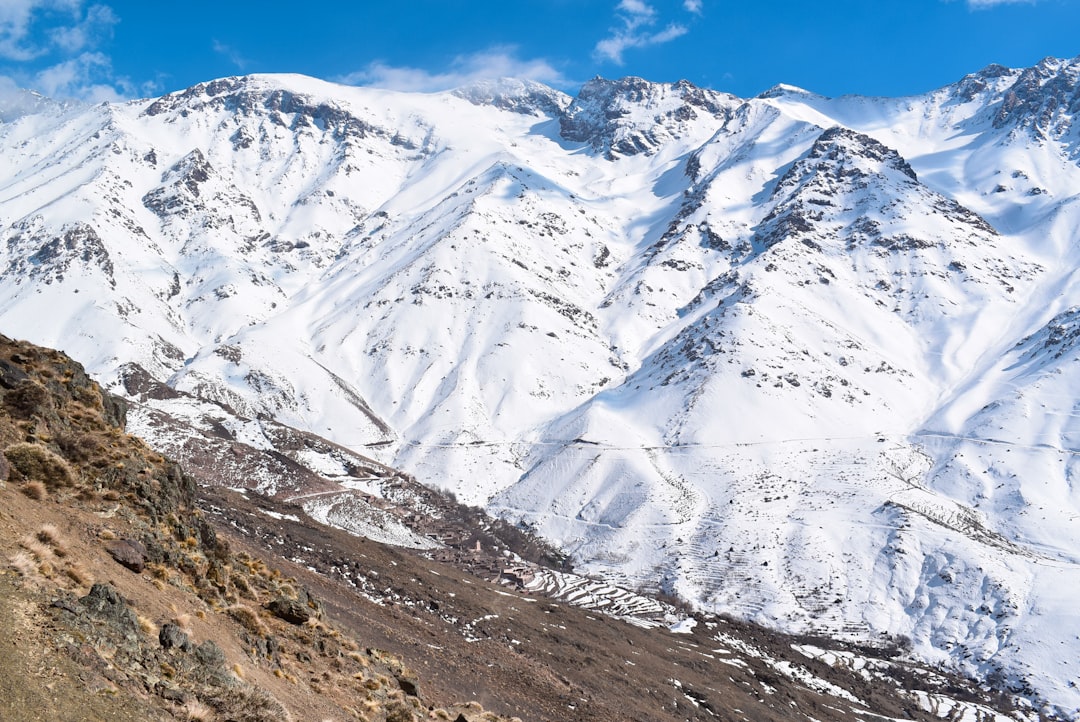
Winter turns Toubkal from a trek into a full mountaineering expedition. Snow usually covers the upper mountain from early January to mid-May, with the heaviest falls — and the highest avalanche risk — from January to March. First snows can arrive as early as late October or November. This is not a hike with extra layers: it’s crampons, an ice axe, the skills to use both, and the judgment to read avalanche-prone slopes.
Conditions are genuinely severe. Summit temperatures can drop to around –10 °C with wind up to 40 km/h; even the refuge at ~3,200 m sits near 0 °C. Guides commonly descend the west side in winter to avoid avalanche terrain. If you’ve done a winter-skills day and walked in crampons before, a guided winter Toubkal is a superb objective. If you haven’t, choose another month — this is where people get hurt.
When is the snow window — and when do you need crampons?
The practical line for gear:
- Crampons + ice axe likely needed: late November through April, and into May in heavy-snow years (especially the north side of the cone).
- Non-technical walk-up: roughly May through October most years.
- Snow on the summit, broadly: early January to mid-May, building again from late October/November.
Conditions vary year to year, so these are guidelines, not guarantees. Crampons and ice axes rent cheaply in Imlil — even shoulder-season climbers can grab them if a recent storm has dusted the top. Have your guide confirm current snow before deciding to leave the technical kit behind.
When is Toubkal least crowded?
The mountain is busiest June through September, and the Refuge du Toubkal can fill completely on summer weekends — advance booking is essential. For quiet, aim for late September into October midweek: the weather is still excellent for a walk-up, but the peak-summer crowds have gone home. May midweek is similarly calm. Avoid August weekends if solitude matters — that’s the high-water mark for refuge crowding.
How cold does it get at altitude?
Temperature swings hard with season and height. In summer, the refuge (~3,200 m) sits at a mild 10–20 °C and the summit is cool but manageable. In winter, the same refuge hovers near 0 °C and the summit can hit –10 °C with 40 km/h wind — windchill that demands full winter gear. Even in the friendly shoulder months the pre-dawn summit push is cold, so a warm layer and gloves go in the pack year-round. This gradient is exactly why the month matters: the trail that’s a t-shirt walk in October is a wind-blasted snow climb in January.
So — which month should you pick?
Match the month to the climb you want:
- You want a non-technical walk-up, best all-round conditions → October (or May). Stable, mild, quiet, snow-free.
- You want green valleys and snow on the skyline, and you’ll carry crampons just in case → late April / May.
- You can only travel in summer → June or September over July/August; start at dawn, carry water, beat the afternoon storms.
- You want a genuine winter mountaineering challenge and you have the skills → December–March, guided, with full technical kit.
- You’re unsure of your fitness or experience → September/October, the most forgiving window, and book a licensed guide who can pace you.
Whichever month you choose, plan a two-day trip with a refuge overnight and lock your guide and refuge bed early in peak season. Toubkal rewards the climber who picks the right month far more than the one who simply turns up.
Planning a High Atlas trek around your dates? Message Anass on WhatsApp →
Frequently asked questions
Q: What is the best month to climb Toubkal?
May and October are the two best months. Both have stable weather, mild daytime temperatures, and the heavy snow either gone (May) or not yet arrived (October), with smaller crowds than midsummer. April can still hold snow on the upper cone, and September is warm but very reliable. For the calmest all-round conditions, October is the standout pick.
Q: Can you climb Toubkal without crampons?
Yes — roughly May through October most years, when the route is a non-technical walk-up. From late November to April (and sometimes into May on the shaded north side) you generally need crampons and an ice axe for the icy summit cone. Crampons and axes rent cheaply in Imlil, so have your guide check current snow before deciding to go without.
Q: Is it too hot to climb Toubkal in summer?
The summit stays cool, but the lower trail bakes. In June–August, Marrakech hits the high 40s °C and the valley around Imlil reaches 20–30 °C, making the climb to the refuge a hot, exposed grind. Heat and afternoon thunderstorms — not snow — are the real summer risks. Start at dawn and summit before midday.
Q: How dangerous is Toubkal in winter?
Winter (December–March) is a true mountaineering expedition with avalanche risk, summit temperatures around –10 °C, and wind up to 40 km/h. Snow covers the upper mountain from roughly January to mid-May. It’s for climbers with winter-walking experience, crampons, an ice axe, and a licensed guide — not a first-timer’s hike.
Q: Do you need a guide to climb Toubkal?
Yes. A licensed local guide has been mandatory on the trail between Imlil and the summit since 2019, and you’ll pass Gendarmerie checkpoints that verify both your passport and your guide’s ID. Hire through the Bureau des Guides in Imlil; the official rate is around €50 per day. A guide is doubly important — and legally enforced — in winter.

Sources cited in this guide
- UKClimbing — Climbing Toubkal: summer trekking and winter mountaineering — ukclimbing.com
- Call to Adventure — Jebel Toubkal weather; Toubkal in winter — calltoadventure.uk
- Altura Expeditions — Best time to climb Toubkal: seasonal analysis and required gear — alturaexpeditions.com
- Skyhook Adventure — Toubkal weather; best time to climb — skyhookadventure.com
- Maratrek / Imlil Morocco — guide-mandatory rule and Gendarmerie checkpoints — maratrek.com
Continue your Morocco prep
- Mount Toubkal Trek Guide — the full route, itinerary, and what to pack (hub).
- Do You Need a Guide for Toubkal? — the mandatory-guide rule explained.
- Toubkal in Winter — the technical winter ascent, gear, and avalanche safety.
- Best Time to Visit Morocco — month-by-month, region-by-region weather.
- Things to Do in Marrakech — your base city before and after the trek.
- Accommodation in Morocco — riads, refuges, and where to stay in Imlil.
- Morocco Itinerary — fit Toubkal into a 7, 10, or 14-day trip.
- Private Morocco Tours & Guides — let a local plan your trek and the rest of the trip.