If you’ve spent any time researching a one-week trip to Morocco, you’ve seen the same itinerary copy-pasted across thirty travel blogs: Marrakech → Atlas → Sahara → Fes → Chefchaouen. That structure works. But none of those posts answer the question that actually matters when you’re booking your flight: does my arrival airport change the plan? Yes, it does — and the differences are enough that landing in Casablanca versus Marrakech versus Fes will give you two distinctly different versions of the same trip.
This guide is the version I give friends. Three route variants by arrival city, a day-by-day for the most common one, the trade-offs between them, and the unspoken rules that catch first-timers off guard.
Is 7 days enough for Morocco?
For a first trip — yes. Seven days gives you one major Atlas/Sahara loop plus two imperial cities (Marrakech and Fes) and a quick stop in Chefchaouen if you sequence it right. What you’ll miss is the Atlantic coast (Essaouira, Asilah), deep Drâa Valley palmeries, and the Mediterranean north. You’ll also be moving most days — this is not a slow-travel pace.
If you’re considering 5 days instead, see our 5-day Morocco itinerary — honestly, 5 days forces you to choose between Sahara and Chefchaouen. With 10 days you unlock both plus Essaouira; see the 10-day itinerary. For the comprehensive grand tour, the 14-day plan is the dream version.
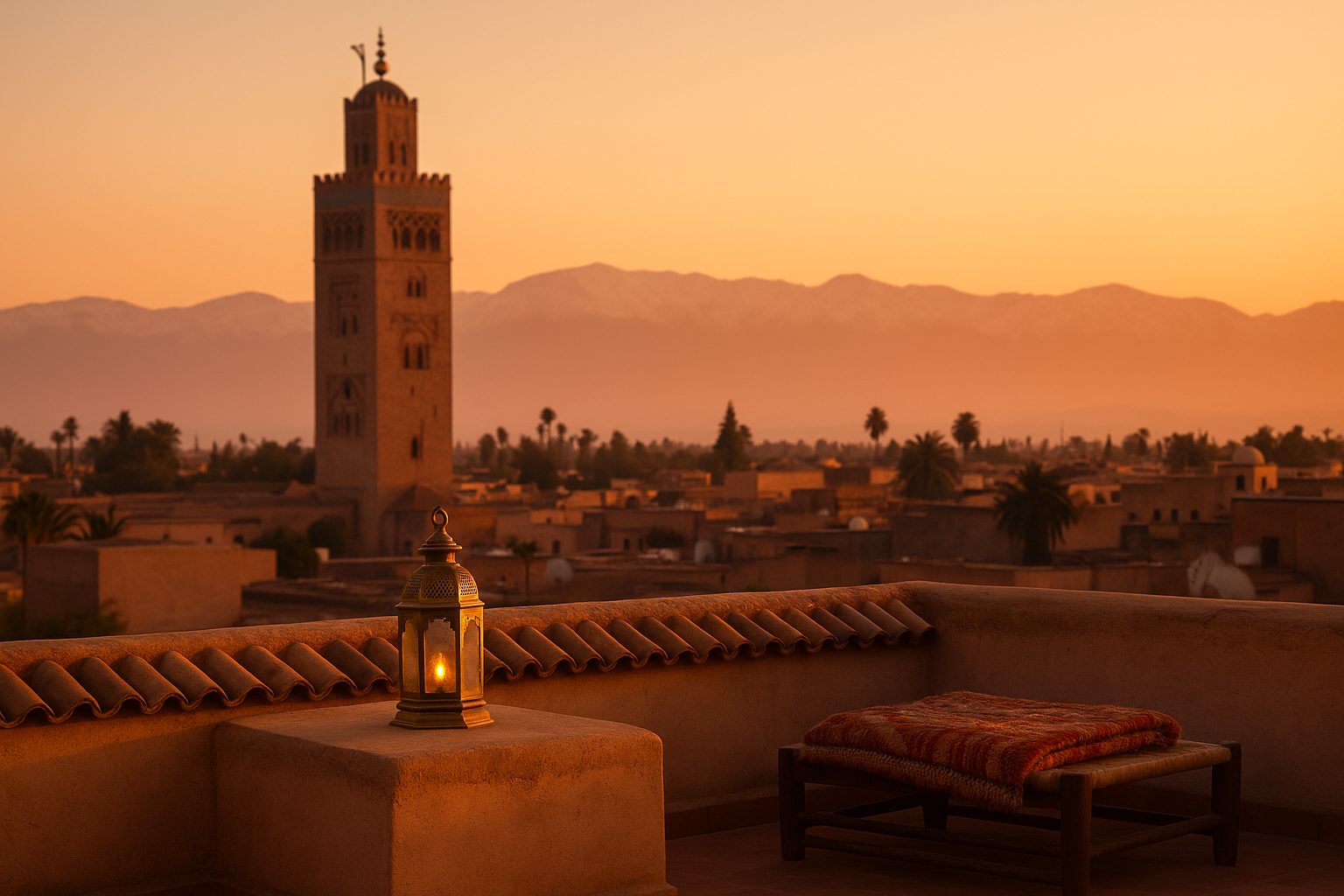
The canonical 7-day route at a glance
| Day | Stop | Travel time | Sleep |
|---|---|---|---|
| 1 | Arrive Marrakech | — | Marrakech riad |
| 2 | Marrakech (medina + Jardin Majorelle) | — | Marrakech riad |
| 3 | Marrakech → Aït Benhaddou → Dades Gorges | ~6h drive | Dades hotel |
| 4 | Dades → Todra → Merzouga (camel trek + desert camp) | ~5h + camel | Sahara camp |
| 5 | Merzouga → Fes (via Midelt OR through Erfoud) | ~8h drive | Fes riad |
| 6 | Fes medina (full day) | — | Fes riad |
| 7 | Fes → Chefchaouen OR straight to departure airport | ~4h to Chefchaouen | Chefchaouen OR fly out |
The route forms a triangle: Marrakech in the south-west, Sahara in the south-east, Fes in the north-east. Whether you start at the southern corner (Marrakech), the western corner (Casablanca), or the northern apex (Tangier or Fes) changes which direction you drive that triangle.
Itinerary variant A: Arriving Marrakech (RAK airport)
The most popular version, and the one I’d recommend for first-timers. You land at Marrakech Menara, do 2 days in the city to adjust to the pace and culture, then loop counter-clockwise: Marrakech → Sahara → Fes → either Chefchaouen overnight (then fly out from Tangier) or back to Casablanca for departure.
How does 7 days compare to 5, 10, or 14? See our Morocco itinerary planner.
Best for: First-timers, photographers, anyone whose primary goal is “the Marrakech experience plus the desert.”
Pros: Adjustment time before the long drives. The Atlas pass is in your second day, not your last. Sahara is your trip’s emotional centerpiece, set up by Marrakech.
Cons: The Marrakech → Aït Benhaddou drive on Day 3 is the trip’s first big day and starts early.
Itinerary variant B: Arriving Casablanca (CMN airport)
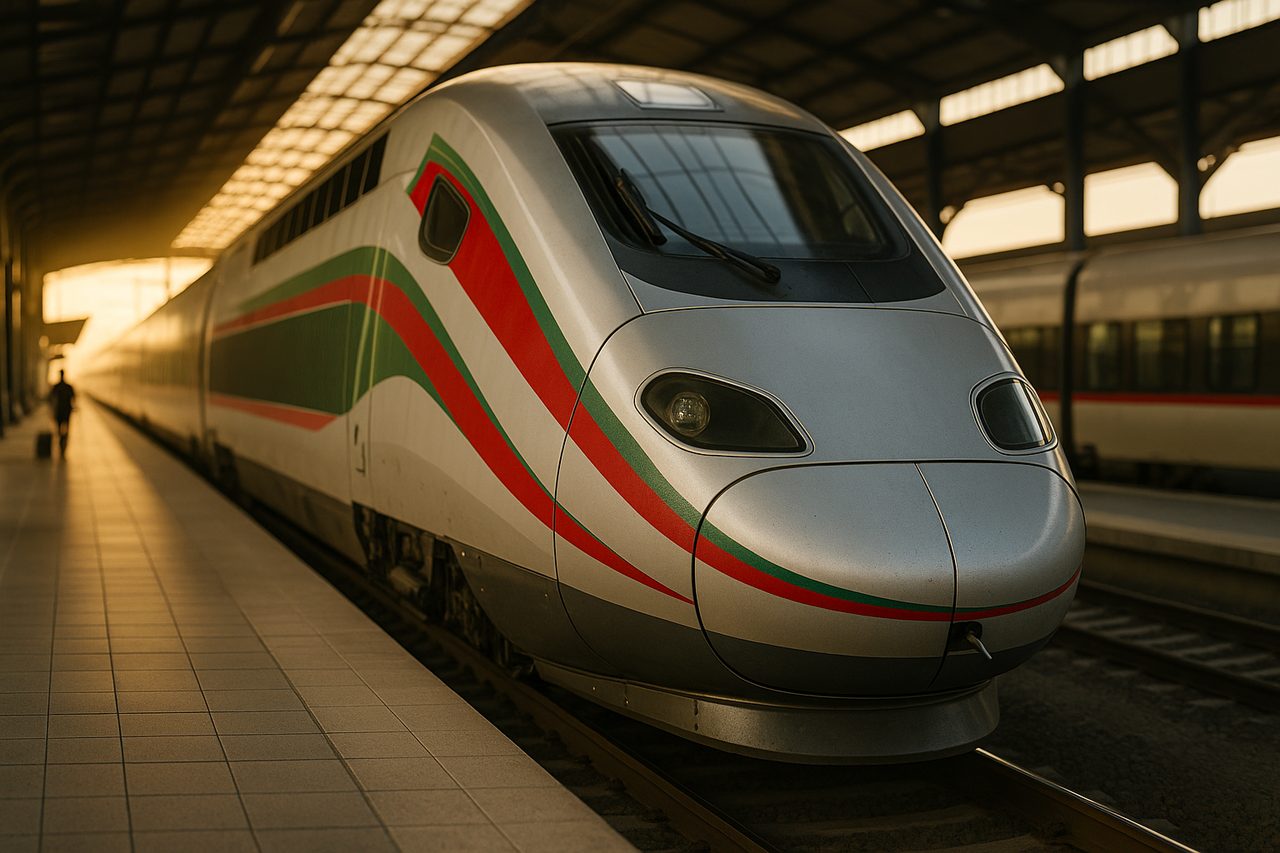
Casablanca is the country’s biggest airport (Mohammed V), and it’s often the cheapest flight from North America or Europe. The 3-hour high-speed train south to Marrakech is straightforward. If you go Casa → Marrakech first thing on arrival, you essentially convert this into Variant A. But if you have a flexible return ticket, you can do open-jaw — fly into CMN, out of Tangier or Fes — and reverse the loop.
Best for: Travelers locked into a Casablanca-only flight, especially with cheaper fares.
Pros: Cheapest international flight access. You can use the ONCF Al Boraq high-speed train (Casablanca → Tangier in 2h10) for the northern leg.
Cons: Casablanca itself is industrial — most travelers don’t spend more than half a day. You’ll lose part of Day 1 in transit.
Itinerary variant C: Northern loop from Tangier or Fes
If you can fly into Tangier (Ibn Battouta) or Fes (Saïss), you can flip the loop entirely: north first (Chefchaouen → Fes), then south (Sahara → Marrakech), then fly out of Marrakech Menara. This is the “open-jaw” version that maximizes ground covered.
Best for: Second-time visitors, photographers who want Chefchaouen rested rather than rushed, travelers who hate doubling back.
Pros: No backtracking. Chefchaouen on Day 1-2 sets a calmer pace than Marrakech does. Open-jaw flights can be price-competitive.
Cons: Fewer direct international flights to Tangier and Fes; you may end up routing through Casablanca or Madrid anyway. Tangier as your first impression of Morocco is more European than most travelers expect.
Day-by-day for Variant A (Marrakech arrival)
Day 1 — Arrive Marrakech. Land at Menara. Standard airport taxi to medina is 100–150 MAD (~$10–15) by day, more after midnight. Settle into your riad, walk to Jemaa el-Fna at sunset, eat at a rooftop café. Don’t try to do anything ambitious — jet lag plus the medina sensory load is enough. Get a Moroccan SIM or activate an eSIM tonight; see our SIM card vs eSIM guide for the carrier breakdown.
Day 2 — Marrakech medina + Jardin Majorelle. Bahia Palace opens at 9 AM, beat the heat. Spend the morning in the medina (Saadian Tombs, Ben Youssef Madrasa, the souks). Lunch at Nomad or Café des Épices. Afternoon at Jardin Majorelle and the Yves Saint Laurent Museum (book Majorelle tickets in advance — they sell out). Evening Jemaa el-Fna food stalls if you didn’t do them on Day 1.
Day 3 — Marrakech → Tizi n’Tichka → Aït Benhaddou → Dades Gorges. Long day. The Tizi n’Tichka pass climbs to 2,260 m and was widened in 2023; the drive is now smoother but still mountain switchbacks. Aït Benhaddou is the UNESCO-listed ksar where Gladiator, Game of Thrones, and The Mummy were filmed; entry costs about 10 MAD. Lunch in Ouarzazate. Continue to Dades Gorges, sleep at a hotel with a terrace overlooking the canyon.
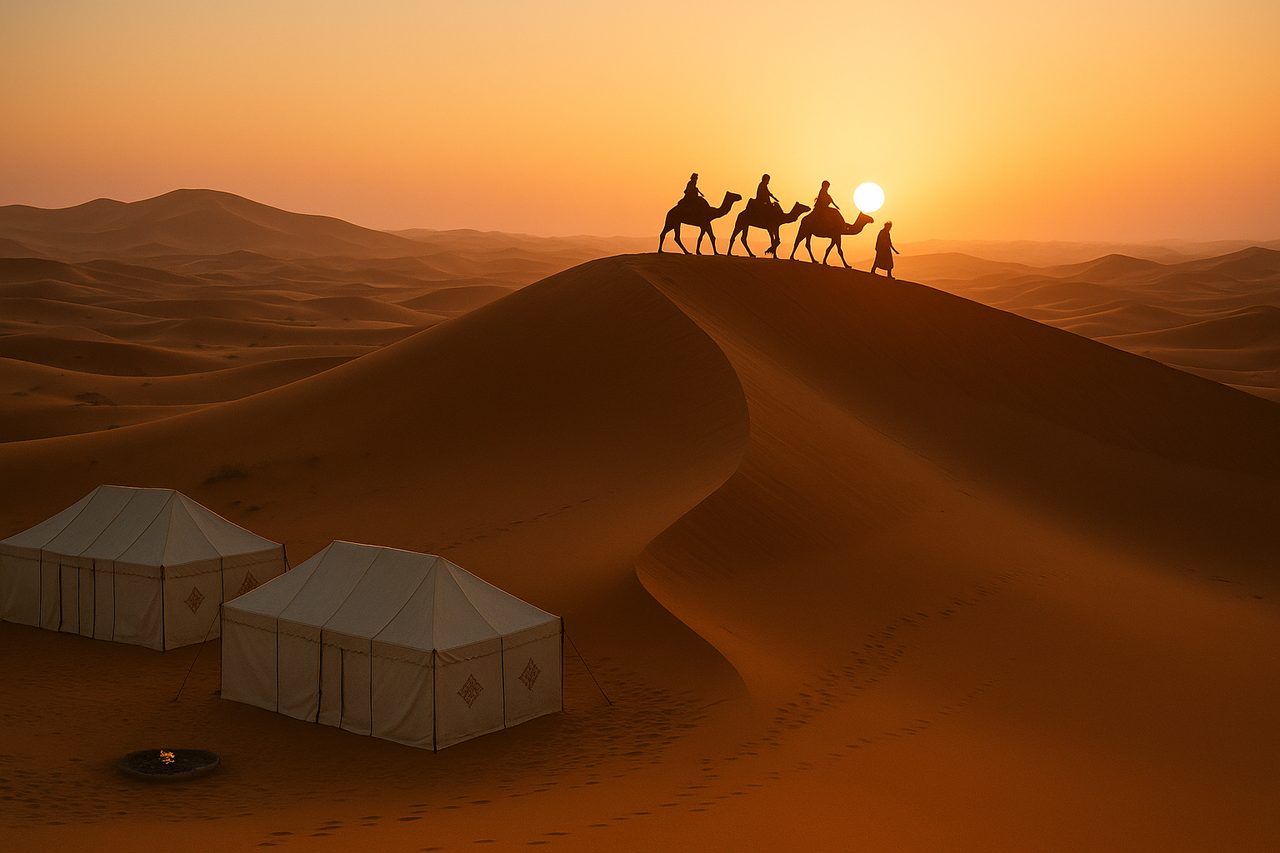
Day 4 — Dades → Todra → Merzouga + camel trek + Sahara camp. Drive through Todra Gorges (300m vertical cliffs, climbers’ destination) in the morning. Continue to Merzouga via Erfoud. Arrive at your camp’s meeting point by 4 PM. The camel trek into Erg Chebbi dunes is about 90 minutes at sunset, then dinner with Berber music, and you sleep in a tented camp under the stars. This is the trip’s centerpiece. See our Marrakech-to-Sahara desert tour guide for what’s included, what’s not, and how booking direct compares to GetYourGuide.
Day 5 — Merzouga → Fes. Sunrise camel ride if you have the energy. Drive day: ~8 hours via Erfoud → Midelt → Ifrane → Fes. Cedar forests, Berber villages, occasional Barbary macaques near Azrou. Arrive Fes in the evening, eat at your riad.
Day 6 — Fes medina. Fes el-Bali is the world’s largest car-free urban area (about 250 hectares) and a UNESCO site since 1981. You want a guide for the morning — the medina is genuinely confusing and a half-day with a local navigates you through Chouara Tannery (the famous one), Al-Qarawiyyin (the world’s oldest continuously-operating university, founded 859), and the Bab Boujloud blue gate. Afternoon free, evening rooftop dinner.
Day 7 — Fes → Chefchaouen OR airport. If you have a late flight, you can do a Chefchaouen day-trip from Fes (~4 hours each way by CTM bus or hired driver — not ideal but doable). If you have an extra night, do Chefchaouen properly with an overnight, then fly out from Tangier the next morning. Chefchaouen itself is small enough that 24 hours is plenty.
What to skip if you only have 5 days
If your trip shortens to 5 days, the cuts are: drop Chefchaouen entirely, do a 2-day desert pattern instead of 3 (so 1 night at the dunes instead of 2), and choose between Fes and the desert — you can’t do both well. The 5-day Morocco itinerary walks through three different ways to make 5 days work depending on whether you prioritize the Sahara or the imperial cities.
What to add if you have 10 or 14 days
With 10 days, the natural additions are: 2 nights in Chefchaouen instead of one day-trip, Essaouira on the Atlantic for windsurfing and seafood, and a second Atlas day for trekking in Imlil. The 10-day itinerary sequences these. With 14 days, you also get Meknes, Volubilis Roman ruins, the Drâa Valley palm groves, and Rabat — see the 14-day grand loop for the breathing-room version.
Want this customized for your dates and arrival airport? Chat with Anass on WhatsApp →
Unspoken rules tourists miss
Three things first-timers consistently underestimate:
Friday afternoons go quiet. Most shops in medinas close from about noon to 3 PM for Friday prayer. Plan museums, gardens, or Jardin Majorelle for that window. The souks reopen around 3 PM and run late.
Ramadan changes the rhythm dramatically. If your trip falls during Ramadan (Feb 17–Mar 19 in 2026), restaurants reduce hours, alcohol sales at supermarkets are suspended for the entire month, and the streets are sleepy until iftar at sunset — then everything comes alive until 1 AM. Read our visiting Morocco during Ramadan guide before booking dates that overlap.
Alcohol is legal but discreet. You can drink at licensed hotel bars, riad rooftops, and restaurants — not in public. Supermarkets like Carrefour have alcohol sections; Acima and BIM don’t. Our alcohol in Morocco guide breaks down where to buy and how much things cost.
A few other small things: keep hands tucked when approached by henna sellers at Jemaa el-Fna (the “free” henna grab is a known scam — see the FAQ in our is Morocco safe guide). Always agree on a taxi price before getting in, or insist on the taximètre. Tip 10–20 MAD per day for housekeeping, 50–100 MAD per day for a guide, and 5–10% in restaurants.
What is the #1 tourist attraction in Morocco?
By volume of visitors, Marrakech’s Jemaa el-Fna square is the single most-visited tourist site — it’s UNESCO-listed as an “intangible cultural heritage” site since 2001 for the daily performance tradition (snake charmers, storytellers, musicians, food stalls). It’s also the most-photographed point in the country. But by most-loved on traveler surveys, the answer is usually the Sahara at Merzouga (the camel trek + camp night) or Chefchaouen’s blue medina. Most 7-day itineraries hit all three.
Frequently asked questions
How much does a 7-day Morocco trip cost?
Mid-budget for one person: about $1,000–1,500 USD all-in, excluding international flights. That includes mid-range riads (~$80–120/night), shared 3-day desert tour (~$150–200), train fares (~$50), and food/sundries. Budget travelers can do it for $600. Luxury (5-star riads, private driver, luxury Sahara bivouacs) starts around $3,000+.
Can I do a 7-day Morocco trip with kids?
Yes, but pace down. The Day 3 and Day 5 long drives are tough on toddlers; consider hiring a driver instead of self-driving so you can pass-out in the back seat, and break those days at Ouarzazate. Camel trek is fine for kids 6+. Most riads welcome families and add a child bed for ~50 MAD.
Should I rent a car or hire a driver for a 7-day Morocco trip?
For 7 days with a Sahara loop, hire a driver. Self-drive is fine for shorter trips that stay near major cities, but the Atlas pass + remote Sahara routes plus parking in medinas (you’ll need to leave the car outside and walk in) tips the balance toward a driver. Drivers typically cost $80–120/day all-in. See our driving in Morocco guide.
What should I pack for a 7-day Morocco trip?
Lightweight long sleeves and pants (sun + modesty), a scarf for sun and mosques, comfortable closed-toe shoes for medina walking, a warmer layer for Sahara nights (can drop to 5°C even in spring), sunscreen, a refillable water bottle, and a headlamp for the desert camp. Don’t overpack — most riads do same-day laundry for 30–50 MAD per load.
When is the best time to visit Morocco for a 7-day trip?
March–May and September–November are ideal: warm days (22–28°C), cool nights, low rain. Avoid July–August (45°C+ in Marrakech and the desert), December–February (cold + occasional snow in the Atlas pass that closes routes), and Ramadan unless you specifically want the experience. Our best time to visit Morocco guide has month-by-month detail.

Sources cited in this guide
- ONCF — Moroccan national rail company; Al Boraq high-speed train schedules and fares.
- UNESCO: Aït Benhaddou — World Heritage listing for the fortified ksar.
- UNESCO: Medina of Fes — World Heritage listing (1981).
- UNESCO: Cultural Space of Jemaa el-Fna Square — Intangible Heritage listing (2001).
- Moroccan National Tourist Office (ONMT) — official tourism authority.