
Whether you should visit Morocco during Ramadan is one of those questions where the honest answer is “depends what you came for.” If you want bustling souks and meal-friendly cities at midday, no — pick another month. If you want cheaper flights, fewer crowds at major sites, and a genuine cultural experience watching an entire country reset its daily rhythm, yes — and many travelers say it’s their favorite Morocco visit. This guide walks through the calendar, what changes, and how to navigate it.
Can tourists visit Morocco during Ramadan?
Yes — visa and entry rules are unchanged. Morocco remains open to all 70+ visa-free nationalities for 90-day tourist stays during Ramadan. Hotels, riads, airports, museums, and tour operators continue to operate (some at reduced hours). Licensed hotel bars, riad restaurants, and 5-star establishments continue serving food and alcohol. The only things that change are the daily rhythm and what’s open when.
What you trade vs visiting in a non-Ramadan month: limited daytime restaurants, no supermarket alcohol, slightly slower museum/monument hours, and a generally sleepier mornings/afternoons. What you gain: 15-30% cheaper flights, 20-40% cheaper hotel rates, much fewer crowds at major sites, and a once-a-year cultural experience.
When is Ramadan in Morocco?
Ramadan is based on the Islamic lunar (Hijri) calendar, which is about 11 days shorter than the Gregorian calendar — so Ramadan dates shift earlier each year:
| Year | Approximate Ramadan dates (Morocco) | Hijri year |
|---|---|---|
| 2026 | Feb 17 – Mar 19 | 1447 |
| 2027 | Feb 6 – Mar 7 | 1448 |
| 2028 | Jan 26 – Feb 24 | 1449 |
| 2029 | Jan 14 – Feb 12 | 1450 |
| 2030 | Jan 4 – Feb 2 | 1451 |
Important: Morocco’s Ministry of Habous officially announces Ramadan’s start each year based on lunar moonsighting. The announcement can differ from Saudi Arabia or other Muslim countries by 1 day. Verify the exact dates 2-3 weeks before your trip if you’re booking close to the predicted window.
After Ramadan: Eid al-Fitr (the celebration day) is 1-2 days of public holiday with reduced transport and most shops closed on Day 1 (Day 2 mostly normal).
What changes for tourists during Ramadan
Restaurant hours
- 60-70% of local restaurants in big cities reduce hours or close 11 AM-7 PM (the daytime fasting hours)
- Tourist-zone restaurants (Marrakech Gueliz, Casablanca Anfa, Tangier Place du Maroc) less affected — many stay open with reduced lunchtime menus
- Hotel restaurants continue normal service for tourists (this is by design — international guests are accommodated)
- Iftar (sunset breaking-fast) is served at almost all restaurants from sunset onwards — this is the busiest meal of the day
Alcohol
- Supermarket alcohol sales SUSPENDED for the entire month (Carrefour, Marjane — see our alcohol in Morocco guide)
- Licensed hotel bars + 5-star restaurant bars CONTINUE serving through Ramadan, but only inside the venue
- Discretion expected — don’t walk through a medina with a beer during daytime even though no one will physically stop you
Museum + monument hours
- Major attractions stay open with shortened hours (often 9 AM-3 PM instead of 9 AM-6 PM)
- Madrasas, Hassan II Mosque, Jardin Majorelle: same days but earlier closing
- Souks: open later in the morning (10-11 AM), open very late at night (until midnight)
Transport
- Trains (ONCF) run normal schedules with minor adjustments
- CTM and Supratours buses maintain schedules with built-in iftar breaks
- Taxis more available in evenings (drivers fast during day, work nights)
- Iftar break: expect ~1-hour delay on any cross-country drive between 6:30 PM and 7:30 PM as drivers stop to break their fast
The honest case FOR visiting during Ramadan
If you can adjust your daily rhythm to match Morocco’s, Ramadan is a uniquely rewarding time to visit:
- Cheaper flights: ~15-30% off compared to peak season
- Cheaper hotels: ~20-40% off mid-range riads, less in luxury
- Far fewer crowds at Marrakech Jardin Majorelle, Bahia Palace, Fes medina, Hassan II Mosque
- Authentic cultural experience: watching iftar happen across an entire country is genuinely moving — kids running home from school, families gathering, restaurants filling at 6:45 PM
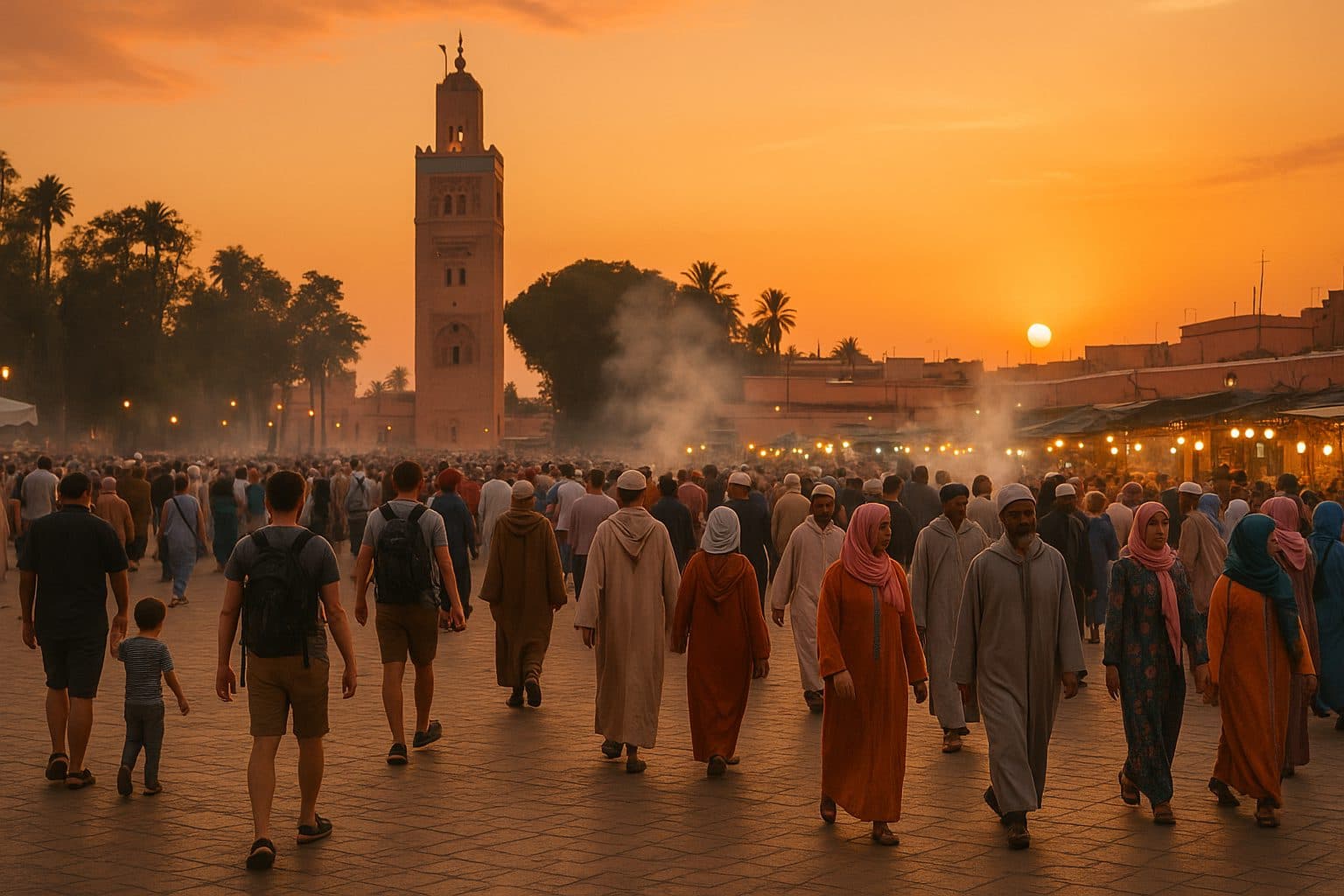
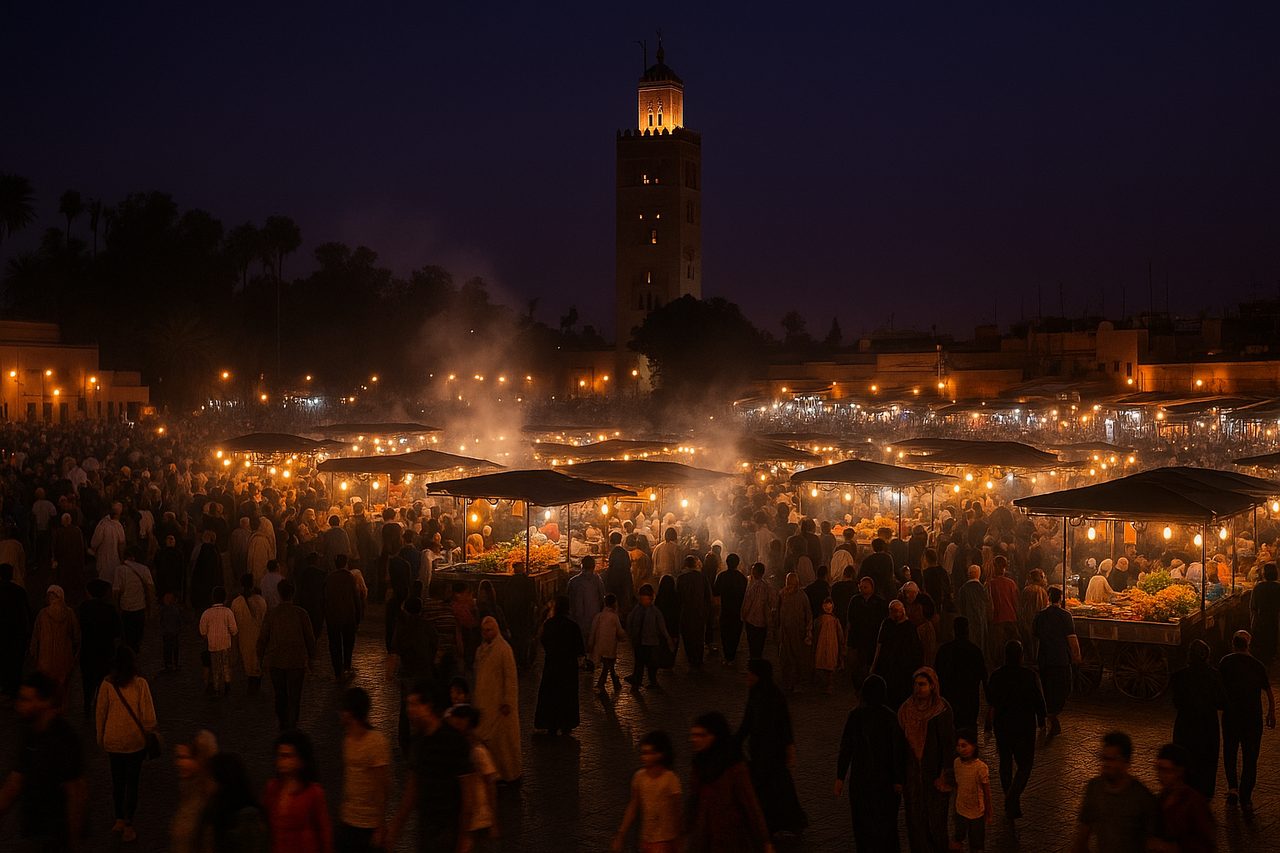
- Evening medina magic: Marrakech Jemaa el-Fna at 9 PM in Ramadan is unforgettable — families with kids, food stalls running late, music
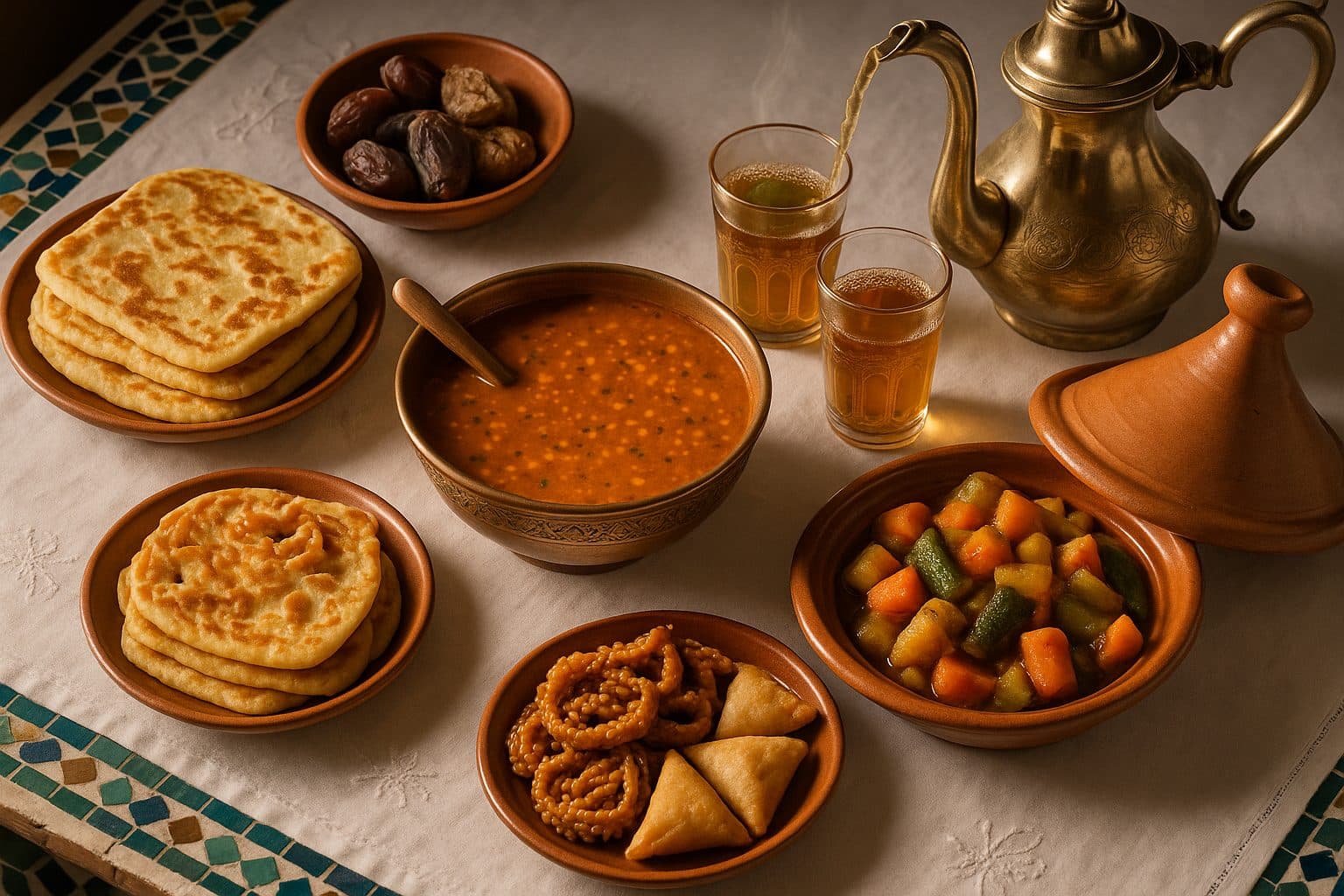
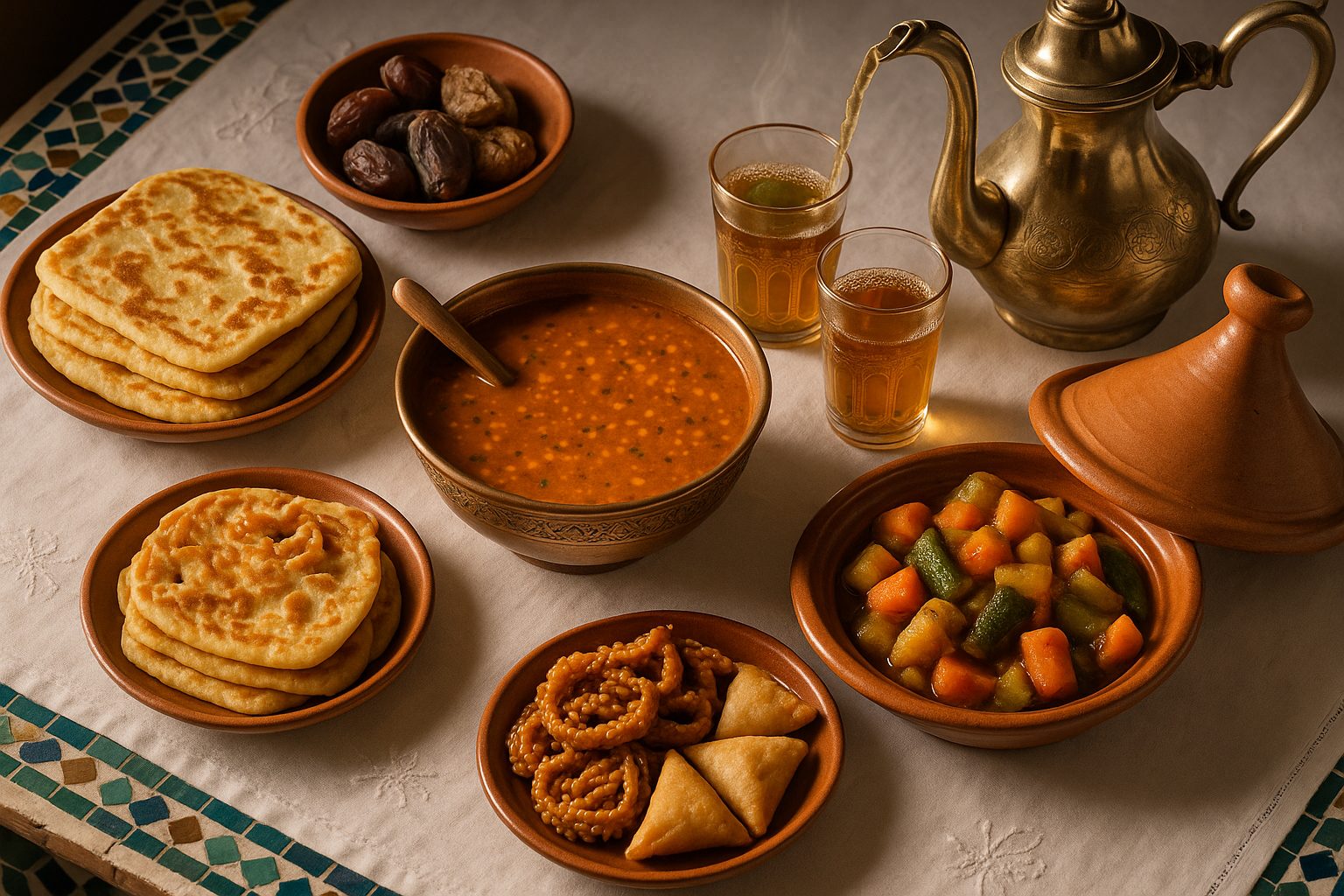
- Iftar dishes: harira soup, dates, chebakia (sesame-honey pastries), msemen, sellou — Moroccan cuisine’s most distinctive moment
The honest case AGAINST
- Limited lunch options: especially in smaller towns; some travelers feel hangry by 2 PM if they don’t plan
- Tired tour guides: guides fasting during the day may have reduced energy mid-afternoon
- Some restaurants closed: especially small family-run places; the Marrakech food-tour scene is reduced
- Empty during daytime in non-tourist towns: places like Asilah, Tetouan, smaller Berber villages feel deserted from 10 AM to 6 PM
- Solo female travelers: midday harassment is much reduced (most people are home or at work), but evening streets are more crowded — net effect varies
For most travelers: the answer is “depends on what you came for.” If you’re a foodie wanting daytime restaurant variety, skip Ramadan. If you’re a photographer or culturally curious traveler with flexible meal times, Ramadan can be the best month.
Best cities to visit during Ramadan
Tourist infrastructure varies by city. Rough rank:
If you’re crossing from Spain during Ramadan, ferry schedules dip 10–15% — full route detail in our Spain to Morocco guide.
| City | Ramadan-friendliness | Why |
|---|---|---|
| Marrakech | 9/10 | Most tourist infrastructure; restaurants open in Gueliz; medina alive evenings |
| Casablanca | 8/10 | Business-traveler infrastructure; hotel restaurants open; Habous market quiet |
| Tangier | 8/10 | Cosmopolitan; international hotels, Spanish-influenced restaurants stay open |
| Fes | 6/10 | Conservative; daytime medina very quiet, evening lively but limited dining |
| Chefchaouen | 5/10 | Small; very quiet during daytime, few options |
| Essaouira | 6/10 | Atlantic coast; some restaurants open for tourists |
Smaller mountain or rural towns: 5/10 or lower — daytime feels deserted, fewer restaurant choices. Best to stay in larger cities during Ramadan if possible.
The iftar tourist experience
If you visit Morocco during Ramadan, make iftar your highlight meal of the trip. Many hotel restaurants and a select group of upscale traditional restaurants serve iftar to non-Muslim tourists — and the experience is genuinely worth planning for.
Marrakech: Le Comptoir Darna, Café Arabe, La Maison Arabe (book 2-3 days ahead — they fill)
Fes: Palais Amani, Riad Fes restaurant (smaller crowds)
Casablanca: La Sqala restaurant (architectural + atmospheric)
What you typically get for iftar (around 6:30-7:15 PM depending on city + month):
- Harira soup: tomato-lentil-chickpea, traditional first sip
- Dates and milk: ritual breaking of the fast
- Chebakia: sesame-honey pretzel pastries
- Bread: msemen, baghrir, khobz
- Main course: tagine, couscous, or kefta
- Sweets and mint tea: usually post-meal
Cost: ~200-400 MAD ($20-40) at mid-range, $50-80 at luxury hotels. Book ahead; iftar slots sell out.
What to wear during Ramadan
Slightly more modest than your normal Morocco wardrobe. Women: cover shoulders and knees (dresses below knee, no tank tops in public). Men: long shorts OK in tourist zones, but skip the beach shorts in medinas. Both: no see-through fabrics, no plunging necklines. A light scarf in your bag for impromptu mosque visits or conservative neighborhoods is wise.
This isn’t strict — Morocco is more relaxed than Gulf countries — but Ramadan is when locals notice and appreciate respectful dress. See our Moroccan culture and customs guide for the broader picture.
Cultural etiquette during Ramadan
Three small habits that go a long way:
1. Don’t eat or drink visibly in public during daylight. Not because anyone will stop you, but because it’s a small kindness to people fasting around you. Eat at hotel restaurants, in your riad, or wait until iftar to enjoy meals outside.
2. Don’t smoke visibly in public during daylight. Same reasoning.
3. Greet with “Ramadan Mubarak.” (“Blessed Ramadan”) — Moroccans appreciate the gesture. Pronounced rah-mah-DAN moo-BAH-rak. You’ll get a smile every time.
Hotel + riad bookings during Ramadan
Most hotels and riads stay open. A few notes:
- Staff scheduling: some riads run with reduced day-staff and full evening-staff (because workers prefer evening shifts during fasting)
- Breakfast hours: extended in some hotels — often served until 11 AM since guests sleep in
- Pre-iftar dinner service: most hotel restaurants serve a “before iftar” set menu starting 5:30 PM
- Direct booking advantages: with cheaper flights driving lower demand, mid-range riads are more open to negotiation on direct bookings (skip Booking.com, message the riad directly for a 10-15% discount)
For broader accommodation guidance, see our accommodation in Morocco guide.
Frequently asked questions
Can tourists go to Morocco during Ramadan?
Yes. Visa rules and entry are unchanged. Hotels, riads, airports, and most major attractions stay open with reduced hours. Licensed hotel bars continue serving alcohol; supermarket alcohol sales pause for the month. The country runs at a different daily rhythm — quiet days, lively evenings.
Is it okay to visit Marrakech during Ramadan?
Yes — Marrakech is the most Ramadan-tourist-friendly Moroccan city. Tourist-zone restaurants in Gueliz stay open during the day, hotels and riads operate normally, and Jemaa el-Fna at evening during Ramadan is one of the most atmospheric experiences in Morocco.
Will restaurants be closed during my Morocco trip if it’s during Ramadan?
60-70% of local restaurants reduce daytime hours or close 11 AM-7 PM. Tourist-zone restaurants, hotel restaurants, and 5-star establishments stay open. After iftar (sunset), almost all restaurants open and stay open until 1-2 AM.
Can I drink alcohol in Morocco during Ramadan?
Yes, at licensed venues — hotel bars, 5-star restaurant bars, and riad rooftops continue serving. Supermarket alcohol sales are SUSPENDED for the entire month. Discretion is expected — don’t walk through medinas with a visible beer. See our alcohol in Morocco guide.
Is it disrespectful to visit Morocco as a non-Muslim tourist during Ramadan?
No — Morocco’s tourism economy explicitly welcomes non-Muslim visitors year-round, including Ramadan. The expectation isn’t that you fast or pray; just don’t eat/drink/smoke visibly in public during daylight, dress modestly, and greet with “Ramadan Mubarak.” Most travelers find Moroccan Ramadan hospitality genuinely warm.

Sources cited in this guide
- Moroccan Ministry of Habous and Islamic Affairs — official Ramadan moonsighting announcements.
- Moroccan National Tourist Office (ONMT).
- Article 222 of the Moroccan Penal Code — public consumption regulations for Moroccan Muslims during Ramadan.
- Islamic Hijri calendar — lunar dates for Ramadan 2026-2030.