
The practical decision is not simply whether driving in Morocco is “safe.” It is whether your licence, route, schedule and comfort level make a rental car the right tool. This guide separates official rules from variable local conditions so you can make that decision without relying on fixed prices or anecdotes.
Should you drive in Morocco or use a local driver?
Self-driving suits travelers who are comfortable with busy roundabouts, two-lane rural roads and reading Arabic- or French-language signs. It can be especially useful when an itinerary includes dispersed coastal stops or smaller towns where a car adds genuine flexibility.
A local driver or public transport may be the better choice when your plan includes dense city centers, a long mountain crossing after a flight, or a same-day journey whose timing leaves no daylight margin. Marrakech and Fes medinas are primarily explored on foot, so a rental can also spend much of a city stay parked.
| Trip setting | What driving is like | Sensible choice |
|---|---|---|
| Autoroutes between major cities | Controlled-access roads with service areas and tolls | Suitable for a confident licensed driver |
| Casablanca or Marrakech traffic | Dense traffic, scooters, pedestrians and frequent lane changes | Drive only if comfortable in busy urban traffic |
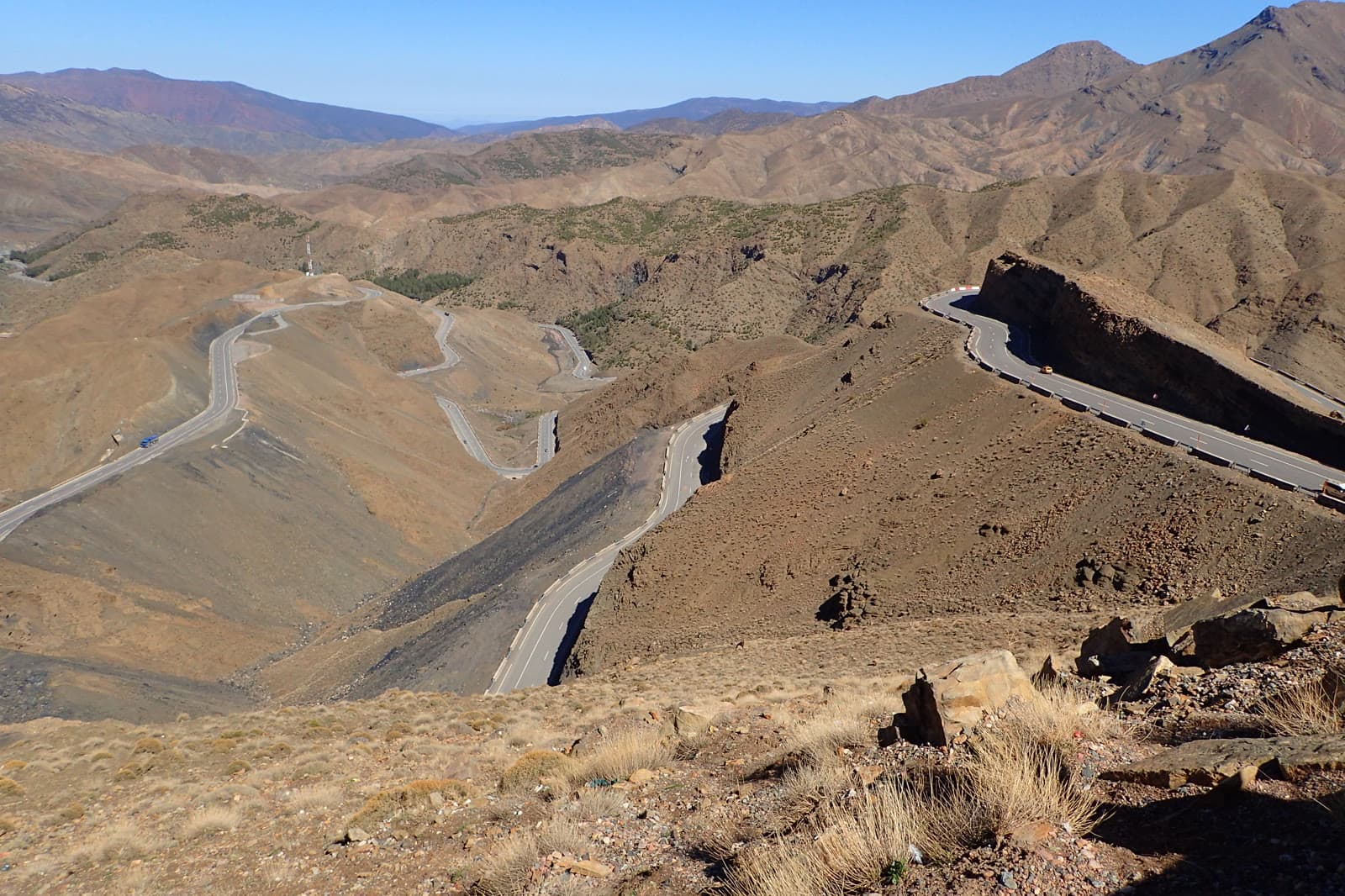
| Atlas and mountain routes | Bends, elevation, changing weather and longer real journey times | Travel in daylight; consider a local driver |
| Remote desert approaches | Long distances and fewer services away from main roads | Stay on established roads and plan fuel and assistance |
| Medina-based city break | Limited vehicle access and separate parking | Train, official transfer or local driver is often simpler |
For route planning, compare the transport assumptions in the Morocco itinerary guide before booking a car. If the difficult driving segments outweigh the flexible ones, the private Morocco tours and driver guide explains the alternative without treating it as the only valid option.
Which side does Morocco drive on, and what licence do you need?
Vehicles drive on the right, and the driver sits on the left. A foreign visitor should carry the original valid driving licence, passport, rental agreement, vehicle registration and insurance documents supplied with the vehicle.
NARSA's current driving checklist requires a valid licence for the relevant vehicle category. That checklist does not establish one universal visitor-duration or International Driving Permit rule: requirements can depend on the country that issued the licence, and a rental company may impose stricter document conditions. UK government guidance, for example, tells UK licence holders to carry a 1968 IDP.
Check the relevant government advice for the country that issued your licence and obtain the rental company's requirements in writing before paying. Current official guidance does not support a blanket claim that every foreign licence is valid for only 90 days or that every nationality can rent without an IDP.
NARSA's official checklist also tells drivers to confirm that the vehicle carries its required safety equipment, including a warning triangle and high-visibility vest. Inspect these items before leaving the rental desk.
What are the speed limits and road conditions?
Posted signs control. NARSA's current guidance describes urban limits that may be 20, 40 or 60 km/h, national-road limits that are generally 80 km/h with some 100 km/h sections, and a maximum of 120 km/h on motorways. That is more accurate than treating every national road or residential street as having one universal limit.
| Road context | Official guidance | What a visitor should do |
|---|---|---|
| Urban area | 20, 40 or 60 km/h depending on the road and signs | Watch for changes at town entrances and schools |
| National road | Generally 80 km/h; some sections permit 100 | Follow the posted limit rather than the road's appearance |
| Motorway | Maximum 120 km/h | Allow for tolls, weather and slower traffic |
| Temporary works or local restriction | The displayed temporary or local limit | Treat the sign as controlling |
Major intercity motorways are usually the simplest part of a self-drive trip. National and mountain roads can be slower than a mapping app suggests because they pass through settlements and may include sharp bends, road works, livestock or slow-moving vehicles. Check weather and daylight before a mountain crossing; the Morocco weather and best-time guide helps with seasonal planning.
What should you check before accepting a rental car?
Treat the handover as an evidence-gathering step. Photograph every side of the car, wheels, windscreen, fuel gauge and dashboard while a rental representative is present. Make sure existing damage is written on the condition report and keep a copy of the signed document.
Before driving away, confirm:
- the exact insurance included, exclusions, excess and security deposit;
- whether glass, tyres, underbody and roadside assistance are covered;
- the fuel and mileage policy;
- the procedure and phone number for a breakdown or collision;
- the registration, insurance certificate, warning triangle, vest, spare-wheel equipment and child seat you requested;
- opening hours and after-hours procedure at the return location; and
- any one-way, late-return or cross-border restriction in the contract.
Do not assume a low advertised rate is the final cost, and do not accept an informal vehicle arrangement without a written contract and verifiable insurance. Airport collection can be convenient, but compare the current transport and rental options in the Morocco airports guide first.
What should you do at a police checkpoint or after a traffic notice?
Slow down early, follow the officer's signal and stop only where directed. Keep your hands visible and present the documents requested. A checkpoint is not the place to debate traffic flow or volunteer an explanation that was not requested.
If an officer identifies an offence, ask which rule applies and request the official written record or receipt. Do not offer an unofficial payment. NARSA provides an online platform for consulting recorded road infringements and payment information; with a rental vehicle, the rental company may also receive or administer a later notice under the contract.
NARSA groups speeding penalties by the amount over the limit, so an old table of one “typical” fine for every speeding incident is misleading. Check the current official rule rather than using an undated tourist price list. For broader personal-security guidance, see Is Morocco safe?.
How does parking work in Moroccan cities?
Parking arrangements vary by municipality, neighborhood and property. You may encounter a formal car park, a metered or marked street space, or a person supervising an informal parking area. A colored vest by itself does not establish an official city tariff.
Before leaving the car, ask the accommodation or car-park operator where guests normally park, whether the area is official, when it closes and how the fee is displayed. Pay against the posted tariff or a clear agreed amount, and keep valuables and travel documents out of sight. Do not leave luggage visible while checking into a riad.
Medina access is limited and can change with local traffic controls. Confirm the current drop-off and parking point directly with your accommodation instead of relying on an old named-lot recommendation. Fixed “guardian” prices and claims that non-payment leads to vehicle damage are not reliable traveler guidance.
What road hazards deserve the most attention?
The UK Foreign, Commonwealth & Development Office advises extra care because road conditions and driving standards vary, particularly on secondary roads and in poor weather. It also advises avoiding night driving where possible. Rural roads may include pedestrians, bicycles, animals or unlit slow vehicles, while city driving adds scooters and sudden stopping.
Use a conservative speed that leaves space to react. Plan long drives to finish before dark, pause after a flight rather than driving tired, and reconsider a mountain route when weather reduces visibility. Navigation apps can help with routing, but their arrival estimates and community reports are not substitutes for signs, police directions or road closures.
Seat belts should be used in every occupied seat. If traveling with a child, reserve an appropriate restraint in advance and verify it at handover rather than assuming the rental desk will have one available.
What should you do after a breakdown or collision?
Move out of live traffic if it is safe to do so, turn on hazard lights, put on the high-visibility vest before leaving the vehicle and place the warning triangle only when this can be done safely. Stand away from moving traffic and call the assistance number in the rental or insurance contract.
After a collision, photograph the scene, vehicles, registration plates and visible damage without obstructing emergency work. Exchange identification and insurance details and contact the rental company before authorizing repairs or a tow. Morocco's insurance regulator ACAPS explains the constat amiable, the joint form used for material-damage incidents; ask the rental company to show you its copy before departure.
If anyone is injured, prioritize emergency assistance and police instructions. Emergency numbers and operator contacts can change or differ by location, so they should be verified from current official or rental documentation rather than copied from an undated travel article.
How should you compare the cost of self-driving?
There is no honest universal daily figure. Rental dates, vehicle class, excess, fuel market, route, toll use, parking and one-way fees can change the total substantially. Build a dated quote for your actual trip instead.
| Cost line | What to record before choosing | Common omission |
|---|---|---|
| Rental | Total price for the exact dates and vehicle | Airport, late-return or one-way fees |
| Insurance | Included cover, excess and deposit | Tyre, glass or underbody exclusions |
| Fuel | Planned distance and vehicle fuel type | Mountain detours and city traffic |
| Tolls | Exact motorway route | Cash/payment requirements |
| Parking | Accommodation and city arrangements | Overnight access or closing time |
| Alternative | Train, transfer or driver quote for the same route | Time spent collecting and returning the car |
Compare totals on the same basis, including time and responsibility after an incident. A rental may still be the best-value choice, but the answer should come from current written quotes rather than a generic euro-per-day claim.
In summary
Driving in Morocco can work well when the driver has the right documents, chooses realistic daylight routes and understands the rental contract. Let posted limits and current official guidance override old online tables. Use a driver, train or transfer selectively where urban or mountain driving would add more stress than freedom.
Frequently asked questions
What side of the road do they drive on in Morocco?
Morocco drives on the right-hand side, with the steering wheel on the left in most vehicles. Roundabout traffic circulates counter-clockwise, but entry priority and lane markings must be read from the signs at that specific junction rather than assumed from habit.
Is it safe for tourists to drive in Morocco?
It can be reasonable for an experienced, properly licensed driver on major routes. The larger risks are variable driving standards, busy urban traffic, secondary roads, mountain weather and night visibility. Plan conservative daily distances and use another transport option for any segment beyond your comfort level.
Do I need an International Driving Permit for Morocco?
It depends on the licence's issuing country and the rental company's conditions. NARSA says drivers should carry a valid licence for the relevant vehicle category, but its checklist does not set one universal visitor IDP rule. UK guidance, for example, specifies a 1968 IDP alongside the UK licence.
What are the speed limits in Morocco?
NARSA describes urban limits of 20, 40 or 60 km/h, national roads generally at 80 km/h with some 100 km/h sections, and a motorway maximum of 120 km/h. Posted signs, including temporary restrictions, always control on the road you are using.
What should I do at a Moroccan police checkpoint?
Slow down, follow the officer's signal and present the requested licence, passport and vehicle documents. If an offence is alleged, ask for the applicable reason and official record or receipt. Do not offer an unofficial payment; use the documented process and contact the rental company when its vehicle is involved.
Authoritative sources
- NARSA, “Conduire au Maroc : la check-list des équipements et papiers,” 17 September 2019 — documents and safety-equipment checklist
- NARSA, “La vitesse excessive,” 27 August 2024 — official speed-limit and penalty guidance
- NARSA, road-infractions consultation platform, 3 February 2025 — recorded violations and payment information
- Secretariat-General of the Government, current consolidated text of Law 52-05, checked 31 July 2026 — Moroccan Road Code
- ACAPS, insurer's driver kit, published April 2025 and checked 1 August 2026 — official material-damage accident and
constat amiableguidance - UK Foreign, Commonwealth & Development Office, updated 17 February 2026 and checked 31 July 2026 — Morocco road-travel guidance (nationality-specific)
Continue planning with the Morocco itinerary guide, Morocco airports guide, Morocco safety guide, seasonal road-planning guide or private driver guide.