
This guide is a garment glossary, not a claim that every Moroccan dresses the same way. Contemporary and traditional clothing coexist, spellings vary across Arabic, Darija, French, and English, and the same garment can be simple everyday wear or highly decorated occasion wear.
What are traditional Moroccan clothes called?
| Name and common spelling variants | What the term identifies | Typical context |
|---|---|---|
| Djellaba / jellaba | A long, loose outer garment with a pointed hood | Everyday, seasonal, or occasion wear depending on fabric and finish |
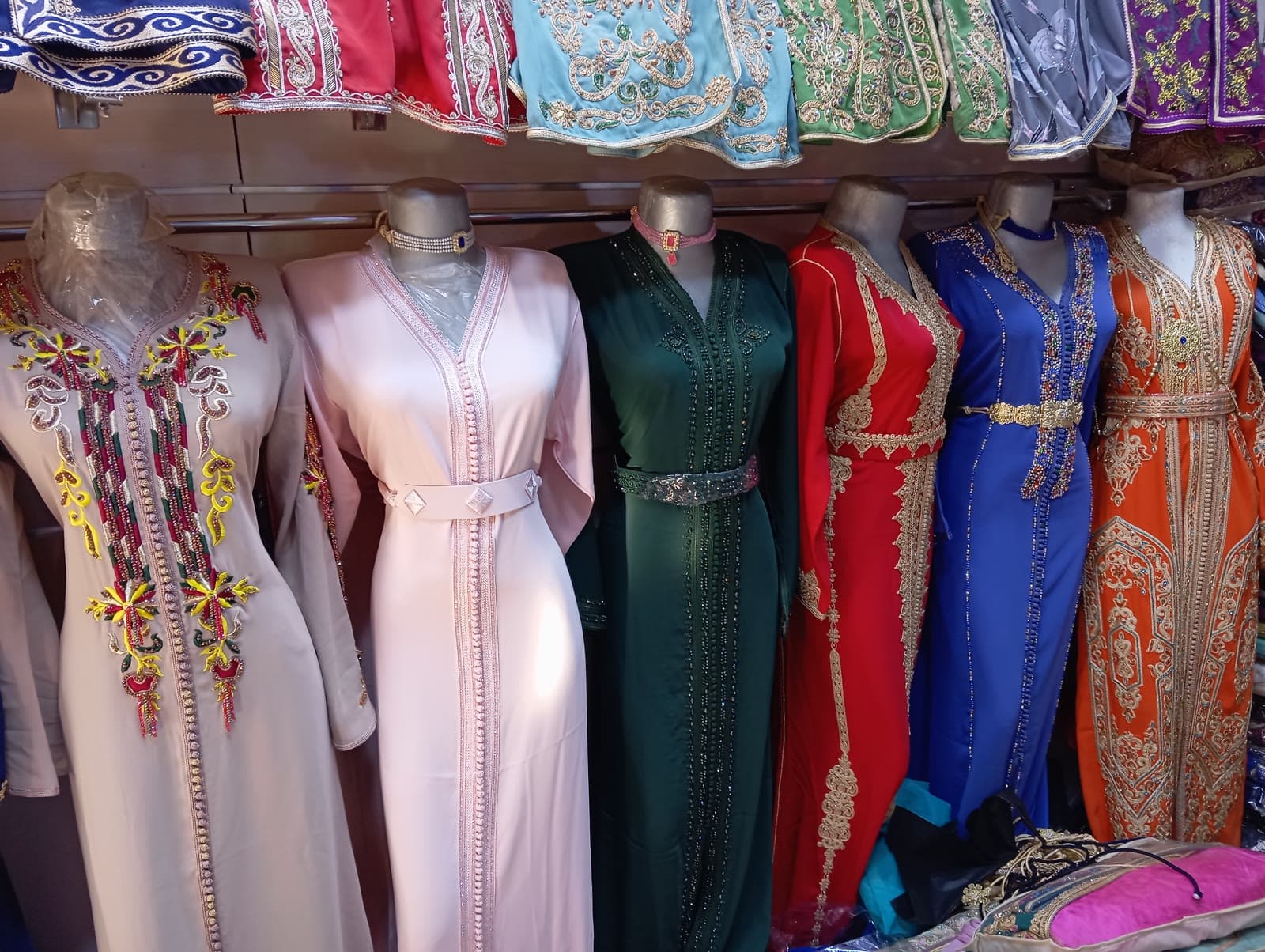
| Caftan / kaftan | A long tunic, generally with a central opening; styles, fabrics and decoration vary | Celebrations and important social or religious occasions |
| Takchita | A Moroccan caftan ensemble of at least two pieces | Formal celebrations, often completed with a decorative belt |
| Jabador | A coordinated traditional outfit; styles and pieces vary | Family, religious, and formal occasions |
| Gandoura | A loose traditional garment; local cut and use vary | Informal or occasion wear depending on material and decoration |
| Selham / burnous | Related outer-cloak terms; exact construction and local use vary | Warmth or formal presentation, depending on the piece |
| Belgha / babouche | Belgha is the Moroccan term; babouche is common French and English retail wording for traditional slippers | Home, religious, formal, and souvenir contexts |
| Tarbouche / fez | A brimless red hat, often with a tassel | Formal or ceremonial dress rather than universal daily wear |
These are useful category names, not rigid labels for every workshop or region. If you are shopping, ask the maker how the local term, cut, material, and intended occasion differ.
What is a djellaba?
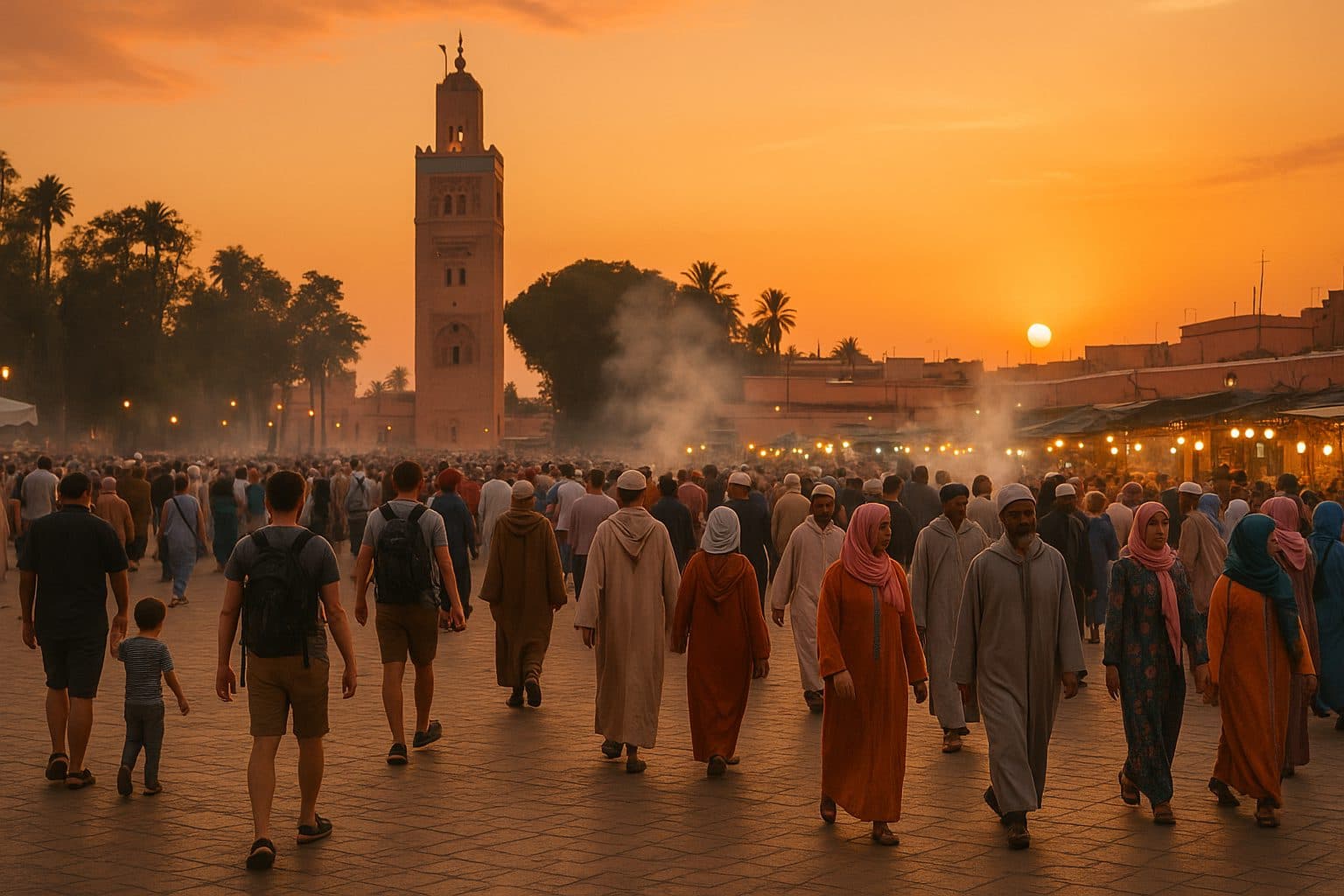
The djellaba is recognizable by its long, loose shape and pointed hood. It is made in different weights and finishes, from practical pieces to finely decorated garments. Both men and women wear djellabas, but cut, fabric, color, and decoration vary widely.
Avoid turning those variations into universal rules such as “men always wear neutral colors” or “one city wears djellabas every Friday.” A useful comparison is construction: inspect the fabric weight, seams, lining, embroidery, braided trim, buttons, and whether the garment is ready-made or tailored.
Travelers can wear a djellaba, but it is not required. Treat it as clothing rather than costume, ask before photographing another person, and use the Morocco language guide for respectful shopping questions.
What is a Moroccan caftan?
UNESCO describes the Moroccan caftan as a long tunic worn by people of all genders and ages for special occasions and celebrations. It may be made in brocade, velvet, silk, or other fabrics, with a central opening, buttons, braids, embroidery, beads, or sequins, and it may be worn with or without a decorative belt.
In 2025, “Moroccan Caftan: art, traditions and skills” was inscribed on UNESCO's Representative List of the Intangible Cultural Heritage of Humanity. The inscription recognizes a living craft system involving fabric makers, tailors, button and braid makers, embroiderers, workshops, families, training centers, and fashion schools.
That evidence describes a living craft system rather than a simplified single-origin story. It does not support reducing the Moroccan caftan to one year, one population, or one route of origin.
What is the difference between a caftan and a takchita?
The Moroccan Ministry of Handicrafts' traditional-couture glossary defines a caftan as a long traditional tunic in Moroccan clothing heritage and notes that it is worn by women and men.
The same glossary defines the takchita as a Moroccan caftan form made from at least two pieces: the tahtiya, itself a caftan, and the open outer fouqia or dfina. Contemporary takchitas may contain more layers and are often completed with a decorated mdamma belt.
| Garment | Verified construction distinction | Useful shopping question |
|---|---|---|
| Caftan | Long traditional tunic; can be worn with or without a belt | Is this one piece, and which work is handmade? |
| Takchita | At least a tahtiya plus an open fouqia or dfina | Which pieces and accessories are included? |
Do not use price alone to decide which term applies. Construction, workmanship, and how the seller describes the complete set matter more.
What other Moroccan garments should you recognize?
The official Maison de l'Artisan textile guide lists caftans, jabadors, takchitas, djellabas, gandouras, and sarouals within traditional couture. These categories contain many local and contemporary variations.
Jabador: a coordinated outfit whose cut and number of pieces can vary. Ask whether trousers, vest, or accessories are included rather than assuming one fixed set.
Gandoura: a loose garment that can be simple or decorated. The word is used beyond Morocco as well, so local construction and context matter.
Saroual: loose trousers used in different traditional outfits.
Selham or burnous: related outer-cloak terms whose exact construction and local use vary. Avoid treating them as universal synonyms or assigning one exclusive ethnic origin without a specialist source.
Belgha or babouche: belgha is the Moroccan term, while babouche is common French and English retail wording for traditional slippers. Shapes, colors and finishes vary; ask about material, sole, stitching, and intended indoor or outdoor use.
Tarbouche or fez: a brimless formal hat. It is a recognizable garment, not something all Moroccan men wear daily.
Which details show the craft behind a caftan or djellaba?
UNESCO highlights the coordinated work behind a caftan: woven fabric, tailoring, buttons, braids, embroidery, beads, and sequins. Moroccan tailoring vocabulary includes sfifa for decorative braid or trim, akad—also written aakad—for thread-made buttons, and mdamma for a decorative belt. Latin spellings vary.
When comparing two garments, ask:
- Which fabric and lining were used?
- Which elements were handmade, machine-made, or applied later?
- Is the piece ready-made, adjusted, or made to measure?
- Which pieces, belt, or accessories are included?
- Who made it, and how should it be cleaned or stored?
For craft-focused stops in Fes, see things to do in Fes.
What should travelers wear in Morocco?
Travelers do not need to wear traditional Moroccan clothing. This page should not absorb the separate dress-code and packing intent.
Current UK travel advice says women may receive unwanted attention and suggests considering loose-fitting clothing that covers the arms, legs, and chest. Dress expectations vary by setting; a beach, hotel, city street, rural area, and religious site are not interchangeable. Clothing can reduce social friction but cannot guarantee safety or make harassment the traveler's fault.
Use the Morocco safety guide for current official advice and the Morocco weather guide for climate-based layers and fabrics.
Is henna part of traditional Moroccan clothing?
Henna is body decoration rather than clothing, so it belongs here only as a short safety note. UNESCO lists henna rituals and social practices as living heritage shared across Morocco and other countries in the region.
Products marketed as black henna may contain p-phenylenediamine, or PPD. The US Food and Drug Administration warns that PPD can cause dangerous skin reactions and that color alone does not prove what a paste contains. Avoid products marketed as black henna, and do not assume that a brown paste or a “natural” label proves its ingredients. Ask what has been added and seek medical care for a serious reaction.
For the broader ritual context, see the Moroccan culture and customs guide and Moroccan hammam guide.
How should you shop for traditional clothing?
Prices depend on fabric, workmanship, number of pieces, tailoring, city, seller, and whether accessories are included. There is no reliable national price range or single tourist markup that applies across every medina.
Compare genuinely similar garments at several shops. Ask for the full price before alterations, confirm what is included, inspect seams and closures, and request a receipt for a significant purchase. For commissioned work, write down the fabric, measurements, deposit, completion date, fitting plan, and remedy if the finished piece differs from the order.
Fixed bargaining percentages are unreliable. Decide your maximum price, stay polite, and walk away if the terms are unclear. The Morocco language guide includes useful Darija phrases.
What should a guest wear to a Moroccan wedding?
Ask the host. Moroccan weddings differ by family, city, formality, and event. A caftan, takchita, jabador, suit, or long formal dress may be appropriate, but no single outfit, cash-gift amount, start time, number of courses, or photography rule applies to every wedding.
Confirm whether traditional clothing is expected, whether renting is practical, and whether photos are welcome. Do not describe participation as mandatory or invent a universal budget. The Moroccan culture and customs guide gives the wider etiquette context.
In summary
Identify Moroccan garments by their construction, layers and intended occasion rather than by a loose shop label. Ask the artisan, seller or host before assuming a regional meaning, wedding expectation or styling rule, and compare like-for-like workmanship before buying.
Frequently asked questions
What are traditional Moroccan clothes called?
Common names include djellaba, caftan, takchita, jabador, gandoura, saroual, selham or burnous, belgha or babouche, and tarbouche. There is no single correct name for a “Moroccan dress”: construction, layers, hood, fabric and occasion determine the more accurate garment term in Morocco.
What is the difference between a djellaba and a caftan?
A djellaba is a loose outer garment distinguished by its pointed hood and used in different fabrics for everyday or occasion wear. UNESCO describes the Moroccan caftan as a long tunic for special occasions and celebrations, often richly decorated and worn with or without a belt. The hood and construction are the clearest distinction.
What is the difference between a caftan and a takchita?
The Ministry of Handicrafts' glossary defines a takchita as an ensemble of at least a tahtiya and an open fouqia or dfina, often with a mdamma belt. A caftan is the long traditional tunic and can be worn on its own. Ask about the layers and construction rather than relying only on a shop label.
What do Moroccan men traditionally wear?
Men may wear garments such as djellabas, caftans, jabadors, gandouras, sarouals, selhams, belgha slippers, or a tarbouche, depending on region and occasion. Fabric, cut and styling also vary. Treat these as garment categories and examples, not as a universal description of what Moroccan men wear every day.
Can visitors wear Moroccan traditional clothing?
Yes, when it is worn respectfully as clothing rather than as a caricature. Ask the seller, artisan or host how the garment is normally worn and whether a particular piece has an occasion-specific meaning. Avoid sacred or ceremonial claims you cannot verify, and ask permission before photographing people, workshops or private celebrations.
Sources
- UNESCO Intangible Cultural Heritage — Moroccan Caftan: art, traditions and skills, inscribed in 2025; checked 31 July 2026.
- UNESCO Intangible Cultural Heritage — Henna: rituals, aesthetic and social practices, inscribed in 2024 with Morocco among the participating states; checked 1 August 2026.
- Moroccan Ministry of Handicrafts and Social and Solidarity Economy, Batha Fès training center — Traditional Couture Glossary, retrieved 31 July 2026.
- Maison de l'Artisan — Textile Arts and Moroccan clothing brochure, retrieved 31 July 2026.
- UK Foreign, Commonwealth & Development Office — Morocco safety and security, updated 17 February 2026 and still current 1 August 2026.
- US Food and Drug Administration — Temporary tattoos, henna, and “black henna” fact sheet, checked 31 July 2026.
Continue with Moroccan culture and customs, things to do in Fes, Morocco language guide, and best time to visit Morocco.