The Blue Pearl is one of Morocco’s most-photographed places — and one of the most-debated. Travel blogs gush over it; Reddit threads call it overrated; Instagram makes it look magical at midday but it’s actually packed with tourists from 11 AM to 3 PM. This is the honest take, written from inside Morocco: when Chefchaouen is worth the detour, when it isn’t, and what most blog posts get wrong about the famous blue (hint: it’s not the mosquito myth).
Is Chefchaouen worth visiting? Quick answer
Yes — with three conditions:
- You have at least 7 days in Morocco (5-day trips can’t include Chefchaouen sensibly)
- You’re OK with a quiet, slow-paced 24-48 hours (no major nightlife, modest restaurants, basic accommodations)
- You can stay at least one night — day-trippers from Tangier or Fes get the worst version of Chefchaouen (peak-crowd midday)
For photographers and travelers who like medieval medinas, blue alleys, and mountain views, Chefchaouen is the best photography stop in Morocco. For travelers prioritizing food, nightlife, beach, or a Marrakech-vibe experience, it’s not.
Why Chefchaouen is famous
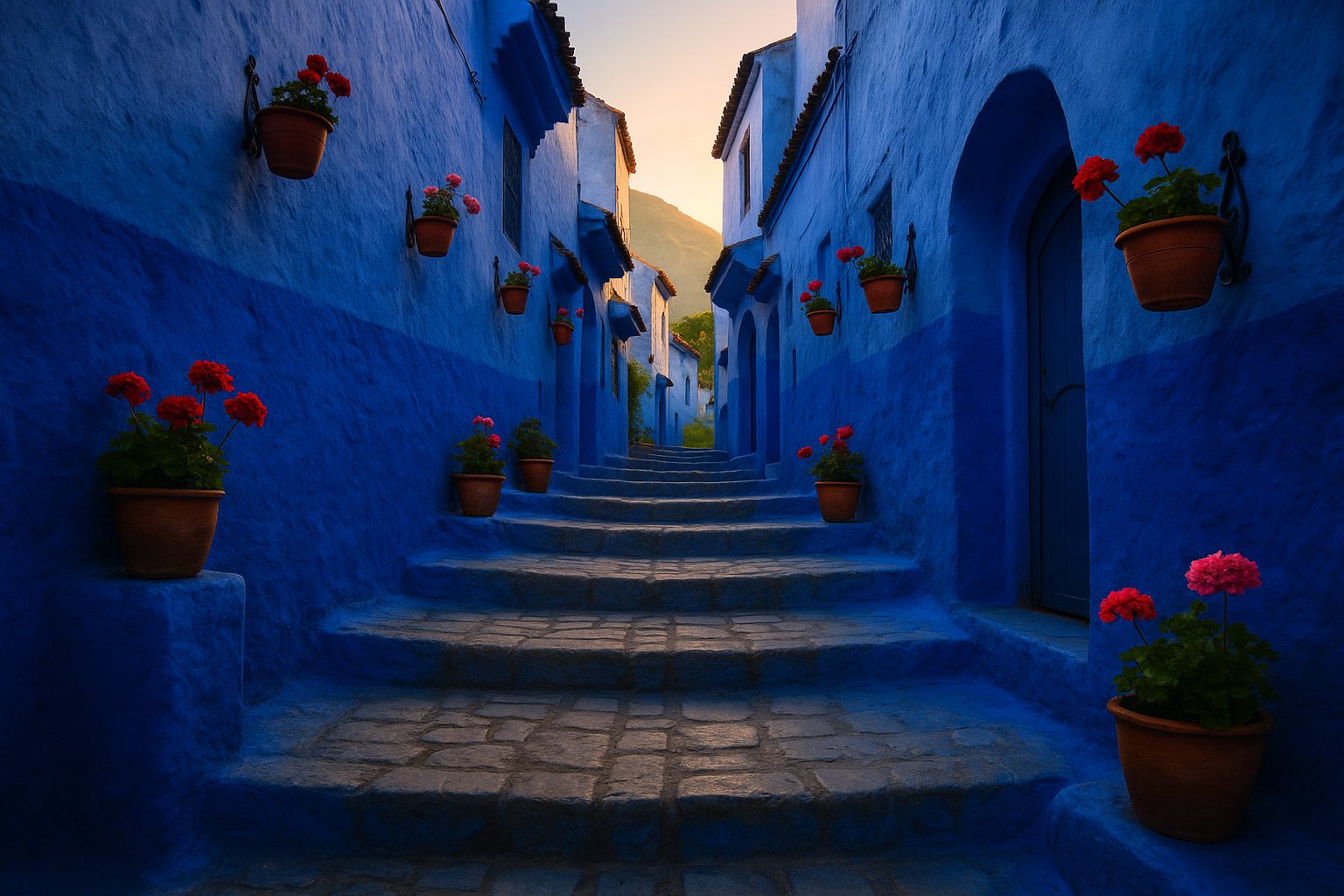
Chefchaouen (also spelled Chaouen) is a small Rif Mountain town in northern Morocco, about 200 km from Fes and 120 km from Tangier. The entire medina is painted in shades of blue — pale powder blues, deep cobalt blues, indigos, faded sky blues. Stone-stair alleys, blue-painted facades, terracotta pots of red geraniums against blue walls. It’s a UNESCO World Heritage tentative site (not yet inscribed).
The town was founded in 1471 by Moulay Ali ibn Rashid as a Berber fortress, served as a base for Andalusian refugees fleeing the Spanish Reconquista, was a Spanish protectorate from 1920-1956, and remained closed to non-Muslims until 1920 (Spanish soldiers were the first foreigners). That history shows in the architecture (Andalusian + Spanish), the language (Spanish + Darija both common), and the food (Spanish-influenced harira, paella-style tagines).
Why Chefchaouen is actually blue: the real reason
The most-told story is that the blue paint repels mosquitoes — which is a myth. Mosquitoes are not particularly deterred by blue.
The real explanation: Jewish refugees who arrived in the 1930s (fleeing Hitler’s Europe via Tangier) painted their homes blue, following a Talmudic tradition where blue (tekhelet) symbolizes sky, heaven, and God’s presence. When the Jewish community emigrated to Israel in the 1940s-1950s, the tradition was kept up by Muslim residents — partly for tourism, partly for tradition. The town has been almost entirely blue since the 1970s.
A second contributing theory: the cool blue paint reduces heat absorption in summer (Chefchaouen is at 564m altitude and gets warm in July-August). Both factors are real; the mosquito myth is not.
Top things to do in Chefchaouen
A small-town itinerary — you can see the essentials in 24 hours, do them properly in 48:
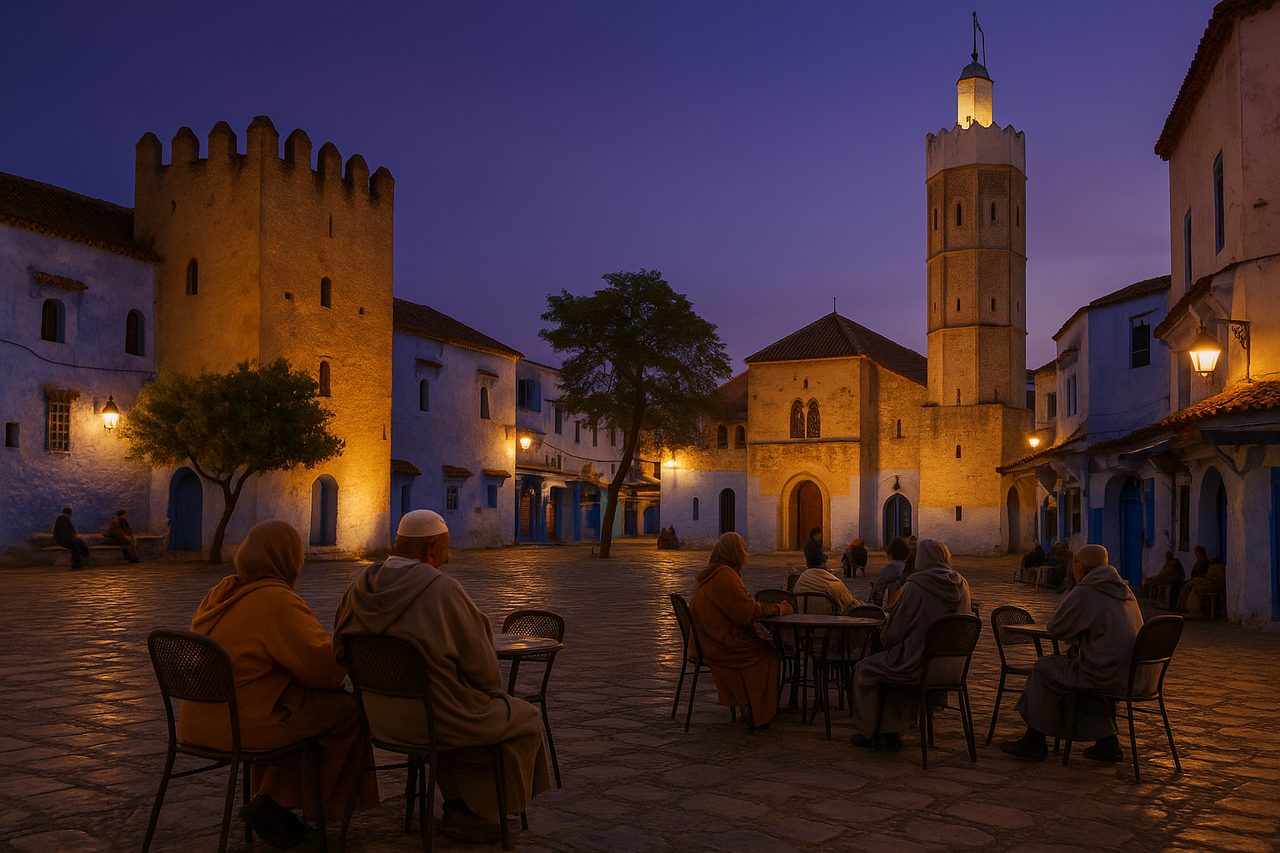
- Plaza Uta el-Hammam — the main square, with the 15th-century Kasbah Museum (small entry fee, well-preserved Andalusian gardens) and the great mosque
- Walking the blue medina — endless photogenic alleys; best 7-9 AM and 5-7 PM for light + few tourists
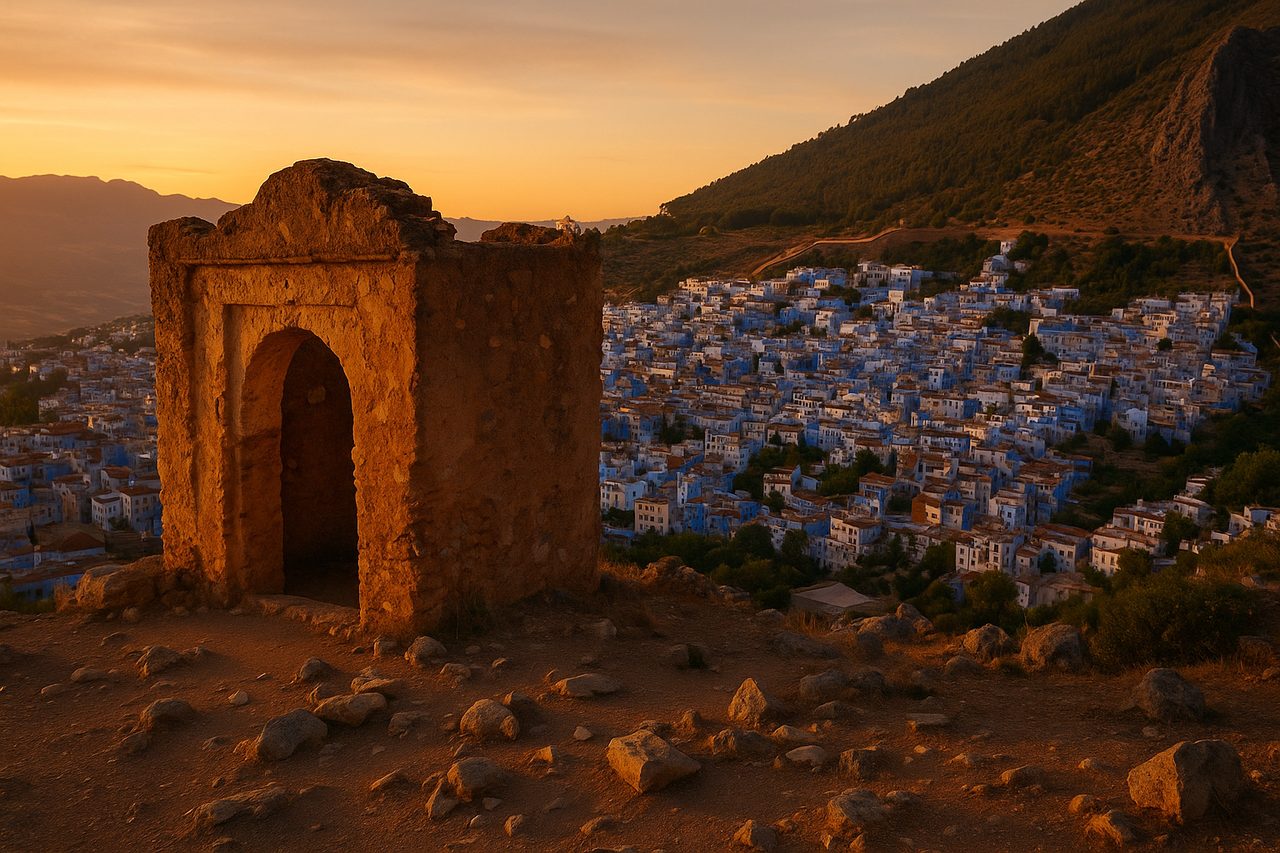
- Spanish Mosque hike — 30 min uphill from town, abandoned Spanish-era mosque on a hilltop with the famous viewpoint over Chefchaouen
- Ras El Maa waterfall — small cascade at the medina’s east edge where locals do laundry; cute, brief
- Akchour cascades day trip — 40 min drive from town, hike to the Cascades d’Akchour (3h round trip) through the Rif National Park
- Sunset on the rooftops — many riad rooftops face the Spanish Mosque hill for a perfect sunset shot
The town is small (~42,000 population) and very walkable — you can cross the medina end-to-end in 15 minutes.
Is Chefchaouen overrated? The honest cons
I’ll be honest because most travel blogs are not:
1. Midday crowds are real. From about 11 AM to 3 PM, the main blue alleys are packed with tour buses and day-trippers from Tangier and Fes. Mitigation: stay overnight, photograph early morning (7-9 AM) and evening (5-7 PM).
2. Limited restaurant variety. Chefchaouen has good but basic Moroccan-Rif cuisine. There’s no Marrakech-level dining scene; expect tagines, harira, kefta, and a couple of decent pizzerias for Spanish-influenced food. Eat at Casa Hassan, Bab Ssour, or Pizzeria Mandala.
3. Modest accommodations. Most “riads” in Chefchaouen are dars (family townhouses), not the courtyard-fountain riads of Marrakech. Mid-range $40-80/night is the norm; luxury options are limited.
4. The hash subculture. Chefchaouen is near Morocco’s cannabis-growing region (the Rif). Tourist hash culture exists, mostly low-key but visible. Solo women have reported low-level harassment by drug touts (much less than Marrakech medina scams, but real). Verdict: not a safety issue, just a minor annoyance.
5. The blue is sometimes overdone. A few cynics point out that the deliberate paint-touch-ups have made the town more “tourist blue” than authentic. There’s truth to that — but it’s also still beautiful.
Chefchaouen vs Tangier: which is better?
A common question because both are in northern Morocco and travelers often choose one. Honest take:
| Factor | Chefchaouen | Tangier |
|---|---|---|
| Size | Small (~42k pop) | Large (~1.1M pop) |
| Vibe | Slow, quiet, photogenic | Bustling, cosmopolitan, port city |
| Photography | World-class | Great but not iconic |
| Food | Basic Moroccan + pizza | Excellent, Spanish-Moroccan fusion |
| Beach | None (mountain town) | Yes (Mediterranean coast) |
| Nightlife | Quiet | Decent bars and clubs |
| History | Andalusian refugee Berber fortress | International port (Paul Bowles era) |
| Day-trip viability | Possible from Tangier (2h) | Day-trips to Cape Spartel |
| Time needed | 1-2 nights | 2-3 nights |
For most travelers: do both if you have 14 days. If forced to choose, Chefchaouen for photographers, Tangier for food + culture + beach. Tangier has the better infrastructure for first-time visitors and is the most-Westernized Moroccan city.
How to get to Chefchaouen
The town is NOT served by trains — closest rail station is Tangier, then 2h by bus or grand-taxi.
| From | Mode | Time | Cost |
|---|---|---|---|
| Fes | CTM bus | 4h | ~100 MAD ($10) |
| Fes | Grand-taxi (shared) | 3h | ~150 MAD ($15) seat |
| Tangier | CTM bus | 2h | ~75 MAD ($7.50) |
| Tangier | Grand-taxi | 1h45 | ~100 MAD shared seat |
| Marrakech | Train+bus or driver | 9-10h | NOT a day trip |
Do not try to day-trip from Marrakech. It’s 660 km away — the entire trip would be 18+ hours of driving for 2-3 hours in the town. Save Chefchaouen for trips ≥7 days like the 7-day plan or the 10-day version.
How many days do you need in Chefchaouen
24-48 hours is right for most travelers. That gives you:
- Day 1 afternoon: arrive, walk the blue medina, sunset Spanish Mosque hike
- Day 2 morning: medina photography (early light), Plaza Uta el-Hammam, Kasbah Museum
- Day 2 afternoon: Ras El Maa waterfall + departure OR Akchour day trip
- Day 2 evening: depart for next stop (Tangier or back to Fes)
48 hours adds the Akchour day trip (highly recommended for hikers) and lets you slow down for photography. Three nights is only worth it if you specifically want to do multiple Rif National Park hikes.
Best time to visit Chefchaouen
March to May and September to November are ideal: 18-25°C day, 8-15°C night, mostly clear skies. Avoid July-August (heat + holiday crowds), December-February (cold + occasional snow), and Eid holidays (jammed with domestic tourism).
Photographers: late spring (April-May) has the best combination of clear light, low rain, and reasonable crowds. For the year-by-year breakdown, see our best time to visit Morocco guide.
Where to stay
For 1-2 nights in the Chefchaouen medina:
- Budget ($25-50/night): Pension Marrakech, Hostel Aline, Dar Echchaouen (basic)
- Mid-range ($50-100/night): Dar Mounir, Casa Hassan, Dar Antonio, Hotel Atlas Chaouen
- Boutique ($100-180/night): Lina Ryad & Spa, Riad Cherifa, Casa Annasr
- Outside the medina (better views, less character): Hotel Madrid, Hotel Quzaza Dar Saada
Most properties are dars (townhouses) rather than true courtyard riads — character varies more than in Marrakech. For broader guidance, see our accommodation in Morocco guide.
Frequently asked questions
Is Chefchaouen worth a day trip from Tangier?
Yes, if you’re staying multiple nights in Tangier and have a free day. The CTM bus takes 2h each way (~75 MAD), giving you 4-5 hours in town. But you’ll miss the magic early-morning light. Overnight is better.
Is Chefchaouen safe?
Yes, generally safe — Chefchaouen has lower crime rates than Marrakech, and the medina is small. Minor annoyances: low-key drug-selling touts, occasional persistent local guides. Solo female travelers report Chefchaouen as significantly easier than Marrakech. See our broader is Morocco safe guide.
Why is Chefchaouen blue?
Jewish refugees who arrived in the 1930s painted their homes blue following a Talmudic tradition (blue = sky/heaven). The tradition was maintained after the Jewish community emigrated in the 1940s-1950s, partly for tradition, partly for tourism. The “blue repels mosquitoes” story is a myth.
How far is Chefchaouen from Marrakech?
660 km, 9-10 hours of driving — NOT a day trip. The only viable Marrakech-Chefchaouen connection is as a multi-day route, fitting into 7+ day itineraries like our 7-day plan or 14-day grand loop.
Can I do Akchour as a day trip from Chefchaouen?
Yes — and it’s recommended. Akchour cascades are 40 min by shared taxi or driver (~$15 round trip per person shared, $40 private). The hike to Cascades d’Akchour is ~3h round trip on a marked trail. Best in March-May or September-October.

Sources cited in this guide
- UNESCO tentative list — Chefchaouen.
- CTM — long-distance bus; Fes-Chefchaouen-Tangier routes.
- Chefchaouen historical context — founded 1471 by Moulay Ali ibn Rashid; Spanish Protectorate 1920-1956; Jewish refugee blue-paint tradition 1930s.
- ONMT — official tourism authority.