If you’re planning a 7-day Morocco trip, the desert tour from Marrakech is the question that takes the longest to research. Tour-operator sites all sell the same tour but bury cost differences; Reddit threads cover personal experiences; nobody explains exactly how the tour works, what’s included, and where the markup hides. This guide is the neutral version, written from inside the country, with 2026 prices and the booking patterns that save you the most money without sacrificing experience.
Can you visit the Sahara Desert from Marrakech?
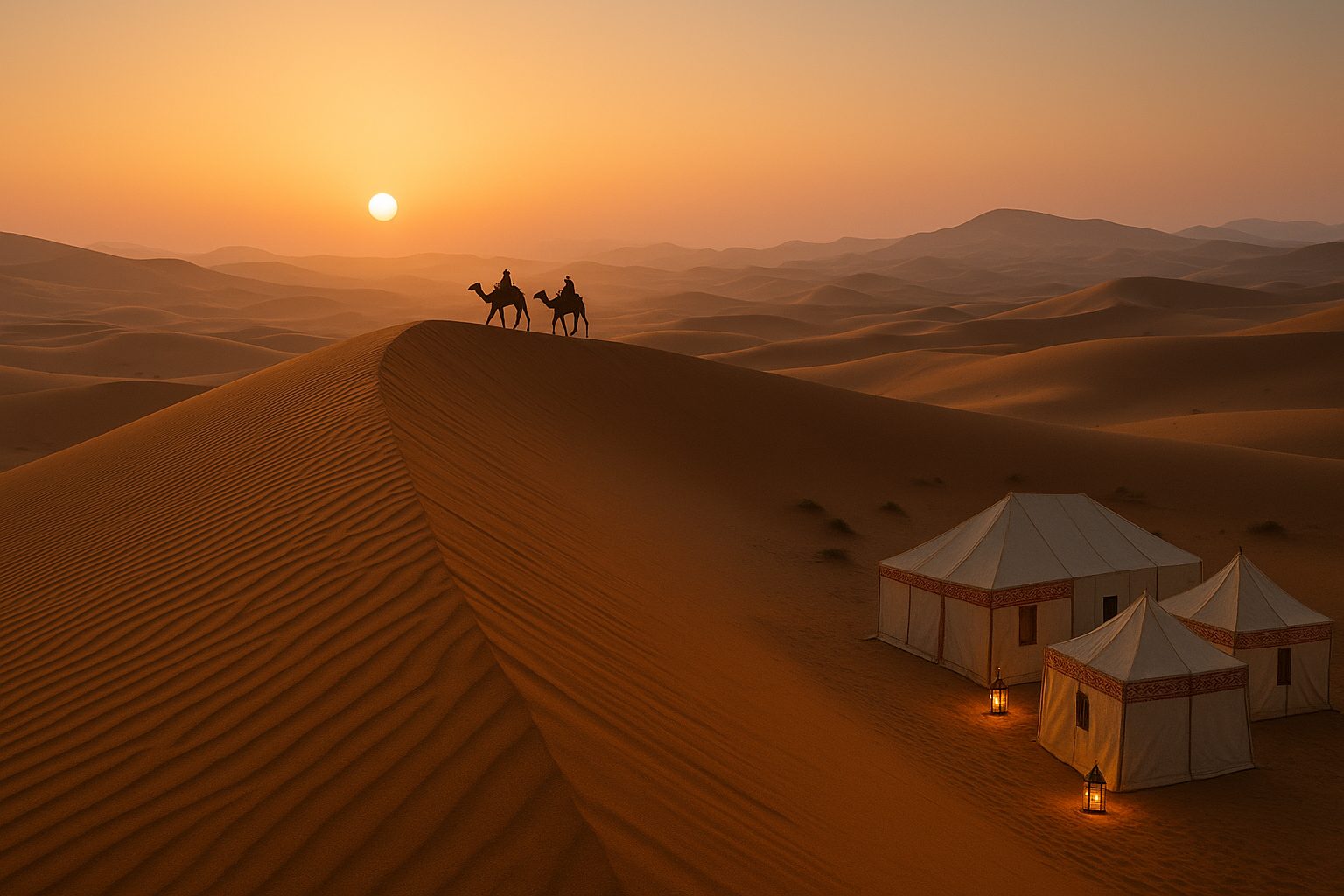
Yes — and Marrakech is the most common starting point. The Sahara dunes most travelers come to see are at Erg Chebbi, near the village of Merzouga, about 560 km south-east of Marrakech. That’s a 9–11 hour drive each way (across the Atlas Mountains and through the Drâa Valley), which is why the tour is typically structured as 3 days / 2 nights: one day driving in, one full day at the dunes, one day driving out.
Shorter 1-day and 2-day desert “tours” from Marrakech don’t actually reach the real Sahara — they go to Agafay, a rocky pseudo-desert about 40 km from Marrakech. Agafay is scenic and decent for a half-day, but it isn’t sand dunes. If you came to Morocco for the iconic golden-dune photo, you need the 3-day Merzouga trip.
The Marrakech-to-Sahara route at a glance
The route is essentially fixed — every operator runs the same path because the geography doesn’t allow alternatives. The variations are in vehicle quality, group size, accommodations along the way, and camp tier in the desert.
| Day | Segment | Distance | Drive time | What you see |
|---|---|---|---|---|
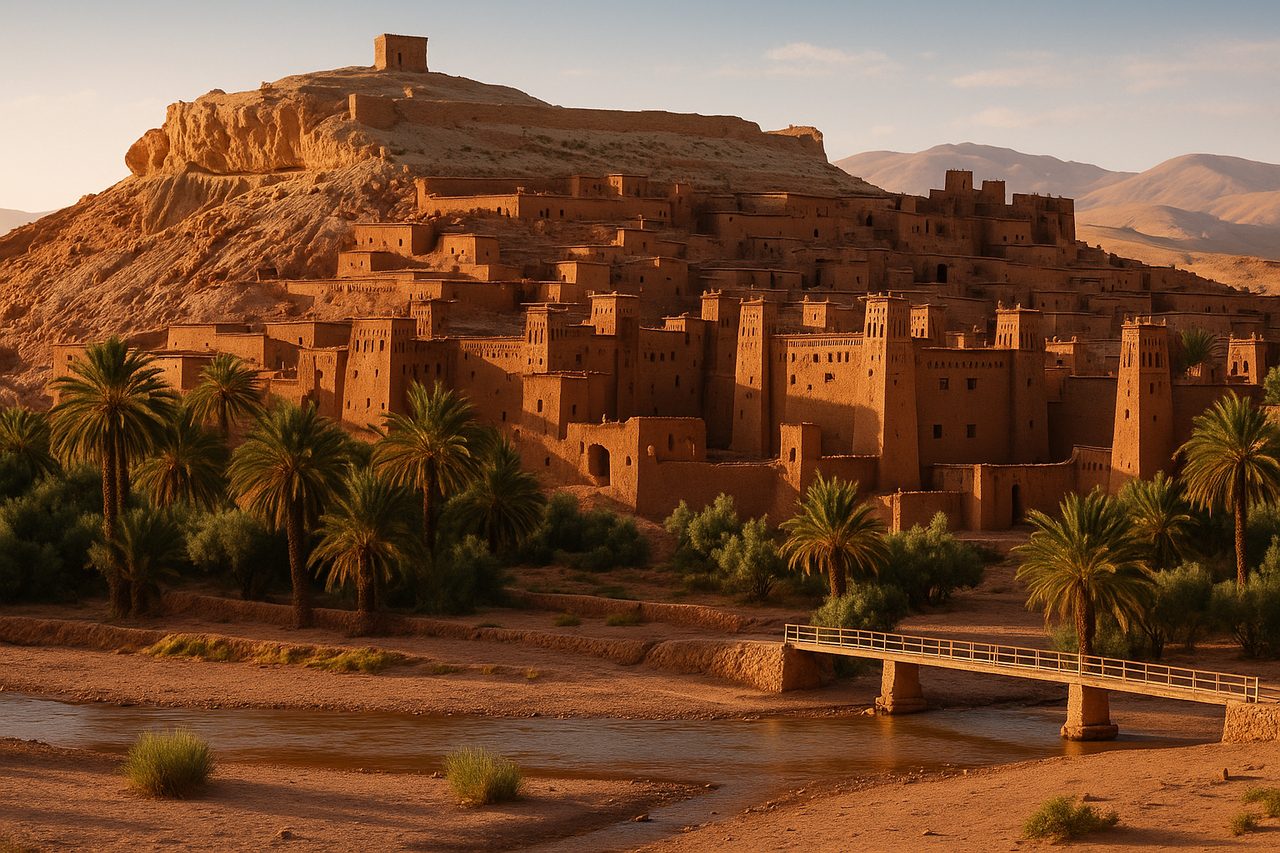
| 1 | Marrakech → Tizi n’Tichka → Aït Benhaddou → Ouarzazate → Dades Gorges | ~350 km | ~7h driving + stops | Atlas mountain pass (2,260m), UNESCO ksar, Hollywood-of-Africa studios |
| 2 | Dades → Todra → Erfoud → Merzouga → camel trek → Sahara camp | ~280 km + camel | ~5h driving + 90min camel | Dades canyon, 300m Todra cliffs, palm oases, Erg Chebbi dunes, camp dinner |
| 3 | Camp sunrise → Merzouga → Aït Benhaddou → Marrakech | ~560 km | ~9-11h | Drive back via Ouarzazate |
The most-cited complaint in Reddit threads is the Day 3 return drive — it’s long and tiring. Some operators split Day 3 into two days (3D2N becomes 4D3N) with a Skoura overnight on the return; that adds ~$60-100 to the package and is worth it if you can spare the day.
Tour length options compared: 1-day vs 2-day vs 3-day
| Option | What you see | Real Sahara? | Cost (shared) | Verdict |
|---|---|---|---|---|
| 1-day “desert” tour | Agafay rocky plateau, camel ride, dinner | ❌ No | $40-80 | Skip unless you have <2 days |
| 2-day tour to Zagora | Drâa Valley, Zagora dunes (small) | Partial | $80-130 | Some sand, but not the iconic dunes |
| 3-day tour to Merzouga (3D2N) | Atlas, Aït Benhaddou, Dades, Todra, Erg Chebbi | ✅ Yes | $120-180 | The standard — recommended |
| 4-day tour with Skoura overnight | Same + slower pace | ✅ Yes | $180-280 | Best for slow travelers |
| Private 4×4 3-day | Same route, private vehicle | ✅ Yes | $400-700+ | Comfort + flexibility |
What’s included in a typical 3D/2N Sahara tour package
The standard inclusions across most operators (verify on booking):
- Transport: minivan (8–17 passengers shared) or 4×4 (private). Driver speaks English in tourist-facing companies, French/Arabic in budget options.
- All 2 nights of accommodation: 1 night at a hotel or kasbah-style hotel along the route (typically Dades Gorges or Boumalne Dades), 1 night at the Sahara desert camp.
- 2 breakfasts: served at your hotel and at the desert camp.
- 1 dinner: at the Sahara camp (multi-course Moroccan dinner — typically tagine + bread + dates + mint tea).
- Camel trek: ~90 minutes at sunset into Erg Chebbi dunes. Some operators also include a sunrise ride.
- English-speaking driver/guide: in tourist-facing tours. Budget tours have French/Arabic-only drivers — fine but expect less narration.
Want a vetted local-operator recommendation? Chat with Anass on WhatsApp →
What’s NOT included (the tip-line items)
The things travelers consistently get surprised by:
- Lunches (Day 1 and Day 3): typically 60–120 MAD ($6–12) at roadside restaurants the driver stops at
- Entry fee to Aït Benhaddou: ~10 MAD per person
- Atlas Studios / CLA Studios entry in Ouarzazate (if you stop): ~30–80 MAD per person
- Tips for driver and camp staff: ~50–100 MAD per person per day for driver, ~30–50 MAD per person at the desert camp
- Alcohol at any stop: not included, available at some kasbah hotels (see our alcohol in Morocco guide)
- Optional ATV/quad bike rental at Merzouga: 250–400 MAD per hour
- Sandboarding: usually included at the camp for free, but board rental at the dunes runs 50–100 MAD if not
Typical 2026 prices
| Tier | Per-person cost (3D2N) | What you get |
|---|---|---|
| Budget shared group (8-17 ppl minivan, basic camp) | $120-150 | Standard tour with budget accommodations and basic Berber camp |
| Mid shared group (8-12 ppl minivan, comfort camp) | $160-200 | Better hotel along the route + mid-tier camp with private tents |
| Private 4×4 (2-4 people in one vehicle) | $400-700 | Flexibility on stops, your own car, mid-tier camp |
| Luxury private + luxury camp | $1,000-2,500+ | High-end driver, kasbah hotels, ensuite-bivouac luxury camp |
The single biggest price driver is group size. Shared minivans of 12-17 people are cheapest and crowded; shared minivans of 6-8 are the sweet spot; private 4×4 doubles the price. Camp tier is the second variable — splurging on the bivouac ($50-100 extra) is what most travelers regret not doing.
Camel trek + night in the dunes: what to expect
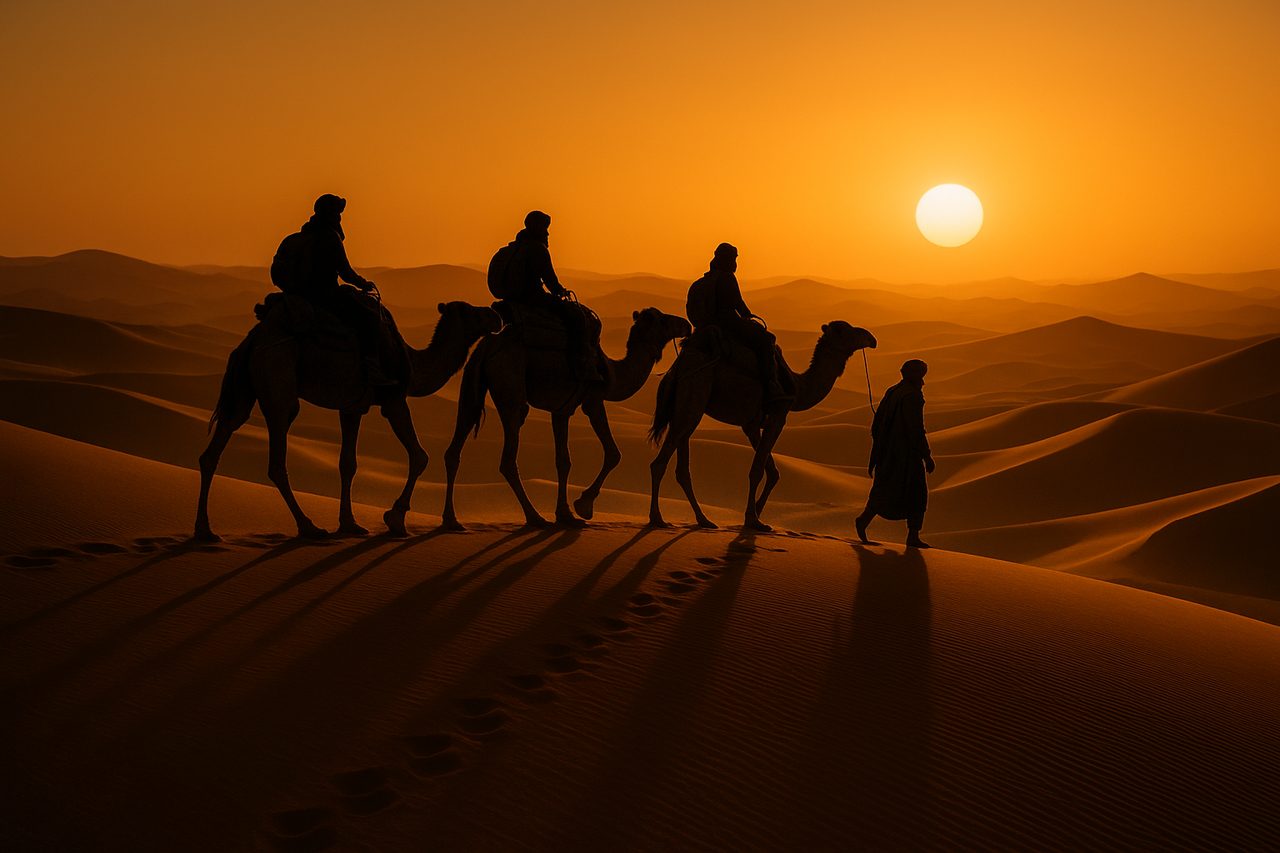
The Day 2 camel trek into Erg Chebbi is the trip’s centerpiece. Here’s what actually happens:
You arrive at the trailhead camp around 4 PM (your driver hands you off to camp staff). After a short break, you’re matched with a camel — most camels are docile and well-trained; first-timers are nervous for about 5 minutes, then relax. The trek into the dunes is about 90 minutes, usually with a stop on a tall dune for the sunset.
You arrive at the actual desert camp around 7 PM, just as the sky goes dark and stars come out. Dinner is multi-course Moroccan — soup, tagine, bread, fruit, mint tea — served around a fire pit or in a communal tent. Often there’s Berber drumming and music. People stargaze (the Milky Way is genuinely visible — Morocco has some of the lowest light pollution in North Africa).
You sleep in a tent. Tier varies (see callout above). Sunrise is around 6:30-7 AM; some operators offer a second short camel ride at sunrise (highly recommended — the light is the best of the trip).
How to book: direct with local operator vs aggregator
Three booking patterns, each with trade-offs:
1. GetYourGuide, Viator, Tripadvisor: convenient app-based booking with international payment. Aggregator markup is 25-40% above local-operator direct prices. Convenient for first-time travelers, but you’re paying for the convenience.
2. Marrakech-medina riad: your riad almost always has a partnered local operator they recommend. Markup is typically 10-15% over direct. Quality is usually solid because the riad’s reputation depends on the tour going well. This is what I recommend for most first-timers.
3. Direct with a Marrakech-based local operator: you find them on Google Maps or via local recommendation, WhatsApp them for a quote, pay 50% deposit, balance on arrival. Cheapest option, requires more trust upfront. Comfortable for repeat travelers.
The savings from going direct vs aggregator on a $180 base tour is typically $40-60 per person — worth it for a couple’s trip, less critical for solo.
Is a Sahara tour worth it? Who should skip it
Worth it for: photographers, first-time Morocco visitors, people who came specifically for “the dunes,” anyone with a 7+ day trip.
Skip it if: you have only 5 days (you can’t do justice to both Sahara and Fes/Chefchaouen — pick one; see our 5-day Morocco itinerary for which to prioritize), you hate long drives, you’re traveling with toddlers under 5, or you have a physical limitation that makes 9+ hours in a vehicle hard.
If you’re committed and have 7+ days, see how the desert tour fits into our 7-day Morocco itinerary. With 10 days, the Sahara plus Chefchaouen plus Atlantic coast becomes the 10-day itinerary.
Best time of year for the desert
The Sahara has the most-extreme weather of any region in Morocco. Realistic windows:
- March to May: Daytime 22–32°C, night 8–15°C. The peak window. Book 2-3 months ahead.
- September to early November: Daytime 25–35°C, night 10–18°C. Excellent.
- December to February: Daytime 15–22°C, night -5 to +5°C. Some tours run; bring serious winter layers.
- June to August: Daytime 40–48°C, night 22-28°C. Skip. It’s genuinely dangerous heat. Some operators don’t run tours in mid-summer.
For the full year breakdown, see best time to visit Morocco.
What to pack for the desert
A short list (full Morocco packing list in our 7-day itinerary):
- Layered clothing: warm down jacket or fleece for nights (yes, even in April), lightweight long sleeves for days
- Scarf/turban: for sand and sun (~50 MAD in Marrakech if you don’t bring one)
- Headlamp: the camp is dark
- Sunscreen + lip balm: the sun is intense
- Refillable water bottle + electrolyte tabs
- Closed-toe shoes for the camel trek (sand gets everywhere; sandals are uncomfortable)
- Hand sanitizer + small wet wipes (camp bathrooms vary)
- A power bank: limited charging at camp
- Camera + extra battery: cold drains batteries fast
Frequently asked questions
Can you visit the Sahara Desert from Marrakech?
Yes. The closest real Sahara dunes (Erg Chebbi at Merzouga) are 560 km south-east of Marrakech, accessible via a 3-day / 2-night tour. Shorter “1-day desert tours” only reach Agafay, a rocky plateau, not actual sand dunes.
Is a desert tour worth it in Morocco?
For photographers, first-time visitors, and anyone with 7+ days, yes — the camel trek + camp night is the trip’s emotional centerpiece for most travelers. Skip it if you have ≤5 days (you can’t add it without cutting Fes or Chefchaouen), or if you can’t handle 9+ hours of driving each way.
What’s included in a Morocco desert tour package?
Standard 3D/2N inclusions: minivan transport, 2 nights of accommodation (1 hotel along route + 1 desert camp), 2 breakfasts, 1 dinner at camp, camel trek, English-speaking driver. NOT included: lunches, entry fees (Aït Benhaddou, studios), tips, alcohol, optional ATV.
How much does a Marrakech to Sahara tour cost?
2026 ranges: budget shared group $120-150 per person, mid shared group $160-200, private 4×4 $400-700, luxury private $1,000-2,500+. Direct local-operator bookings save 25-40% vs GetYourGuide/Viator markup.
What’s the best Sahara desert tour from Marrakech?
For most travelers: a mid-tier shared group (8-12 people) with a luxury-bivouac camp upgrade, booked through your riad or a Marrakech-medina operator. This combination gets you a comfortable van, a quality camp, and a fair price.

Sources cited in this guide
- UNESCO: Aït Benhaddou — World Heritage listing (1987).
- Moroccan National Tourist Office (ONMT) — official tourism authority.
- Tizi n’Tichka pass elevation, R’OAD 2024 upgrade reference.
- Erg Chebbi geographic data — Tafilalt-Drâa basin Sahara dunes near Merzouga.